
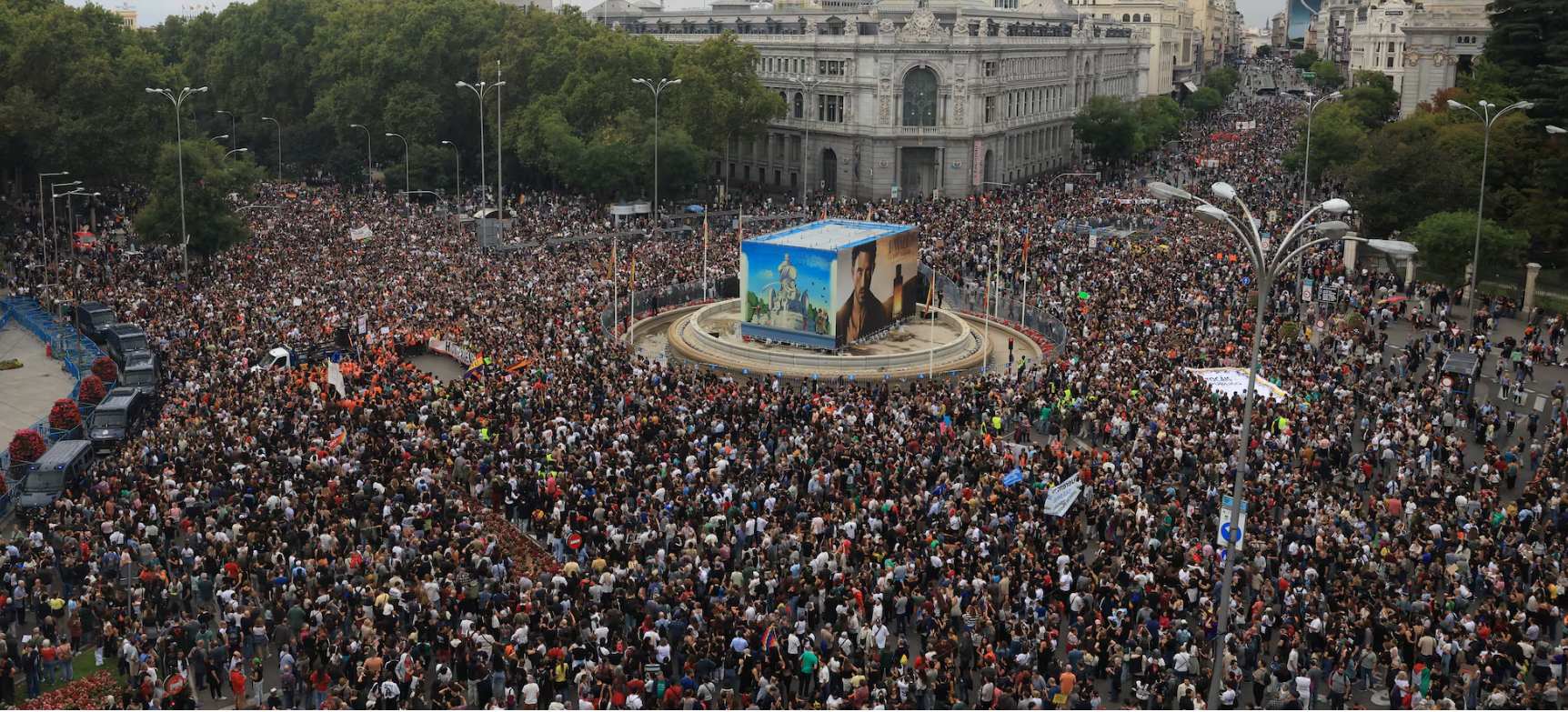

The Communist Party of the Workers of Spain (PCTE) joined and called for participation in demonstrations for the right to housing taking place in cities across Spain on 2 and 3 October, amid a broader wave of mobilisation over the country's housing crisis.
PCTE joins housing mobilisations across Spain
The protests followed the Spanish Congress's rejection on 2 October of two Royal Decree-Laws on housing introduced by the coalition government. The measures included provisions concerning the extension of existing tenancy agreements, protection against evictions, restrictions on certain property purchases by investment funds, and measures concerning affordable housing. A total of 47 demonstrations were announced for Saturday, 3 October, in cities including Madrid, Barcelona, Bilbao, Málaga, Córdoba, A Coruña, Alicante, Cáceres, Palma, Santiago de Compostela and Valladolid.
The PCTE had already expressed its support for the housing movement in a statement published on 29 September. The party argued that the mobilisation around housing had forced the government to introduce the two decrees, while describing the proposed measures as limited and temporary. The PCTE specifically highlighted the extension of tenancy agreements, restrictions on purchases by so-called vulture funds until 2028 and measures concerning evictions until 2030.
According to the PCTE, the housing question cannot be separated from wages and working conditions. The party argues that rising rents and property prices reduce workers' purchasing power and therefore considers the struggle for higher wages to be an important component of the housing struggle. It has also called for greater coordination between housing movements and workplace struggles.
The demonstrations on 2 October followed the eviction of Maricarmen Abascal, an 87-year-old woman whose case had become a focus of the recent housing mobilisation. Protests were reported in several cities after the eviction, while housing organisations continued to campaign against rising rents, evictions and the treatment of housing as an investment asset.
The PCTE has presented the mobilisation as part of a broader effort to build what it calls a working-class opposition to capital. In its 2 October statement, the party argued that housing struggles should be connected with labour disputes and neighbourhood organisation rather than remain isolated campaigns. It also raised the possibility of a future general strike, while stressing that such a strike would require sufficient organisation and coordination among workers.
The wider mobilisation continued on 3 October. Reuters reported demonstrations in more than 50 Spanish cities, with tens of thousands of people taking part nationwide and a large demonstration in Madrid. The protests included demands for government action on housing and, in some locations, calls for a general strike.
For the PCTE, the demonstrations form part of a longer-term campaign linking the immediate demand for access to housing with broader questions concerning wages, employment, public policy and the ownership and use of housing. The party argues that temporary regulatory measures do not constitute a structural solution and continues to call for the development of a sustained working-class movement around the issue.