
Tudeh Party of Iran has published an article titled “The Damages of the Recent US War Against Iran and an Analytical Study of Their Short-Term and Long-Term Effects” on People's Letter.
TUDEH Party of Iran on long term effects of war
In the article the war is defined as one of the most costly and impactful contemporary military conflicts in the Middle East.
The initial “shock and rapid collapse,” strategy is analysed to be an assumption that the elimination of leaders and senior commanders and the disruption of the command structure would pave the way for the collapse of the political system and the change of government. However, it is pointed out that on the contrary conflict has become a war of attrition, leaving extensive human, military, economic, and infrastructural damage. The article examines the main losses of this war at both short-term and long-term levels.
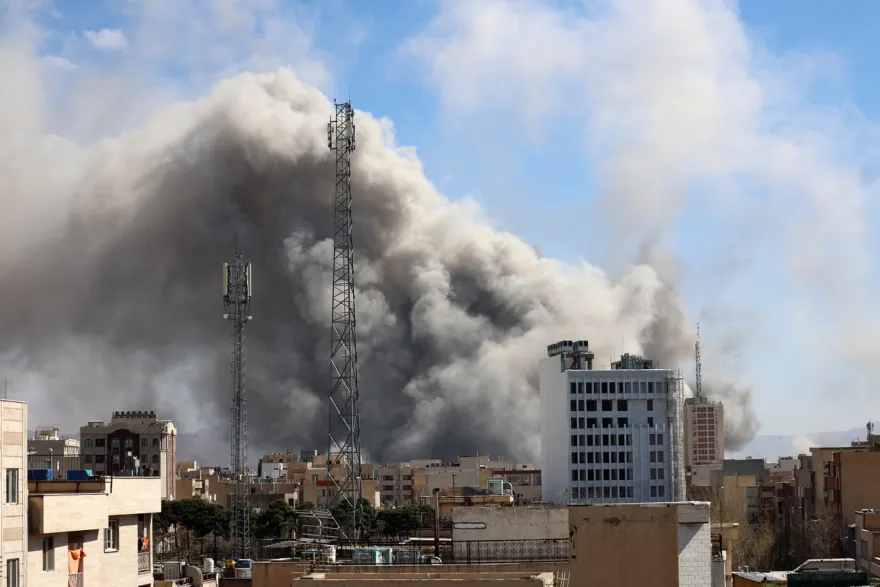
Examination starts with the human toll in Iran which has been the heaviest part of the war. Iranian officials have put the death toll at between 3,468 and over 3,500, including a significant number of civilians. Human rights groups such as HRANA have confirmed more than 3,600 deaths as of early April, of which around 1,700 were civilians. US and Israeli intelligence estimates put Iran’s military casualties at over 6,000. Between 15,000 and 26,000 have been reported injured, and around 3.2 million have been displaced.
The article reminds of the attack on the Shajre Tayyiba girls’ primary school in Minab on 20 March 2025 reportedly killed between 156 and 168 people, mostly children. It is noted that international sources have also recorded damage to more than 100 educational centres. Iranian reports indicate damage to a number of historical and religious monuments has also been recorded during the initial attacks. Iranian sources have also reported damage to more than 300 medical centres, as well as destruction to factories and disruption in the supply of vital medicines, including antibiotics and insulin. Attacks on coastal facilities, power plants, and desalination systems have been reported in the south of the country. In July and August 2026, US attacks on infrastructure related to ports and communication networks intensified along with reports of water and electricity outages in some areas. Attacks on oil, gas, and export facilities in areas such as have also been reported, and Iranian sources have spoken of a significant reduction in production and the occurrence of oil spills, although reports of the exact volume of the spill still require independent verification. Article examines that the later stages of the war, attacks have focused more on military, naval, and coastal transportation infrastructure whereas in the initial attacks, damage was reported to some bridges and roads.
The article states that in any military conflict, infrastructure is one of the most critical targets or indirect victims. Damage to power plants, refineries, ports, airports, railways, power grids, telecommunications systems, and industrial facilities creates very high costs for reconstruction.
The experience of various countries has shown that the complete reconstruction of damaged infrastructure may take years or even decades.
Article reminds that while these infrastructural attacks are normally considered war crimes, USA openly violates international law and any moral basis and minimal norms. It is pointed out that the international law, which itself was formed within and in the service of the global capitalist system and American dominance after World War II, is being ignored and trampled upon in this way by the Trump regime is a sign of a serious crisis within this system. Attacking another country simply because.
Article suggests that the Iranian economy has been the biggest direct victim of the war. Domestic estimates put the direct and indirect damage at around $270 billion (nearly the entire projected GDP for the year). Independent studies, estimate the figure at between $144 billion and $187 billion by the end of 2026, equivalent to about 40 to 80 percent of [Iran’s] pre-war GDP. The consequences of this is stated as more than a million direct jobs have been lost and that the reduced industrial production, supply chain disruptions, reduced exports, and a drop in domestic and foreign investment have also been among the most important economic consequences of the war.
Article also examines the economic consequences on the United States whose direct military costs by the middle of the war are estimated at $29 to $37.5 billion, and when base reconstruction and equipment replacement are included, they have reached $50 billion or more. Indirect costs for American consumers, including higher petrol prices, have been in the tens of billions of dollars. Israel has also spent tens of billions of dollars.
Final analysis is made on the rebuilding of Iran’s damaged infrastructure, especially its petrochemical and energy complexes which could take more than a decade and require hundreds of billions of dollars in capital. It is pointed out that Iran’s economy, which was already under sanctions and structural problems before the war, is facing a persistent output gap, declining domestic and foreign investment, and difficulty accessing international capital markets. Slower economic growth, rising government debt, continued depreciation of the national currency, inflationary pressures, lower industrial production, supply chain disruptions, and reduced exports are noted among the long-term consequences of the war.
Increased poverty, structural unemployment, brain drain, and psychological and educational harm to the younger generation will be other lasting consequences of this war. Environmental damage, including pollution from attacks on energy facilities, will also have regional and long-term effects.
From a geopolitical perspective, article states that the war has changed the regional balance of power, weakening Iran’s military might while strengthening the narrative of resistance. For the United States and its allies, the long-term costs have included rebuilding weapons stockpiles, caring for veterans, and impacting strategic credibility. Global energy markets may also face years of risk from the instability of the Strait of Hormuz.
The article states that the recent Iran-US war has shown that modern conflicts, even without extensive land occupation, can inflict extensive human, economic, social, infrastructural, and geopolitical damage. Although this war has had consequences beyond the borders of the two countries, its main burden has fallen on the people and hardworking people, especially civilians.
It is on the shoulders of the people who have paid the heaviest costs of the war in terms of the loss of loved ones, displacement, poverty, unemployment, destruction of infrastructure, and a decrease in the quality of life.
It is also pointed out that closing the Strait of Hormuz, raised the price of oil from about $70 to more than $120, and brought windfall profits of several hundred billion dollars to major global oil companies. The three industrial sectors (oil, weapons, and automobiles) have directly and indirectly benefited from the consequences of the Iran-US war by hundreds of billions of dollars.
Article concludes that this conflict has once again shown that war, even if some military goals are achieved, rarely creates lasting security and stability, and its effects on the economy, society, and development remain for years. Therefore, dialogue, diplomacy, and international cooperation are the most effective ways to prevent the recurrence of such crises and reduce human suffering. It is stressed that peace is not a sign of weakness, but rather an expression of rationality, responsibility, and respect for human dignity, and is considered the most sustainable way to maintain security, development, and the future of nations.
A call is made to the free people of Iran and the world around the world must protest against this devastating war in every possible way until peace is fully achieved.