
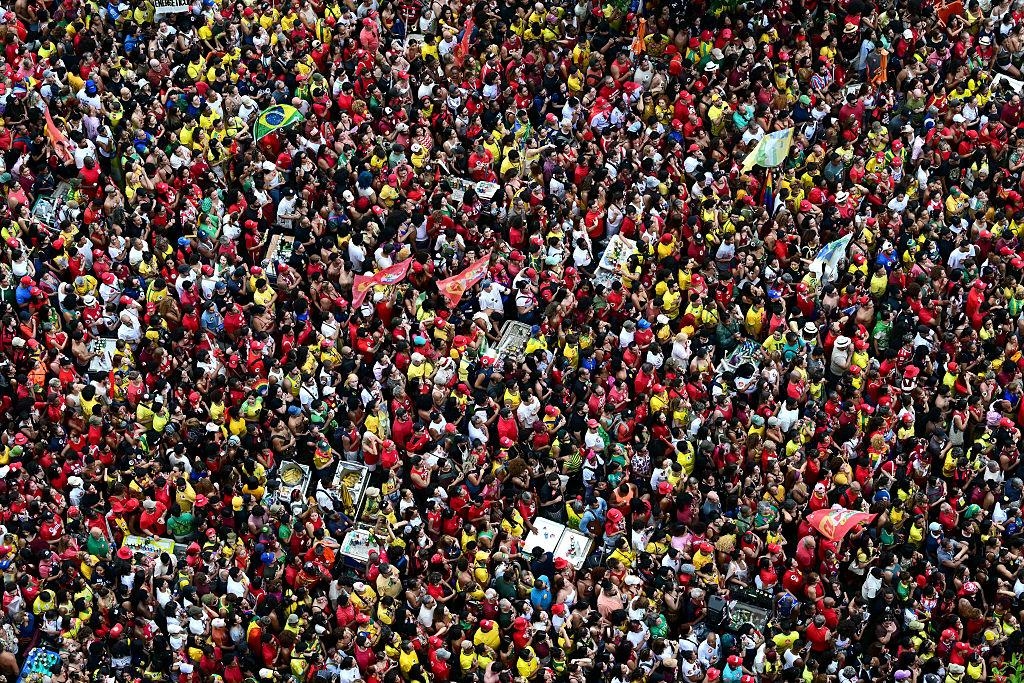
As Brazil prepares for the second round of its presidential election on 25 October, the Brazilian Communist Party (PCB) and the Communist Party of Brazil (PCdoB) have intensified their efforts to prevent the election of far-right candidate Flávio Bolsonaro and secure the re-election of President Luiz Inácio Lula da Silva.
Brazilian communist parties mobilise for Lula ahead of presidential runoff
Although both parties are supporting Lula in the runoff, they approach the campaign from different political and organisational positions.
PCB: Support for Lula while maintaining political independence
Following the first round on 4 October, the PCB called on its members and supporters to join the campaign for Lula while maintaining the party’s independent programme and organisation. In its 6 October statement, titled “Now It’s Lula!”, the party argued that defeating the far right was the immediate priority, even though it continued to criticise the policies of class conciliation pursued by the Workers’ Party (PT) and its allies.
The PCB had contested the first round with its own presidential candidate, Edmilson Costa, and vice-presidential candidate Cleusa Santos. Their campaign presented an anti-capitalist and anti-imperialist programme centred on popular power and socialism. The party highlighted demands including higher wages, shorter working hours, an end to the six-day working week, agrarian reform, stronger public health and education, housing and the expansion of public services.
In a further political statement published on 9 October, the PCB argued that the growth of the far right was linked not only to its own mobilisation but also to the limitations of policies that prioritised negotiations with business interests and financial capital over popular demands. It called for a change in the direction of the runoff campaign, urging greater attention to workers, unemployed people, young people, women, Black communities and residents of working-class neighbourhoods.
The party instructed its militants to engage in door-to-door campaigning, organise meetings in neighbourhoods and workplaces, participate in popular committees and reach voters who had abstained or cast invalid ballots in the first round. It also stressed that defeating Bolsonaro must be followed by renewed organisation among workers and popular movements, irrespective of the election result.
The PCB’s position is therefore one of critical electoral support rather than endorsement of Lula’s government programme. It considers preventing a far-right victory necessary to defend democratic freedoms and social rights, while insisting that the struggle for socialism and independent working-class organisation must continue.
PCdoB: Nationwide mobilisation for Lula’s re-election
The PCdoB, which belongs to the electoral federation with the PT and the Green Party (PV), has made Lula’s re-election the central focus of its political activity during the runoff.
On 20 October, PCdoB national president Nádia Campeão highlighted the demonstrations taking place across Brazil, particularly the participation of young people. She urged militants to continue campaigning in neighbourhoods, at bus terminals, markets, schools and universities, stressing that political mobilisation must involve direct conversations with voters as well as activity on social media.
The party has also called for a concerted effort to reach people who did not vote in the first round. In an appeal published on 14 October, Campeão identified abstention as a central challenge and encouraged militants to speak with relatives, friends and neighbours to persuade them to participate in the runoff. She linked the election to national sovereignty, democratic rights, social protection and the interests of working people.
Labour policy has been another focus. The PCdoB has criticised Bolsonaro’s position on the proposed end of the six-day working week, arguing that his statements on the issue are inconsistent with his record and proposals concerning labour rights. The party presents the election as a choice with consequences for wages, working conditions, public services and Brazil’s development strategy.
On 22 October, federal deputy Jandira Feghali (PCdoB-RJ) raised concerns about the handling of political content on social media and called on the Superior Electoral Court (TSE) to investigate. She cited reports of restrictions on journalists’ and progressive organisations’ accounts and questioned a reported payment of R$600,000 by Bolsonaro’s campaign to a US company offering artificial-intelligence tools. These allegations have prompted wider questions about digital political advertising and platform transparency; the claims require investigation and should not be treated as proof of electoral wrongdoing.
The PCdoB has also drawn attention to the party’s legislative results in the first round, when it won 11 seats in the Chamber of Deputies—an increase from six in 2022. The party has presented this result as a basis for continuing to defend workers’ rights, social policies and national sovereignty during the next legislative term.