
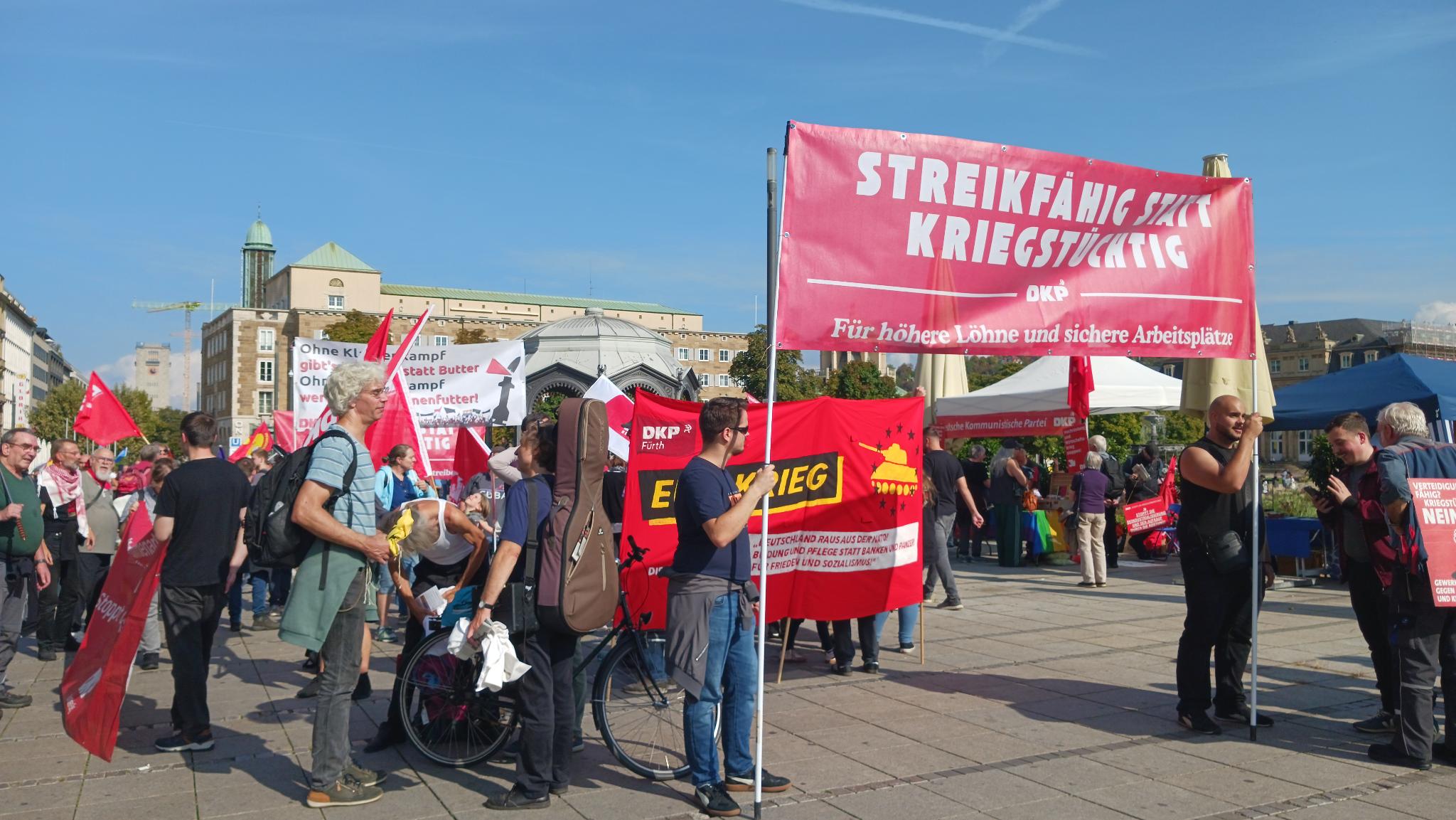

The German Communist Party (DKP) is supporting preparations for the fifth nationwide school strike against conscription, scheduled for 20 November, and is calling on students, parents, grandparents, teachers and workers to join the mobilisation.
DKP mobilises support for nationwide school strike against conscription on 20 November
The party is seeking to broaden the movement beyond schools, connecting the struggle against compulsory military service with opposition to militarisation, military spending and cuts to education and social provision.
The 20 November action is part of a wider wave of youth mobilisation against the German government's plans to expand military recruitment and introduce a new system of military service. The protesters demand an end to conscription and compulsory service, an immediate halt to military examinations and the withdrawal of the Military Service Modernisation Act. Their central message is that young people should be able to determine their own future rather than be prepared for war.
DKP calls for broad solidarity with the students
In a statement issued on 3 November and published on 5 November under the title “Krawallmacher von oben” (“Instigators of Riots from Above”), DKP chairman Patrik Köbele called for the continuation of the youth protests and explicitly declared the party's support for the 20 November school strike.
The statement followed the large demonstrations held at the end of October, which the DKP said had brought more than 120,000 young people onto the streets against conscription and preparations for war. The party criticised what it described as attempts by politicians, sections of the media and police representatives to shift public attention from the protesters' demands towards isolated incidents of violence.
The DKP also condemned police operations against demonstrators, including the containment of protest groups, the use of force and the prevention of demonstrations. It argued that these measures, alongside warnings about possible unrest, risked intimidating young people and weakening the movement. The party maintained that the protests' demands for peace, education and a secure future should not be pushed aside.
Köbele called on students, parents, grandparents and teachers to demonstrate their solidarity on 20 November. The DKP's appeal seeks to prevent the movement from being isolated as a concern affecting only young people and to establish broader links between the student movement and working people.
Local DKP organisations prepare for the mobilisation
DKP organisations in several parts of Germany have begun publicising the strike and encouraging participation.
In Flensburg, the local DKP has called on supporters to gather at 10:30 on 20 November at the Exe car park. It is also collecting signatures for an appeal supporting the school strikes. The appeal demands:
- No to conscription and compulsory service.
- An immediate halt to military examinations.
- Withdrawal of the Military Service Modernisation Act.
The Flensburg organisation stresses that opposition to conscription is not confined to students and that the solidarity of other generations should be made visible.
In Gießen, the local DKP has listed the fifth school strike in its November events calendar and is publicising the nationwide mobilisation. Its local political work also links opposition to militarisation with campaigns against cuts to public services and social provision.
A wider movement against militarisation and social cuts
The 20 November strike is also part of a broader international day of youth mobilisation under the slogan “Fight for Our Future, Not Their Wars”. Students, young workers and other participants are expected to take action in Germany and other European countries. The peace initiative Nie wieder Krieg – Die Waffen nieder! has called for solidarity with the school strike and for further actions between 20 and 22 November against preparations for war and the associated social cuts.
The demands of the movement extend beyond military service. Young people are also protesting against underfunded schools, deteriorating educational infrastructure and the diversion of public resources towards military expenditure. They argue that the government is demanding greater readiness for military service while failing to provide adequate investment in education, healthcare, housing and social security.
Support has also emerged from trade-union circles. An initiative motion adopted by the ver.di Berlin-Brandenburg regional conference on 7 November called for solidarity with the youth protests, opposition to the criminalisation and intimidation of demonstrators, and the mobilisation of union members, workplace representatives and youth structures in support of the 20 November actions.