
Al Ittihad, the organ of the Communist Party of Israel, published an article written by Adel Amer, General Secretary of the Communist Party of Israel. The article entitled "Scorched earth speech" focuses on a recent speech made by Netanyahu from the Knesset podium and the dangers it poses.
CP of Israel General Secretary Adel Amer on 'scorched earth speech'
Netanyahu’s speech from the Knesset podium on Tuesday, November 10, may be recorded as one of the most dangerous speeches in recent years, due to its racist incitement and fascist content, and because it lays the groundwork for a confrontation with the potential end of the extreme right’s rule, and the emergence of the decisive role of the Arab masses in bringing about this change.
What are the features of the stage that this speech foreshadows?
Netanyahu laid the intellectual and political groundwork for refusing to accept the loss of power by his government and his partners, Smotrich and Ben-Gvir. At the heart of this foundation is the delegitimization of the Arab public and its representatives in parliament, portraying its political leadership as a force seeking Israel's destruction. According to this logic, Arab political participation is transformed from a democratic right into an "imminent threat" that must be confronted.
The danger of this logic doesn't stop at refusing to include Arab parties in a governing coalition or rely on their support. Presenting an entire public and its elected leadership as an existential threat creates a climate conducive to justifying their persecution and attacks, using the methods perfected by the fascist right.
This confrontation did not begin today. In the occupied West Bank, fascist settler groups are carrying out attacks, killings, arson, and forced displacement against Palestinians, as part of a policy aimed at ethnically cleansing the land. The danger is that these practices, emboldened by official protection and tolerance, will spread into Israel itself.
Signs of this have already emerged in historic cities, particularly Lod, with groups led by Mordechai David storming Arab neighborhoods, provoking residents, and attempting to assault them. These groups are not only targeting Arabs; they also pursue opponents of the far-right government, signaling the kind of violence that could escalate in the coming period.
In the face of this danger, the role of the elected leadership of the Arab community, foremost among them the Joint List, becomes crucial. This leadership has received a clear mandate to work towards bringing down the Netanyahu-Ben-Gvir-Smotrich government, and to form a safety net for our community and a barrier against the return of these forces to power.
But the responsibility does not lie solely with the Arab leadership. Those aspiring to form an alternative government must be more decisive and firm in confronting incitement, and must begin with the fundamental democratic principle of respecting election results and ensuring complete equality among voters.
It is not enough for this camp to declare its desire to replace Netanyahu while accepting the rules he imposes to delegitimize the Arab voice. A democratic alternative is tested by its ability to confront fascist approaches, recognize the legitimacy of national minorities and intellectual and political currents, and their right to fully participate and freely adopt positions based on their programs and convictions.
This also necessitates confronting settler groups in the occupied Palestinian territories before their experience of violence, murder, and arson spreads into Israel. If this happens, the targeting will not be limited to us, the Palestinian Arab masses, but will extend to all who oppose the policies and approach of the fascist right wing.
A political force created by profound transformations
The election results demonstrated the crucial role that the Arab public can play in the political life of this country. This role is not a product of a fleeting election moment, but rather reflects profound social and economic transformations that our society has undergone over many years.
While recent discussions have focused on the presence of Arab doctors in Israeli hospitals and the healthcare system, this is only one of the most prominent manifestations of these transformations. They also encompass pharmacy, nursing, the judiciary, the increasing number of Arab lecturers in universities and colleges, and broader participation in various professional and scientific fields.
The expansion of these segments of society has contributed to a more urgent political awareness of the need to change the status quo. Advances in education and employment have not eliminated national discrimination, nor have they protected its adherents from racism. Indeed, daily interaction with institutions and the public sphere has led many to directly confront the contradiction between their contributions to the life of the country and the attempts to exclude them and delegitimize their identity and political voice.
The years of Netanyahu, Ben-Gvir, and Smotrich's rule deepened the sense of the need for fundamental political change and for harnessing the electoral power of the Arab community to resist and bring down this government. The widespread participation in the vote was an expression of rejection of racism and fascism, an act of self-defense, and a determination to influence the future.
However, these social and economic transformations did not proceed in one direction. While new professional segments emerged and their presence expanded, class gaps within our society deepened, due to economic policies that particularly affected the poor and working classes.
National Insurance data included in poverty reports indicates that approximately two million people live below the poverty line, including more than 872,000 children, and that Arab children constitute about half of these children, while approximately 38 percent of Arab families live below the poverty line.
These realities are not separate from politics. Poverty and economic insecurity, along with national discrimination and racism, are influential factors in shaping political consciousness. This places upon Arab leadership the responsibility of combining the struggle for national and civic equality with the struggle for social justice and the protection of those groups that bear the brunt of economic policies.
Joint: Translating transformations into a political project
The establishment of the Joint List came in response to these transformations and the need to unify the political power of the Arab masses in the face of exclusion and incitement. It formed a framework that combined defending daily rights and social demands with upholding national rights and rejecting the occupation.
When the Joint List formulated its program and electoral goals, it expressed our society’s desire for national and civil equality, for personal security and a decent life, and for its commitment to resolving the Palestinian issue on the basis of a two-state solution.
Our two goals were clear: first, to bring down the fascist right-wing government; and second, for the Joint List to be a safety net for our society and our people, and a body that would prevent this right wing from returning to power.
The public met this political realism with widespread confidence, granting the Joint List 11 seats and over half a million votes. This confidence is a responsibility, as well as an electoral weight and parliamentary power that must be utilized to preserve the dignity of our society, protect its rights, and open up better prospects for its future.
This does not mean reducing our role to parliamentary calculations. The power that was demonstrated at the ballot boxes needs continued organization, grassroots action, unity, and a lasting connection between the elected leadership and the people who entrusted it with their confidence.
Vigilance and unity in the face of incitement
Netanyahu's speech suggests that the fascist right will not easily accept the possibility of losing power, nor the role played by the Arab vote in depriving it of a majority. It will attempt to obstruct change through incitement, provocation, and delegitimization, in an atmosphere that raises serious concerns about the escalation of political violence.
Therefore, we are facing a critical stage that requires vigilance, responsibility, national unity, and the ability to confront provocation without falling into the traps set by instigators.
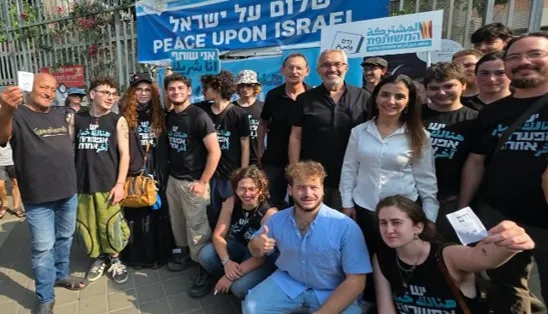
On October 27th, the Arab masses demonstrated an awareness of their power and ability to influence events. What is required today is to preserve and build upon this achievement, and to complete the responsible democratic and national role that was evident in the elections, so that the popular mandate translates into tangible change that protects our society, confronts fascism, and paves the way for equality and peace.