
The following article written by Ahmed Badran was published in Al-Nidaa, publication of the Lebanese Communist Party.
In order to resist fragmentation: The left and the resistance against the "Greater Israel" project
Some, whether in good faith or through miscalculation, attempt to hold the Islamic Resistance responsible for the Israeli aggression against Lebanon and the resulting casualties, displacement, and destruction. It's as if the occupation was merely a "reaction" to a "foreign agenda," and not the most organized colonial project in the region's history. It's as if the successive calamities that befell Palestine, Lebanon, Syria, and Iraq weren't the result of a systematic American-Israeli plan, but rather the work of an axis in which all evil is concentrated. This analysis not only ignores history but also overlooks a fundamental lesson in liberation struggles: the battle for existence precedes the battle for form. If some today reject an alliance with the Islamic Resistance on the grounds of "subservience to Iran," have they forgotten that the Lebanese left itself allied with forces that were described in their time as "subservient to Damascus" or "to Tehran"?
In the 1980s, before Hezbollah fully formed in its current form, the Amal Movement was a key ally of the left in the struggle against the Israeli occupation. Founded under the auspices of Imam Musa al-Sadr, Amal allied itself with the Lebanese Communist Party and other national factions, despite the clear ideological differences between Marxists and the Shiite movement with its religious underpinnings. While it is true that Amal grew closer to Iran after the 1979 revolution, this did not prevent the continuation of military and political coordination, because the enemy was the same: the occupation and its instruments.
The martyred comrade George Hawi, former Secretary-General of the Lebanese Communist Party and one of the most prominent leftist leaders in Lebanese history, did not hesitate to ally his party with the Amal Movement and later with Hezbollah in the fight against the occupation. George Hawi was not a "traitor" to the left; rather, he understood that the struggle for national liberation was the gateway to any genuine project of social change. He himself said: "We are not with Hezbollah because we agree with its vision, but because the common enemy unites us. After liberation, we will have our differences, but today we have no choice but to unite in the confrontation."
Certainly, today's circumstances, realities, developments, and the capabilities of the left are not what they were in the 1980s. However, the position and analysis must be clear and unambiguous to determine the general standing of the left, and the Lebanese Communist Party in particular.
There are other equally significant experiences. The grand alliance led by the martyr Kamal Jumblatt under the name "Lebanese National Movement" included the Lebanese Communist Party, the Communist Action Organization, the Ba'athists, and the Nasserists, alongside Palestinian Islamic factions such as Fatah and other movements. Later, with the outbreak of the First Intifada, the Lebanese left had no qualms about dealing with Hamas as part of a resistance project against the occupation, despite profound ideological differences. The lesson is that the historical left has never been an "offspring" of the existing state, but rather an ally of resistance wherever it exists.
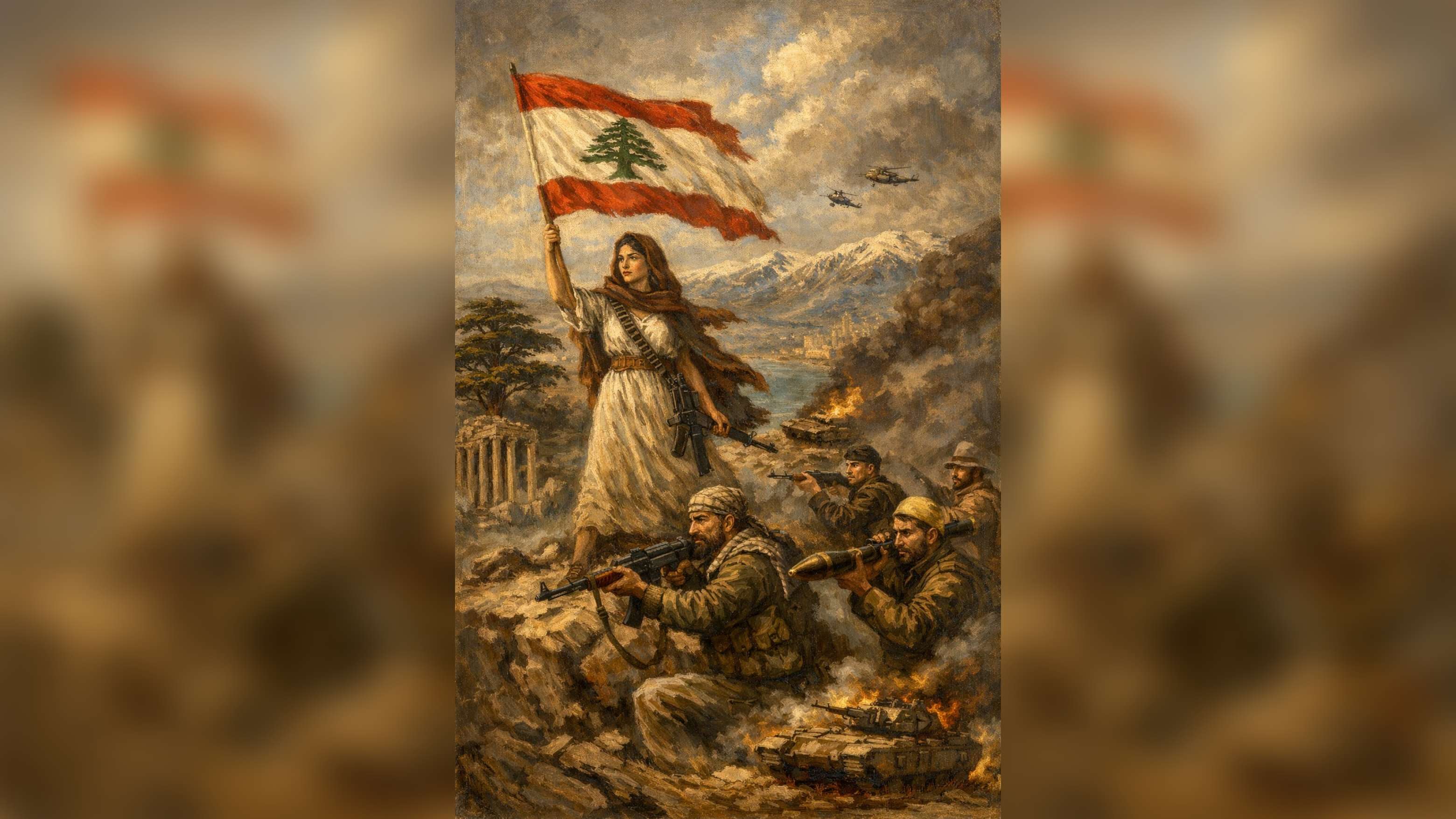
In 1982, with the launch of the "Lebanese National Resistance Front" to confront the Israeli occupation, the Lebanese state was completely paralyzed by the civil war. There was no central authority capable of protecting the borders or making sovereign decisions; the state was internally divided and in crisis. Then came the elected President Bashir Gemayel, backed by Israel, America, and reactionary Arab regimes. His stated goal was to crush the Palestinian resistance and the Lebanese national movement. After his assassination, his brother, Amin Gemayel, did not deviate from this path; rather, he attempted to sign the "May 17, 1983 Agreement" for a separate peace with Israel. This agreement was only thwarted by the blood and sacrifices of the resistance. So, was it reasonable at that time to speak of "completing the building of the state"? Of course not. What we were experiencing was a defense of our very existence, and that is why our slogan was clear: "The land belongs to those who liberate it." This is not a sectarian or revolutionary slogan, but rather a natural historical logic: throughout history, it is the victorious resistance that primarily contributes to rebuilding the state, because a collapsed or complicit state cannot undertake this task alone. Those who liberated the land have the right to build a state worthy of its people.
The national resistance clashed with sectarian leaders who clung to the sectarian power-sharing system backed by America and Israel. When the Taif Agreement came to enshrine this system and legitimize the Syrian occupation, the left was powerless to prevent it because it was exhausted and fragmented. Furthermore, major global shifts occurred, most notably the collapse of the Soviet Union and its devastating repercussions for communist and leftist parties worldwide.
What we are witnessing now is not merely Israeli aggression in response to "resistance missiles." We are facing a major war, intertwined with multiple factors: a struggle over gas and oil in the Eastern Mediterranean, over maritime trade routes (from the route to India to the new Silk Road), and over the redrawing of the Middle East under the banner of "Greater Israel," stretching from the Nile to the Euphrates. In this context, is it reasonable to be preoccupied with internal conflicts instead of addressing those who are demolishing homes over children's heads and plotting the displacement of an entire people?
When these writers lament the "state being replaced by resistance" or the "usurpation of the decision of war and peace," which state are they referring to? A state whose president is elected by an American-Saudi decision? A state whose prime minister is tasked with implementing Israeli dictates under the guise of "reform"? A state that surrendered its borders, its sea, and its resources to the enemy before even defending them? No leftist movement has ever built on such a sectarian state, and we have no future with it.
We must be realistic: our enemies are common (America, Israel, NATO, and the normalization regimes), and our fate is one: either we stand together against the machinery of annihilation, or we are crushed individually. Postponing the dispute over the form of the state and the political system is not a "concession," but a historical necessity and a lesson from the liberation struggle. After defeating the aggression, we will return to the arena of internal democratic struggle.
The past is important, but it is not a prison. The national resistance in 1982 did not fight under ideal conditions; it was besieged from within and without. Today, the resistance forces (Lebanese, Palestinian, Yemeni, and Iraqi) are waging an existential war against a global settler-colonial project. The true left stands with the oppressed and the resistance, not with the "state" that conspires against its own people in the name of "sovereignty." Those who merely lament "foreign agendas" and "the replacement of state authority" while the enemy threatens our very existence are not a liberating left, but a rigid left that betrays its historical mission.
The left's immediate tasks include preparing for the day after, but standing with the resistance today is not enough. The true left prepares for the day after the war, because the internal situation will be far more difficult for the people than the enemy's bullets. The war will not end with just a military battle, but with immense destruction, mass displacement, a shattered economy, and a deep and fierce internal conflict between different political forces, which may threaten the country and its unity even more than the occupation itself.
Therefore, the left in general, and the Lebanese Communist Party in particular, must clearly define its positions on the crucial issues that will impose themselves after the fighting stops:
First: the issue of occupation and borders. Will we be satisfied with a "ceasefire," or will we work to liberate every inch that remains occupied? Will we allow the redrawing of borders under the guise of "permanent demarcation" that enshrines concessions?
Second: the issue of displacement and return. Thousands of families were displaced from the south, the Bekaa Valley, and its suburbs.Who will rebuild it? Who will compensate it? Will we leave this task to the "state" that failed to protect the people before the war, or will we form popular resistance committees for reconstruction and displacement?
Third: The living conditions file. War will exacerbate poverty, unemployment, and hunger. The left is required today, not tomorrow, to present a social emergency program: redistributing aid, breaking monopolies, combating the greed of merchants and importers, and providing medicine and bread for the people, free from sectarian quotas.
Fourth: The issue of weapons, the decision of war and peace, and the regulation of weapons within the state. This is the most dangerous and sensitive. The left cannot simply "postpone the dispute" until after the war, but it also cannot subscribe to the narrative that "the resistance's weapons are the source of all evil." A precise position is required: resisting occupation is a right, but regulating weapons within the state after liberation is a duty. How do we transition from a state of "resistance outside the state" to a "national resistance army"? This is a question we must begin preparing for now, not leave to our opponents.
Fifth: The alternative state project. If the current sectarian state is incapable of protecting the people, the solution is not to abolish the state, but to radically transform it. The left is required to present a project for a "decentralized, democratic, civil state" that protects the poor, opens horizons for development and prosperity, and separates religion from politics. This is a long-term project, but preparations for it begin today.
A left that lacks answers to these issues will be left to the traditional sectarian and political forces to shape the future alone. The result will be either a new civil war or a settlement at the expense of the vulnerable.
This is the true, liberating left: it doesn't wait for the state to save it, but builds its popular power from the ground up to force the state and other forces to change.
In conclusion, defending the land today is defending all that remains of Arab dignity, and it is the only way to build a real state tomorrow. I reiterate the words of our martyred comrade George Hawi, spoken with the sincerity of a leader, not a theorist: "We are not with Hezbollah because we agree with its vision, but because the enemy it faces is a common enemy. After liberation, we will have our differences, but today we have no choice but to unite in the confrontation."