

The following article was published on the website of the Revolutionary Communist Party of France (PCRF).
Seasonal Work in Youth
As summer approaches, seasonal jobs once again take center stage in the bourgeois media. Indeed, every year, the months from June to August become a time for interviews and reports extolling the virtues of seasonal work in tourism, agriculture, or catering, presented as a moment of "training" or "easy money" for our youth. What is the reality? How do working-class youth participate in this type of employment, and does it live up to all the merits praised by the bourgeoisie and its media?
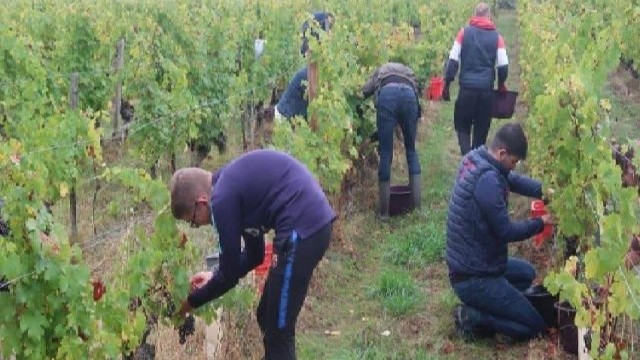
First, it is necessary to distinguish between seasonal employment as such and the seasonal employment contract. Far from being just a small "summer job," seasonal employment covers the reality of an entire category of work essential to society. These jobs involve activities that recur annually at the same period, depending on the seasons—summer and winter alike. This includes, for example, the grape harvest in autumn, jobs in ski resorts in winter, or extra staff in tourism during summer. It may therefore involve natural constraints imposing a seasonal rhythm of work, as in agriculture, or the need for labor power from various sectors of the employer class during specific seasons, as in tourism. The seasonal contract, however, is not mandatory for these jobs; employers may use a standard fixed-term contract (CDD). This contract does not entitle the worker to the precariousness bonus (prime de précarité) and does not allow for reclassification as a permanent contract (CDI). It can be renewed for the following season and includes a potentially longer working time than normal, as well as a distribution of rest days more favorable to the employer (for example, the company is not obliged to grant two consecutive days of rest per week but may separate them within the week).
The necessity for the monopolies and their state to formalize another type of employment contract points to a reality that is glossed over: seasonal work actually constitutes the livelihood of a significant portion of workers, as well as our youth—not a "pastime" for earning a bit of money during the summer.
According to a survey by DARES, a division of the Ministry of Labour that produces analyses, studies, and statistics on employment, over one million people held at least one seasonal contract in France, excluding Mayotte, between 2018 and 2019 (the last year of the most extensive nationwide studies on the subject).
More than a quarter of them work in agriculture, where they represent one-third of the workforce, particularly in fruit harvesting and especially during the grape harvest. Another significant portion is distributed among tourism, hotels, and catering. Ninety percent of seasonal workers are unskilled laborers, with an average age of 34 and a high proportion under 30. On average, a seasonal contract lasts two months, with 55% of these workers supplementing their activity with at least one other paid private-sector job over 12 months, while 45% have no other contract during the year.
According to DARES, 270,000 seasonal workers were employed in the agricultural sector between April 2018 and March 2019, with more intensive hiring in July and August, mainly for vegetable and fruit cultivation, and in September, for the cultivation of fruits, particularly grapes. In the tourism sector, which includes catering and hotels, the proportion of young people is even higher, with an average age of 24 in summer and 27 in winter. In this sector, 77% of employees live year-round on this type of work. What interest would the employer class have in concealing this massive reality? Why is our working-class youth so heavily integrated into it?
Regarding this second question, the answer lies in the importance that seasonal work holds for the employer class. If we have seen the real number of young workers involved, it is because the seasons and the environment continue to influence a large part of social labor. The case of agriculture is the most obvious, the best-known example being the grape harvest. If we take only this sector as an example of the importance of seasonal work, note that alongside thousands of small winegrowers, large vintners and monopolies share the wine estates. Besides the French luxury monopoly LVMH, through its Wines and Spirits division, which owns 27 houses and generated €6,602 million in sales in 2023, the Pinault family, via the luxury monopoly Kering, also owns its wine empire and has joined forces with the Henriot family to pool their respective wine estates within a new entity. Let us also think of the insurance monopoly Axa, which has also invested in wine production, and the Dassault group, through its subsidiary "Dassault Wine Estates," which owns 3 houses and has a strong presence in the sector. If youth are heavily integrated into seasonal work, it is because this sector is not negligible for the monopolies from an economic point of view and requires a labor force that adapts to the seasons, which is particularly the case for students.
If the bourgeoisie nevertheless has an interest in downplaying this importance, or in romanticizing and euphemizing it, it is because of its violence. A violence that is first social, as we saw above regarding seasonal contracts, but also due to low unionization in this sector. The violence of seasonal work also affects the most precarious layers of our class and our youth. We think particularly of the specific situation of immigrant workers: whether they hold a seasonal worker residence permit or are undocumented, the situation is inextricable. The former cannot become French residents, even if their main economic activity is in France for 6 months out of 12. The latter cannot be regularized through work, since employing them as seasonal workers is illegal. The employer class thus deliberately exploits this situation of extreme precariousness, enabled by seasonal work, to massively employ workers who have even fewer legal and social means to defend themselves. As an example of this importance, note that in 2022, the French Directorate General for Foreigners (DGEF) issued 22,000 seasonal work permits to foreigners from outside the European Union.
Faced with this reality, only socialism-communism allows—and has already allowed—a better organization of jobs affected by the seasons, by eliminating capitalist exploitation. The new socialist relations of production in the USSR meant that the working day was divided into work for oneself and work for society—that is, for productive investment and for social and collective needs (health, education, housing, transport, access to culture and leisure, etc.)—and not imposed working time according to the needs of the employer class for its sole interests and private profit. Furthermore, scientific knowledge could develop and serve popular needs, as the example of machine-tractor stations in agriculture demonstrates—an example of a truly rational organization of an entire area of work.
Today, we advocate for professional unionization for youth integrated into this sector, as well as dual professional and student membership for students engaged in seasonal work. We also campaign, among other things, for a real organization of employment and work according to popular needs and the environment, the end of unemployment and precariousness through a fair and equitable distribution of work based on these needs and everyone's capabilities, and a salary commensurate with the work provided—all demands that can only find their full and complete application under a socialist mode of production.