
The following article written by Adile Kaya and entitled "A Kiss of Life for the Economy: “Black Transformation” was published in Ortaklaşa (Collectively), the monthly journal of the Communist Party of Turkey (TKP).
TKP on “Black Transformation” of Turkish economy
After green transformation, digital transformation and technological transformation, “black transformation” has become one of the important elements of the prescription for rescuing Turkish capitalism. As Turkey’s growing role in the international drug trade expands the volume of illicit money flowing into other areas, the struggle for a share of the pie and the associated operations appear likely to continue.
The financial figures cited and the connections uncovered in the operation against the Ahbap Association, in which a number of people, most notably Haluk Levent, were arrested, point to a mechanism far more extensive than the funds collected or Levent’s gambling habits. Such operations, which have increased in recent years, are touching small pieces of a large mechanism promising high returns. Turkish capitalism, whose connections with the world of “dirty money” or the “criminal economy” have moved up a level, has secured a larger share than before of the international “value pool.”
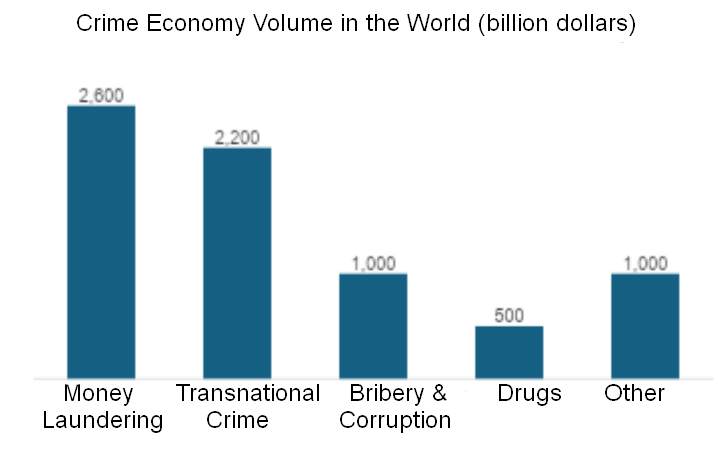
The informal economy, which encompasses a broad range from the informal labor market to various areas of “dirty money” such as drug and arms trafficking, betting and gambling, and crypto activities, is not an “anomaly” of the capitalist system. The areas associated with “dirty money” in particular are indispensable mechanisms for the distribution of value among different sections of capital at both the international and national levels. Leaving aside the grayer dimension involving ordinary economic activities being kept off the books for the purpose of tax evasion, it is estimated that activities including drug, human and arms trafficking, illegal betting and all forms of money laundering exceed $7 trillion globally, amounting to around 6 percent of world GDP.
Looking at the past two centuries, it can be seen that these activities have both diversified and expanded. Developed capitalist countries can be said to possess a greater capacity to conceal, or make less visible, state-politics-capital-mafia connections through more sophisticated mechanisms. However, if Europe’s recent new surge in drug consumption and trafficking is examined more closely, there is a strong possibility that relationships no less significant than those in Turkey would come to light. Reports based on seizures indicate that cocaine shipments have evolved from small packages carried by couriers or concealed among legitimate cargo to the transport of quantities measured in tons, almost in entire containers, to Europe’s major ports. The size of Europe’s cocaine market alone is reported to have exceeded $15 billion.
The likelihood that distribution on such a scale can take place in countries such as the Netherlands, Belgium and Spain, where the most heavily used ports are located, without touching the state, politicians or capitalists is virtually zero. Commercial motives undoubtedly constitute the principal factor behind drug cartels redirecting their routes toward Europe and the Middle East in order to replace the “saturated” U.S. market, where growth has stalled. Yet it is also clear that these activities, ranging from drugs to betting and gambling, simultaneously serve to “narcotize” millions of workers and tighten ideological restraints. There are also additional motivations that go beyond commerce, particularly from the perspective of capital-state mechanisms.
The expansion of the European and Middle Eastern markets is reportedly generating a dramatic increase in profit margins. Cocaine purchased at its source for $2,000–3,000 per kilogram is sold for $30,000–40,000 in the European market and at even higher prices in the Middle Eastern market. These extraordinary margins diversify money-laundering mechanisms and draw capital seeking high returns into the process. It can be assumed that some sections of capital become involved simply in “capital transactions” in pursuit of high returns, while others participate at various levels of the production and distribution chain.
THE “DIRTY MONEY” WAVE IS INHERENT TO TURKISH CAPITALISM
The rapid growth of the European cocaine market, the breaking of the monopoly previously held by Colombian and Mexican cartels, and the entry of new actors from Europe, the Balkans and Turkey have transformed the picture. Both international reports and studies of Turkey’s position in the drug trade indicate that the role of the “Turkish mafia”—partly made up of actors recruited from abroad and partly of established domestic actors—has increased in the European and Middle Eastern trade. They also indicate that actors based in Turkey account for as much as 20 percent of the distribution of Latin American cocaine to the Middle East.
Although cocaine constitutes one of the most striking components of the expansion in the volume of “dirty money” or the “criminal economy,” there has also been significant growth across the entire field, particularly in drugs, betting and gambling. A volume exceeding 5 percent of GDP, or between $60 billion and $75 billion, is being discussed.
What, then, does this volume—or, more broadly, these activities—mean for Turkish capitalism? Is this an economy external to the system, tolerated periodically by the political authorities in response to immediate needs, or a phenomenon arising from the exploitation of legal loopholes by officials inclined to operate outside the law and established rules?
It can be argued that the picture outlined above for cocaine, with some variations, applies to other areas of activity as well. Given such dynamics as the growing resource problem of Turkish capitalism, the high returns required by capital accumulation for further expansion, and ambitions for imperial expansion, it is necessary to speak of a new and powerful wave that is more intrinsic to the system than it has been until now.
The expansion of Turkish capital has reached significant dimensions both quantitatively and qualitatively. If Turkey’s involvement in the Syrian war is taken as a turning point, its appetite for expansion expresses ambitions extending far beyond actual territorial or economic expansion. Developments over the past several years, as well as the NATO Summit held in Ankara in recent weeks, suggest that this appetite also has tangible dimensions, particularly in terms of opportunities for the arms industry.
It is not only the perspective of expansion but the overall development of Turkish capitalism that points to a new phase. Yet none of this “progress” means that the fundamental structural problems of the capitalist economy have diminished. On the contrary, the increasing complexity and the intensification of this wave are aggravating structural problems, above all the problem of access to resources. This is because an “advancing” capitalism results, within relations of dependency, in greater transfers of value to imperialist centers and in more capital being parked abroad or in non-productive sectors.
On the one hand, the increasingly urgent need for resources and, on the other, the growing interaction with the international value pool are stimulating Turkish capitalism’s appetite for claiming a share of the “black economy/criminal economy” in a manner compatible with its position and ambitions within the system. Drugs, arms trafficking and all forms of betting are the most obvious areas that come to mind.
Turkey’s record in each of these areas over the past decade, together with new opportunities emerging internationally, appears to have resulted in significant increases in its share. One of the most striking examples in this regard, as noted above, is Turkey’s emergence as one of the most important actors in the Latin America–Europe–Middle East cocaine trade, beginning at the source itself. Turkey is no longer simply a transit route; the dominance of actors based in Turkey appears to have increased throughout the entire chain, from “production to the end user.”
Naturally, once Turkey becomes involved to such an extent, the “domestic market” also grows enormously. It is estimated that the revenue earned by Turkey-based actors from the cocaine trade alone has risen over ten years from the $500 million–$1 billion range to $5–6 billion.
Operations extending from certain capital groups to Haluk Levent, certain financial institutions that distribute returns far above market norms even though they have not yet been targeted, and various mechanisms that have not been disclosed to the public—all point to the same phenomenon. Even the Haluk Levent operation, which is presumably only a small part of the overall mechanism in terms of both its volume and the relatively palliative nature of the instruments involved, has touched capital groups such as Arca Savunma and Başaranlar that cannot be dismissed as insignificant. This should also be viewed as an indication of the appetite of the capitalist class to skim off a share of this newly expanding pie.
The case of Arca Savunma in particular suggests that a company operating with profitability of around 30 percent, even according to the gross value added figure it reported for the Istanbul Chamber of Industry’s Top 500 Industrial Enterprises list, has sought even higher returns. The desire to obtain more than the value generated through the exploitation of labor and to expand capital accumulation does not disappear.
For Turkish capitalism, rather than an attempt at “cleansing the bowels,” what appears possible is a series of dispersals aimed at consolidating the rapidly growing pie by incorporating those willing to take the risks, while respecting the hierarchy of capital and the existing order.
DRUG LORD IMPORT MECHANISMS: ASSET AMNESTY AND THE SALE OF CITIZENSHIP
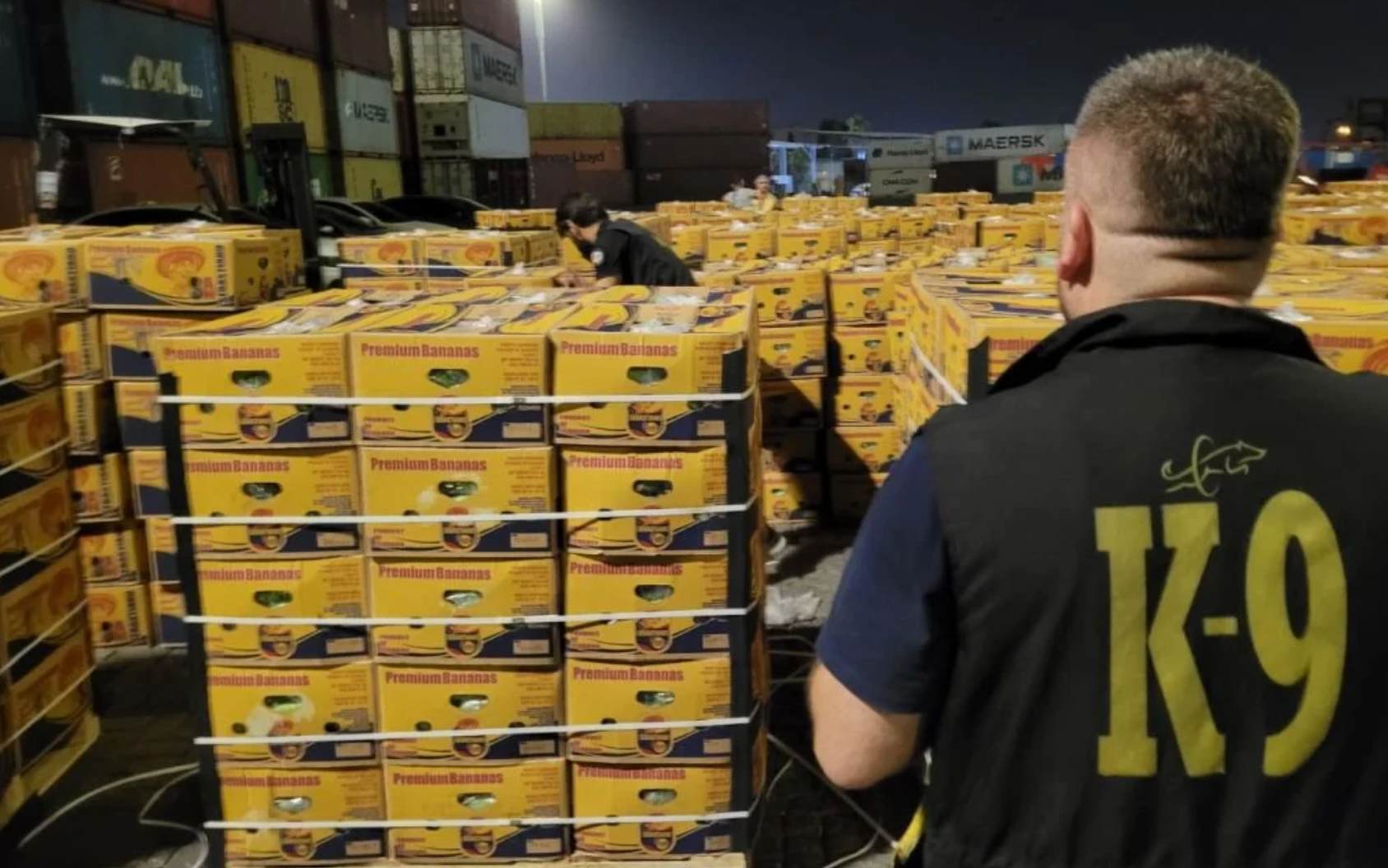
Spain, the Netherlands and Belgium are the principal entry points into Europe. Maritime transportation is one of the most important channels. High-volume ports in Western Europe function as distribution centers. The increases in the quantities of drugs seized at ports such as Antwerp and Mersin are also indicators of the growing volume of drugs being transported.
It can be seen that transportation through couriers in small quantities or small packages concealed within cargo is increasingly being replaced by container shipments reaching quantities measured in thousands of tons.
One of the most important indicators of Turkey’s remarkable growth in this area is the quantity of cocaine seized: compared with the 2010s, the amount of cocaine confiscated in the 2020s has increased nearly tenfold. It is estimated that drug mafias originating in Turkey control as much as 20 percent of the Middle Eastern cocaine market, in addition to their role in the European market. The total size of the traffic passing through Turkey and the domestic market is estimated at between $5 billion and $6 billion.
Among the dynamics behind Turkey’s rapidly growing share of the cocaine trade, granting citizenship to foreigners in exchange for purchasing real estate occupies an important place. Major drug lords from Europe and the Balkans are reported to have obtained Turkish citizenship and to have been able to conduct their operations with ease.
Another important regulation that overlaps with and reinforces this system is the frequently discussed Asset Amnesty (Varlık Barışı) scheme. Declaring income and wealth of uncertain origin and legalizing them by paying relatively low taxes enables the laundering of all kinds of illicit income, particularly drug proceeds.
Naturally, the relationships between the political authorities and allied parties, figures at various levels of the state, and the mafia must also be placed at the center of the new mechanisms established in parallel with the expansion of this growing pie.