
The following article written by Gülay Dinçel and entitled "The Fund Scandal: Surplus-value extraction isn’t
enough for the system of plunder" was published in the October issue of Voice of TKP, the monthly international publication of the Communist Party of Turkey.
TKP on fund scandal in Turkey
The 2020-2025 period in Turkey was one of rapid expansion in capital accumulation. The capitalist class, having made good use of pandemic conditions, expanded its opportunities for exploitation enormously. Manufacturing output in 2025 was more than a third higher than before the pandemic. The expansion in manufacturing output, driven by new opportunities in foreign markets as well as the domestic market, led to a significant rise in the rate of surplus value. Before 2025, the surplus value appropriated in manufacturing industry stood at around 50 billion dollars a year, whereas over 2020-2025 this figure approached 100 billion dollars. While the number of workers rose by 20 percent, the pool of surplus value expanded by more than 100 percent. As the labor force grew across the economy, particularly in manufacturing, real wages fell. Both global developments and the additional opportunism of the Turkish bourgeoisie meant that high price volatility and high inflation created additional mechanisms for reinforcing exploitation. The rapid depreciation of the lira, high inflation, and high interest rates deepened impoverishment for the working masses, while at the same time increasing their search for ways to protect their savings, however small.
This picture opened up room for new moves centered on capital markets, above all the stock exchange. One dimension of this is the accelerating race among different fractions of capital to claim a share of the expanded pool of surplus value, and the design of new mechanisms for that purpose. But these mechanisms are also built to keep value flowing from millions of workers who are trying to protect their small savings, or who are borrowing in the hope of high returns to ease their poverty. The political authority and the relevant regulatory bodies supported the creation of these new mechanisms of plunder. Setting aside the new arrangements in the capital markets, the same period also saw a rise in interest in all kinds of betting, gambling and similar activities in Turkey.
What is the fund scandal?
The fund scandal, which emerged at the end of September, became clear when the Capital Markets Board of Turkey (SPK) decided to liquidate 131 investment funds controlled by seven portfolio management companies. It was announced that the value of these funds exceeded 20 billion dollars and that they affected 450,000 investors. Most of the frozen funds consist of hedge funds, while 14 are money market funds or participation money market funds.
The mechanism that enabled the funds to gain value rapidly and become attractive was stock exchange-based. The value of a proportion of the dozens of companies that had undergone initial public offerings in a huge craze was inflated beyond their true worth, and the funds were linked to these shares. Stocks with low liquidity and low trading volume were overvalued by creating artificial positions. Some of the funds at the center of the crisis, in particular, were limited funds made up of a small number of investors between 2021 and 2025. These funds saw enormous increases during this period. In 2025, small investors in particular showed great interest in the funds, which were opened to other investors on the strength of this high performance. Entry into funds whose value had risen as much as tenfold was encouraged on various platforms. After the SPK defined stricter rules in August 2026, difficulties arose in providing the cash needed to pay investors who wanted their money back. Finally, in September, the funds, which had become unable to pay their debts, were frozen. While small investors were being told in August and September that the funds were very safe, it was established that people who knew the mechanism was unsustainable, who had received inside information, and a significant share of whom had close ties to the government, exited the funds with gains of more than tenfold. One of the most striking examples was Fatma Betül Sayan Kaya, a former Minister of Family and Social Policies and also a Deputy Chair of the AKP. It was revealed that Kaya and her husband invested 3.2 million dollars and made 43.4 million dollars.
Considering the peak value the funds reached with overvalued returns, the size of the financial bubble that has burst exceeds 20 billion dollars. It is claimed that, with systemic effects, this figure could rise to four or five times as much. Given indicators such as Turkey’s GDP (1.6 trillion dollars), the total volume of the financial system and the size of the capital markets, it is inevitable for this to impact the economy. However, considering the principal invested in the funds (2-3 billion dollars), the number of investors and the investor profile, the overall impact on the economy is expected to be containable. There are also assessments that the impact on international financial monopolies and major capital groups of Turkish capitalist class remains very limited, and that the crisis, which could be called "home-made," is an intervention aimed at the AKP.
While the owners of the fund management companies were in close relationships with the AKP government, the regulatory bodies left significant gaps and, in places, turned a blind eye to irregularities. It also emerged that members of the government themselves, above all former ministers and figures in the AKP's top leadership, made substantial gains from the funds. It is clear that this picture is linked to the AKP government's comfort in pushing such mechanisms to limits that are hard to tolerate even under capitalism, and to the fact that significant rent mechanisms have been established in various areas. However, the fact that a risk which everyone, including pro-establishment professionals, had seen and warned about for about a year has materialized in this way is also closely tied to the disarray of the AKP government.
Is the scandal ordinary?
It can be said that the already evident speculative character of the capital markets, above all the stock exchange, was pushed to the limit in a high-volume swindle carried out on a narrow scale, without spreading to a broad base. For in the same period, a major stock market heist also took place, with the permission and the blind eye of the political authority and the bureaucracy. Through the new IPOs mentioned above, millions of small investors (nearly 6 million) were drawn into the stock exchange, and their savings were transferred to the capitalist class. But because it unfolded across a much broader base and over a longer period, it drew less attention and gave rise to fewer complaints. It was normalized within the stock market "logic."
Similar scandals are taking place in capitalist countries at every level of development, both historically and today. Capitalism is a system of plunder, and with capital markets designed precisely for this purpose now so highly developed, it cannot avoid crises of this kind. On the contrary, newer and more creative methods keep being found. That such a scandal has surfaced in Turkish capitalism, where far more sophisticated and well-concealed mechanisms exist across the financial system as a whole, is ordinary when considered in terms of the tendencies of the capitalist order. But it is not ordinary when one considers the structure of Turkish capitalism and the quantitative and qualitative level of development of its capital markets. In Turkey, the establishment have long been keen on “developing and deepening the capital markets”. In this way, the AKP government would be able to both provide new opportunities for the capitalist class and create new rent mechanisms for its own circle. However, despite a history spanning over 40 years, capital markets in Turkey remain shallow and constitute a significant barrier to the realisation of the ambition mentioned above. The financial sector is dominated by the banking sector, and banking industry also have a strong influence over the capital markets. The capital hierarcy taking into account the structure of Turkey’s capitalist class and the inclusion of international capital, is a significant barrier to design the sort of sophisticated mechanisms—of the kind upon which the fund scandal was built. Indeed, it appears that the mechanism at the heart of the fund scandal was itself based on very flimsy foundations. That it was not defused earlier and more quietly appears to be largely related to tensions within the establishment in Turkey.
Capital markets are shallow; banks dominate the financial system
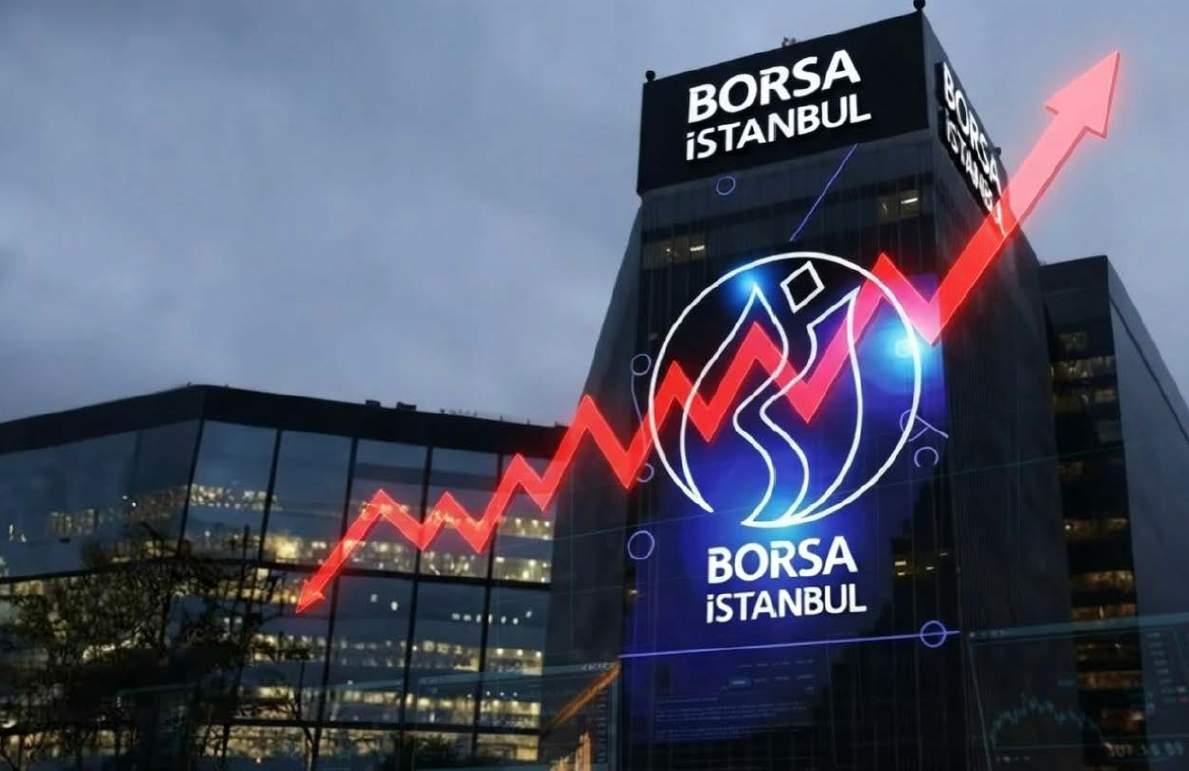
In Turkey, the financial system is controlled by the banking sector. Despite the inflated growth in Borsa Istanbul (stock exchange) and portfolio investments in recent years, the share of the capital markets in both the financial system and GDP remains relatively low. If government bonds and corporate bond issuances are set aside (technically regarded as capital market instruments, but under the control of the state, the banks and large capital groups), the share of instruments such as equity markets and investment funds in the total financial system is limited, despite the stimulated growth of recent years. The bank-dominated structure of the financial system is related to the way Turkish capitalism is integrated with international capital, and to the structure and preferences of the capitalist class.
While the share of the world's ten largest stock exchanges in GDP exceeds 100 percent, for Turkey this ratio was around 25 percent in 2025. In the US, Nasdaq's market capitalization is 122 percent of US GDP, while the same ratio for the New York Stock Exchange is around 102 percent. For Euronext, which covers major European economies, it exceeds 140 percent. Likewise, the number of listed companies on the ten largest exchanges ranges between 2,000 and 6,000, whereas in Turkey this number stood at 569 at the end of 2025, despite the IPO frenzy of the last five years. The picture is weaker still for investment funds. At the end of 2025, the securities investment portfolio in Turkey was 11 percent of GDP. The same ratio is 145.5 percent for the US and 94.8 percent for France.