
The following article entitled "'Unlimited War' and the Dangerous Future of Iran and the Middle East" has been published in People's Letter of TUDEH Party of Iran.
TUDEH article on "unlimited war"
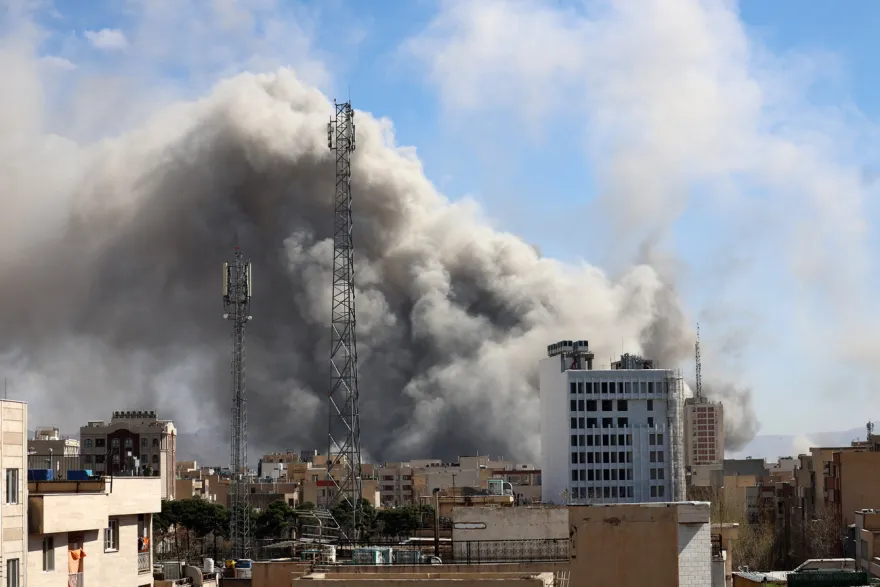
The fire of the devastating war that began with the third aggression of American imperialism against our homeland has caused severe damage to the country in the past thirteen days, and the continuation of this trend can undoubtedly pose serious risks to the future and national sovereignty of Iran. Although, for unknown reasons, American attacks on Iran have stopped since Saturday.
Hossein Kermanpour, head of the Ministry of Health's Information Center, announced: "Since the beginning of the US airstrikes, from July 26 to 9 am on August 1, 629 people have been injured and 55 have been martyred. Among the injured are 46 women and 24 children and adolescents under the age of 18, and among the martyrs are 6 women and 3 children and adolescents under the age of 18."
In the latest round of US aggression against Iran, several cities including Ahvaz, Bandar Abbas, Andimeshk, Omidieh, and Nain were heavily attacked by US military forces. The Iranian military announced that it had targeted several US military bases and facilities in Bahrain, Kuwait, and Jordan with missiles and drones in response to the latest US attacks.
The barrage of missiles and heavy air strikes is causing serious damage to the country’s economic infrastructure, which will require years of work and massive investment to rebuild. The war is also having a more devastating impact on the lives of tens of millions of Iranians, who are without electricity and water and are struggling to make ends meet. While reports of mediators’ proposals for a ten-day ceasefire have been circulating in the media, Trump said on Thursday, August 2, that “Iran has not been hit hard enough” and that he is close to deciding on a “very large-scale attack” on Iran. UN Secretary-General Antonio Guterres warned at a Security Council meeting that the region has reached an “unimaginable precipice” and is dangerous, and that the current military conflict is further obscuring the political goals of the war.
Classic wars often begin when they have clearly stated political goals, in addition to economic benefits for the military-industrial complex, and usually end when one side achieves all or a significant part of those goals or considers continuing the war futile and unprofitable. But what is happening today between Iran and the United States and Israel no longer resembles classic wars. This war is more an example of “unlimited” and multilateral warfare that blurs the lines between the battlefield, economics, politics, and security.
Such a large-scale war is no longer just a battle of missiles and planes. Economic sanctions, intelligence operations, cyberattacks, psychological warfare, targeted assassinations, infrastructure destruction, and diplomatic pressure all become unified tools of warfare. And unlike historical wars hundreds of years ago, the goal of today’s wars is not necessarily the capture of territory and resources, but the gradual erosion of the ability of governments to govern. What we are witnessing in Iran today largely fits this pattern.
Of course, it should be emphasized that the water crisis, electricity shortages, the deterioration of energy infrastructure, the decline in investment, the widespread migration of skilled workers, and economic pressures in Iran are not just the result of the recent war. Many of these problems began years ago. But the war, like a powerful accelerator, has made all these accumulated shortcomings and weaknesses more obvious and widespread. A society that was already struggling with livelihood problems must now pay the costs of an “unlimited” war and security confrontation. Abdolnaser Hemmati, Governor of the Central Bank, said at the “Iran Economic Outlook Conference 2020”: “The country’s real per capita income, based on constant prices for 2021, has decreased from about 141 million tomans in 2021 to about 75 million tomans in 2024, which is almost equivalent to halving real per capita income over 13 years.” This comes a month after Seyyed Mohammad Bathaei, Deputy Minister of Interior and Head of the Social Affairs Organization, announced that "60%" of Iranian citizens could not "bear" more economic pressure.
Meanwhile, signs of a rift within the power structure have become more apparent than ever. Statements by some senior officials in the Islamic Republic in recent weeks, particularly Araqchi’s recent interview with Javad Mogoui on the “War Story” program, and his reference to the existence of “security holes” in the country’s intelligence, security, and government agencies that played a major role in the assassination of the Islamic Republic’s political and military leaders, and that, according to him, most likely still exist, have raised many questions about the security situation in the Islamic Republic. Araqchi’s detailed interview and other material published in cyberspace, including claims by Javad Oji, Raisi’s oil minister, that Mossad contacted him before the explosion of Iran’s gas pipelines, indicate the widespread and deep influence of the Israeli and American security agencies in the highest decision-making ranks of the Islamic Republic. The most important point here is not the exact content of these statements and claims, but rather the fact that they were published, as it shows that the past consensus in the ruling apparatus regarding crisis management, threat assessment, and future direction is no longer as strong as it once was. In the continuation of the clashes between different factions of the regime over the principle of negotiating with the United States or adopting a policy of “war, war, until victory,” and the widespread propaganda attacks against the negotiating team with the United States, the newspaper Entikhab reported that during a Sunday meeting of the cabinet, after Peyman Jebali, the head of the Iranian Broadcasting System, objected to a report by one of the key government ministers on the process of negotiations, the president sharply reprimanded him. It is worth noting that the "Government Information Council" issued a statement regarding the censorship of the president's speeches on the Iranian Broadcasting Corporation, writing, among other things: "The Iranian Broadcasting Corporation's action in deleting part of the speech of the President of the Islamic Republic of Iran at the ceremony of the National Day of Industry and Mining regarding the permission of the martyred leader of the Islamic Revolution regarding negotiations, a few days after broadcasting a partial interview with the Speaker of the Islamic Consultative Assembly (although the next day it broadcast the interview in full), and the censorship of part of the statements of the head of the judiciary in support of the president, are examples of the unusual actions of this organization [the Iranian Broadcasting Corporation] regarding the heads of the forces."
It is also important to note that the head of the Islamic Republic of Iran Radio and Television is appointed by the regime’s “leader.” If, under the current circumstances, according to the claims of the government and medical experts, all of the regime’s ruling body are “in unrivaled unity” with each other and running the country’s affairs under the supervision of their leader, then why is the “leader” not taking action to remove the head of the IRIB, who, according to government spokesmen, is “sowing seeds of discord”?
History has shown that many governments are eroded not by a major military defeat but by an accumulation of small but persistent crises. When external pressure is combined with domestic discontent, economic problems, and political disagreements, decision-making capacity gradually diminishes.
Since the beginning of the aggression of American imperialism and the criminal Israeli government against Iran, the Tudeh Party of Iran has always emphasized the principle that the continuation of the devastating war imposed on Iran only serves the interests of imperialism and its allies in the region and the arms monopolies in the world, whose desire is to further destroy Iran and impose complete imperialist domination and leadership in the region.
The drumbeat of war, along with exaggerated claims about the Islamic Republic’s military and defensive capabilities and attacks on advocates of negotiations, is undoubtedly the will of the imperialist media and the propaganda agents of the genocidal and criminal Netanyahu government, which call for “unlimited war” until the complete destruction of Iran. One of the most worrying issues in the current situation is the lack of a clear vision for ending the current war crisis. Neither the United States has provided a clear definition of the goals of continuing the war, nor has Iran painted a realistic picture of the conditions for ending this confrontation. As a result, there is a risk that the region will enter a period of permanent tension; a situation in which neither peace is established nor war ends, and in the meantime, huge resources and national wealth are wasted and the lives of millions of people are ruined, especially in dictatorial governments such as the Iranian government. This situation is not only dangerous for Iran, but also pushes the entire West Asian region into a new round of insecurity and endless economic and political crises. Any military attack could shake up energy markets; any intelligence operation could lead to a diplomatic crisis; and any miscalculation could increase the likelihood of a wider conflict. Perhaps the most important question today is not which side will win this war. The more fundamental question is which country will be able to withstand the pressures of unlimited and attritional war for a long time without its economic, social, and political foundations collapsing.
Perhaps the great mistake of many analysts is that they still measure war by 20th-century standards. In today’s Middle East, war is no longer an event that begins and ends one day, but rather an ongoing process that affects politics, the economy, security, and the daily lives of society. It is on this basis that we say that the main question is no longer which side will win, but which country and society can withstand such attrition without collapsing.
The Tudeh Party of Iran believes that the current situation has created very dangerous conditions for the future of Iran that could seriously endanger the national sovereignty and territorial integrity of the country. Establishing a nationwide movement for peace and confronting the aggressive policies of US imperialism and the criminal Israeli regime and the forces within the Islamic Republic that want to continue the war is an urgent task. The Tudeh Party and other progressive and freedom-loving forces of the country can and must play an active role in this work. In recent days, the media reported that more than a thousand political activists, civil and social activists, cultural and academic figures, and journalists, by issuing a statement titled “No to War; Yes to Peace, Negotiation, and National Interests,” correctly defended the necessity of continuing negotiations and diplomacy and reviving the existing memorandum of understanding between the United States and Iran. Efforts must be made to create a nationwide movement for peace in the country and around the world to increase pressure on the warmongers.