

The following article, written by Christa Hourani and entitled "Attack of the Car Bosses" was published in Unsere Zeit, the organ of the German Communist Party (DKP). It assesses what the Mercedes management wants to do on workers.
German Communist Party on "car bosses' attack"
No sooner had the IG Metall executive board and the bargaining committees decided on 24-hour strikes in the current round of wage negotiations than capital launched further attacks on the workforce just a few hours later. Mercedes bosses now want to halt all investments in Germany, in addition to demanding five hours of unpaid overtime, and are threatening plant closures and the relocation of future model production abroad. In doing so, they are stoking the fears of the workers and their families and aiming to break the strikes. It's a transparent maneuver to weaken the other side in the wage dispute.
It is claimed that Mercedes must already make decisions about the production sites for future generations of vehicles. The lead times allow for no delay. This time pressure is also clearly directed against the strike. The board's demand to reduce labor costs by 20 percent naturally entails a massive wage cut. Regarding the "productivity offensive" demanded by Mercedes, no "solution corridor" has yet emerged in the cost-cutting negotiations. The scenarios discussed so far are far from sufficient, according to the board. They are increasing the pressure on these talks and intend to extort concessions and compromises.
Chief Financial Officer Harald Wilhelm praised the 70 percent lower labor costs in Hungary and emphasized that the company intends to double the proportion of its European low-cost production sites within the next few years. Following a massive expansion and the opening of a second large factory this summer, the plant in Kecskemét, Hungary, is already Mercedes-Benz's largest company-owned car factory worldwide, surpassing the plant in Sindelfingen. Its annual capacity is 400,000 vehicles.
The severance packages were also relaunched at the end of September. More employees are to be forced out of the company. A "turbo boost" in the first three months is intended to make it more attractive to colleagues. Several thousand employees already left with severance packages last year. Restrictions on working from home are intended to encourage further "voluntary" departures. This will particularly affect colleagues who provide childcare or eldercare, or who have moved to more distant regions with affordable housing.
The bosses' threats are even more aggressive than in the summer. As early as the beginning of July, tens of thousands of employees protested against the attacks on the 35-hour week. This would mean a 15 percent reduction in pay, and the five-hour extension of working hours would also cost thousands of jobs. A nationwide day of action by the automotive industry followed in September. Works councils emphasize that the employees are not to blame for the crisis and therefore should not be burdened with its consequences.
So far, the board's massive attempts at blackmail have not yielded any breakthrough. But the attacks continue. The management is trying to achieve successes on both the operational and collective bargaining fronts. Resistance has not been as necessary as it is now for a long time. Above all, resistance must be organized beyond the boundaries of the company. The all-day strikes must now be used for this purpose. If the capitalists are no longer capable of properly managing the companies, IG Metall should revert to Article 2, Paragraph 4 of its statutes. This provides for the transfer of key industries and other market- and economy-dominating companies into public ownership.
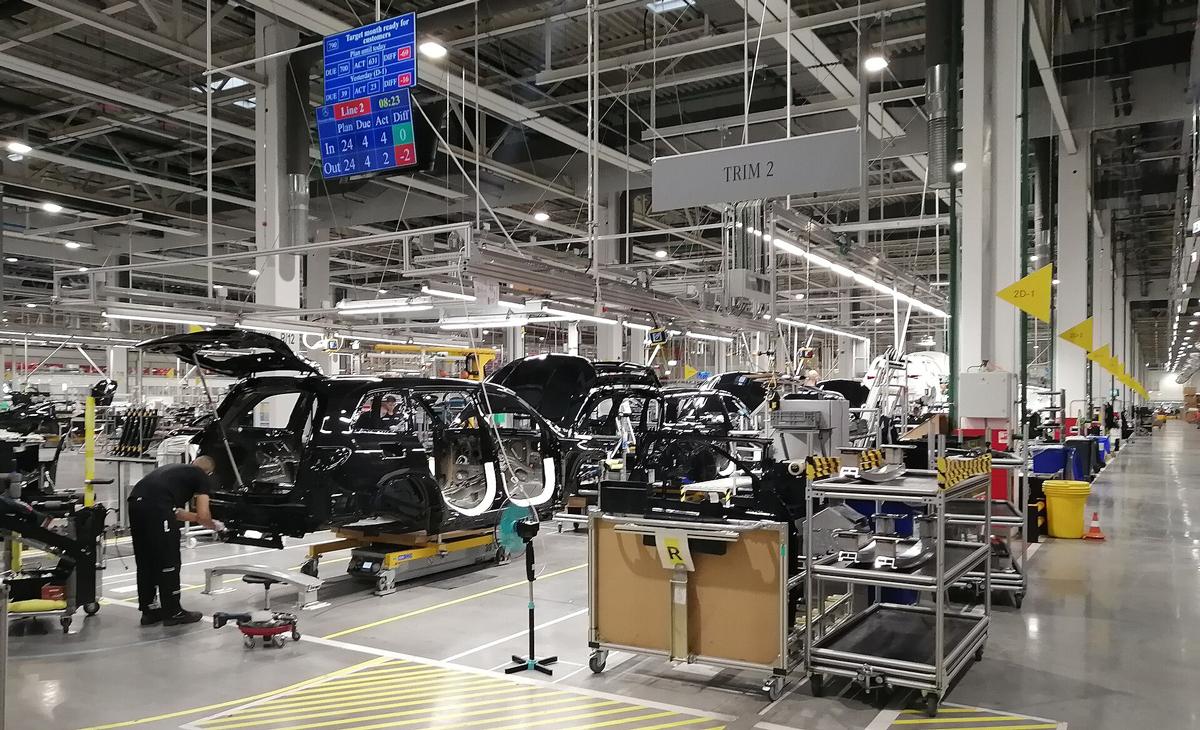
(Photo: Dryuncher / Wikimedia / CC BY-SA 4.0 / Edited by: UZ)