
The Communist Party of Mexico (PCM) has declared its full solidarity with the struggle of healthcare workers, denouncing their deteriorating working conditions, inadequate wages and the broader assault on labour and pension rights.
Communist Party of Mexico rallies with healthcare workers
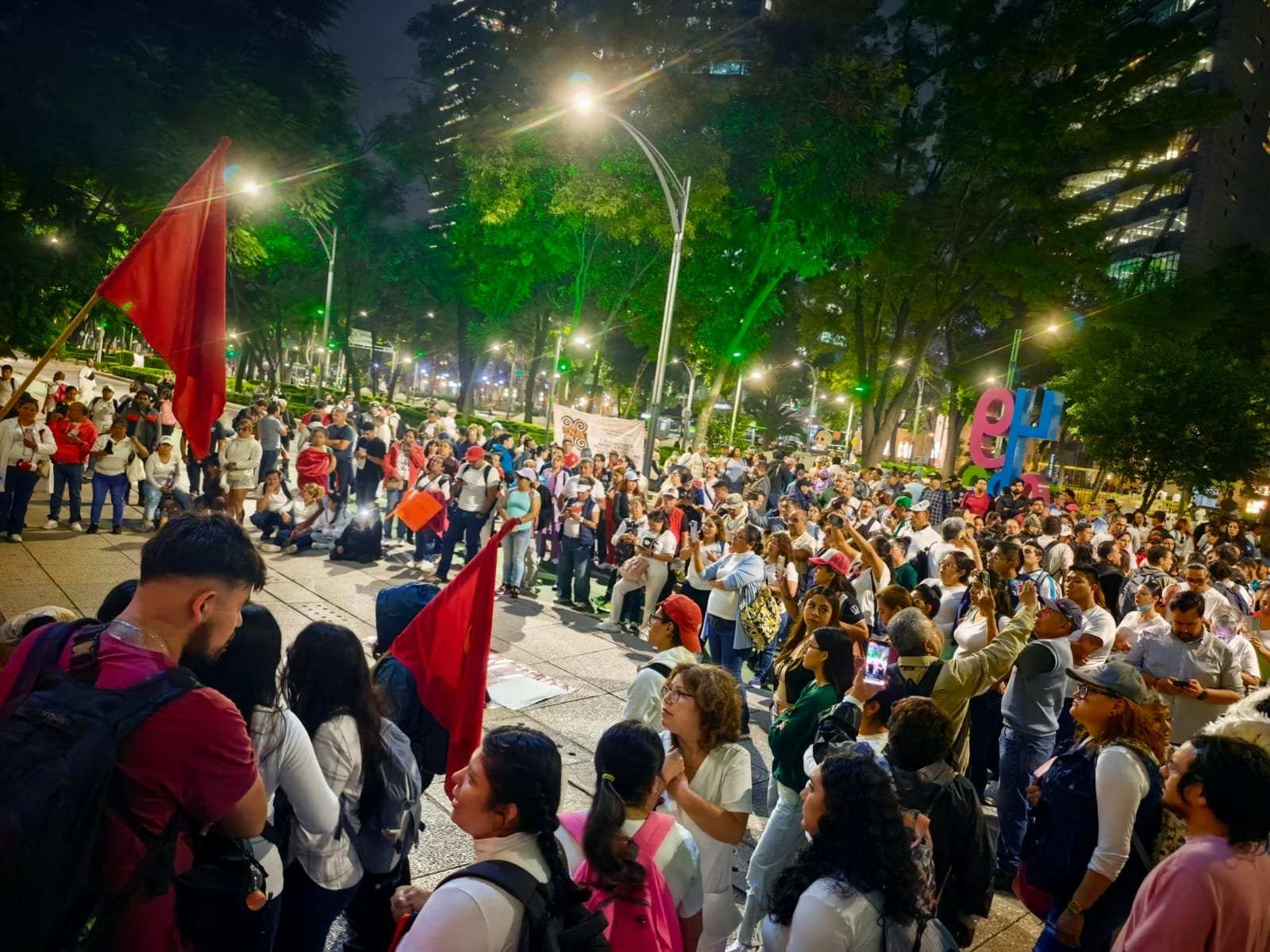
The Communist Party of Mexico joined healthcare workers and their supporters in a march through Mexico City on October 13, demanding higher wages, adequate medical supplies, improved working conditions and secure pensions. In a statement published in El Machete, titled “Solidarity with Health Workers,” the party called on workers across Mexico to support the mobilization of medical personnel and to turn their demands into a common struggle of the working class.
The statement comes amid protests by workers of the Mexican Social Security Institute (IMSS), who are demanding better wages, adequate medical supplies, improved staffing levels, the restoration of pension rights and an end to what protesters regard as the failure of their union leadership to defend their interests.
PCM points out that these grievances cannot be separated from the wider crisis confronting Mexico’s working people. The party states that the conditions faced by healthcare personnel are not simply the result of isolated administrative shortcomings, but part of a longer trajectory of policies that have placed mounting pressure on workers while undermining their economic security and their ability to defend their rights.
During the rally in Mexico City on 14 October Miguel Uribe, member of the Political Bureau of PCM took the floor and saluted the workers.
Healthcare Workers Reject Inadequate Wages and Deteriorating Conditions
The protests have brought renewed attention to the gap between the demands placed on healthcare personnel and the wages, staffing and material resources available to them.
Workers have challenged a negotiated compensation package providing for a 2.9% increase in base wages and a 3.9% increase in benefits, arguing that it fails to address their economic needs. Protesters have demanded a direct salary increase of at least 10%, alongside improvements in working conditions and the availability of medicines and medical equipment.
Their grievances extend beyond pay. Healthcare personnel have denounced excessive workloads, staffing shortages, deteriorating facilities and difficulties obtaining the materials required to provide adequate care. For workers responsible for treating patients under increasingly difficult conditions, the issue is not merely the value of a salary adjustment, but whether they can perform their jobs with the resources, security and dignity they deserve.
The dispute has also exposed the distance between official assurances and workers’ experiences. While the IMSS has defended the negotiated compensation package and maintained that healthcare services continue to operate, protesters insist that the fundamental problems remain unresolved.
A Struggle Against Union Bureaucracy and the Denial of Workers’ Rights
The mobilization has also challenged the leadership of the National Union of Social Security Workers (SNTSS). Protesters have demanded the resignation of its general secretary, Rafael Olivos Hernández, calling out the leadership for failing to represent the interests of ordinary workers in negotiations with the authorities.
PCM's call for solidarity places the struggle within a broader defence of independent working-class organization. It states that workers cannot rely exclusively on negotiations conducted by leaders who do not adequately represent their demands. Their strength lies in collective organization, direct participation and the capacity to mobilize together.
Pension Rights and the Legacy of Neoliberal Reforms
PCM connects the healthcare workers’ mobilization to the struggles of teachers and other public-sector workers over pensions and social security.
The statement recalls the mobilizations of the National Coordinator of Education Workers (CNTE), which has opposed the 2007 ISSSTE pension law and the individual-account retirement system administered through Afores. These institutions have long been at the centre of disputes over retirement security, the adequacy of pensions and the consequences of reforms that shift more responsibility for retirement income onto individual workers.
Healthcare workers and retirees have raised similar demands, including the restoration of the previous pension regime and the elimination of Afores. PCM points out that these demands as part of the same struggle against policies that, in its assessment, have weakened social protections and shifted the burden of economic insecurity onto working people.
PCM frames solidarity with healthcare workers as a defence of the broader public interest. The struggle for adequate wages and staffing is also a struggle for the conditions necessary to provide medical care to the population. Healthcare personnel are not external to that system; they are the people whose labour keeps it functioning. Their working conditions cannot be dismissed as a secondary concern while the quality and accessibility of public healthcare are debated.
Communists Call for Working-Class Solidarity
PCM urges workers to stand with healthcare personnel and stresses the importance of solidarity across sectors, particularly with teachers and other groups engaged in their own struggles over wages, pensions and labour rights.
The party rejects the isolation of individual disputes and argues for a common response to conditions that affect workers throughout society. A struggle confined to one workplace can be contained; a movement uniting workers across professions has a greater capacity to challenge the policies and institutions responsible for their grievances.
The party called for collective action, stressing that defending healthcare workers is inseparable from defending public healthcare and the rights of the entire working class.