

The South African Communist Party (SACP) intensified its campaign for the 4 November local government elections during the final days of October, combining door-to-door visits, direct engagement with communities and victory rallies in the Western Cape and other provinces.
SACP intensifies door-to-door campaign and holds victory rallies ahead of 4 November elections
Senior party leaders joined provincial structures and the SACP’s Red Brigades on the campaign trail, urging voters to support the party’s candidates in its first local government election campaign contested independently under its own name since the democratic transition of 1994.
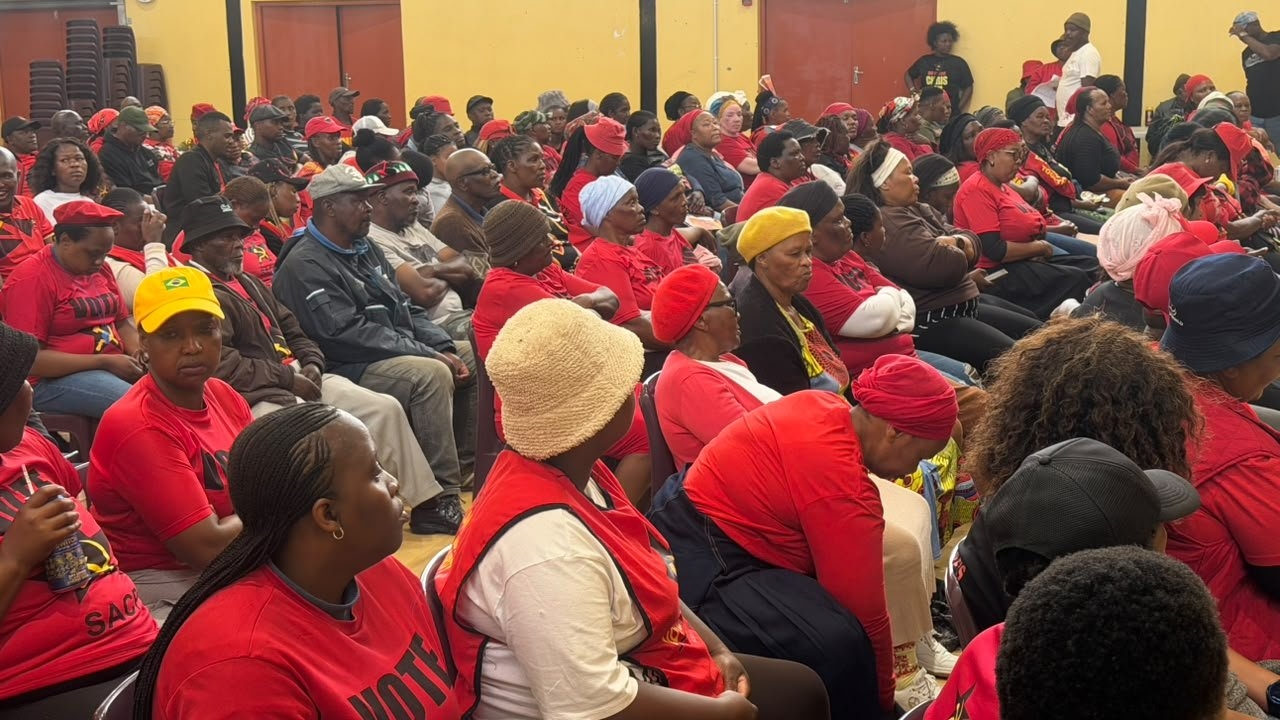
In Cape Town, National Treasurer Joyce Moloi-Moropa led a door-to-door campaign together with the Western Cape provincial leadership and the Red Brigades. The visits culminated in an SACP victory rally in the Brian Bunting District, where Moloi-Moropa delivered the keynote address. Provincial Secretary Benson Ngqentsu welcomed comrades to the rally and addressed party supporters during the campaign.
The campaign also reached communities in Saldanha. Moloi-Moropa and the Red Brigades conducted door-to-door visits in the area, meeting residents and greeting SACP candidates as they engaged with the community. In Ward 12, Laingville, Moloi-Moropa and Ngqentsu addressed Red Brigades members on the campaign trail. The party also reported campaign activity in Ward 1 of Saldanha, where Moloi-Moropa led Red Brigade members in community engagement.
These activities formed part of the Western Cape campaign programme announced by the provincial leadership in the preceding days. The party had planned a series of victory rallies and Red October campaign launches in the province, with activities organised jointly with the Congress of South African Trade Unions (COSATU).
The SACP also reported a “Siyangena Rally” on 30 October, led by Central Committee member Mike Shingange. Meanwhile, the party announced that General Secretary Solly Mapaila would continue campaigning in Rustenburg, with a visit scheduled for the following day.
The final mobilisation followed the party’s main Red October rally, held on 25 October in Thulamahashe, Bushbuckridge, Mpumalanga. Addressing the gathering, Mapaila called for the building of working-class power in communities, workplaces and local government. He urged supporters to intensify the campaign and make the 4 November elections an opportunity to strengthen the political representation of working people.
The SACP is campaigning under the manifesto slogan “Build People’s Power Where We Live: For the Right to Work, Water, Electricity, Roads and Safety for All.” Its programme focuses on restoring reliable municipal services, rebuilding public technical capacity, bringing outsourced essential services back under public provision, creating decent work and supporting cooperatives and local production. It also calls for affordable water and electricity, better-maintained roads, social and affordable housing, improved public transport, food security and stronger community participation in municipal decisions.
The party presents its independent electoral campaign as an effort to give the working class its own political voice and candidates. Its manifesto argues that electoral participation must be accompanied by organised communities capable of holding councillors accountable. The SACP has pledged to introduce a deployment and accountability framework placing service to communities at the centre of councillors’ responsibilities.
As polling day approaches, the SACP is continuing to mobilise through its provincial structures, candidates and Red Brigades. The door-to-door campaign and local victory rallies demonstrate the party’s emphasis on direct contact with voters and community-level organisation. The SACP has presented the 4 November elections not simply as a contest for council seats, but as part of a wider effort to build independent working-class organisation and advance its demands for public services, decent work and greater democratic control over local resources.