
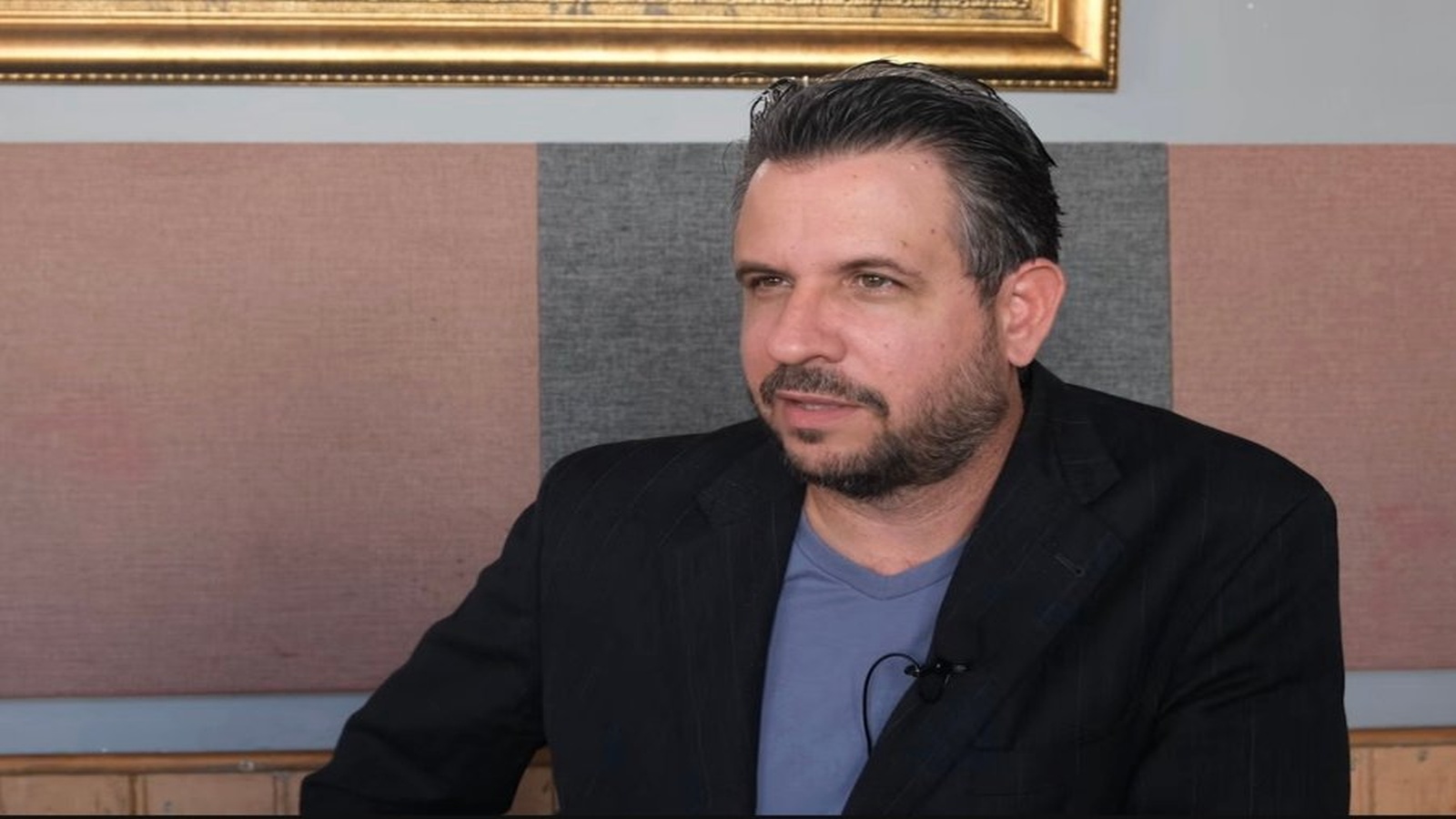
Elías Ramírez Cañedo, a historian, the Deputy Head of the department of ideological work under the Central Committee of the Communist Party of Cuba and a member of the National Assembly of People’s Power of Cuba, was in İstanbul for the 24th IMCWP Working Group meeting. He gave an interview to soL TV, the YouTube channel of the news portal of the Communist Party of Turkey. We are sharing the full text of the interview with ICP readers.
Cañedo: Values of Cuban people cannot be blockaded
It is a great honor for me to be here in Istanbul, Türkiye. I also felt honored to have the opportunity to take part in the wonderful solidarity event held yesterday together with all the friends and comrades who stand in solidarity with Cuba.
Yesterday, April 19, was a very special day for Cubans. It marked the 65th anniversary of the victory at the Bay of Pigs.
It was the first defeat of imperialism in the Americas. So, to be together on such a historic occasion with representatives of the Turkish people expressing their solidarity with Cuba is truly a great honor and responsibility for us. Moreover, we were able to do this in the 100th anniversary year of the birth of our Commander-in-Chief.
Fidel was also on the very front lines of the battle at the Bay of Pigs. Today, Cuba is once again facing imperialism, and we are going through a very complex and difficult period, in which aggressive rhetoric against our country has been repeatedly voiced by various U.S. officials, with even military threats being made. And of course, there has also been a clear intensification of the blockade against Cuba. The blockade has been in place for more than 60 years—indeed, for more than 65 years—but I believe it is important to make one thing clear: the period we are going through now represents a new stage. Because never before in the history of the blockade had such a severe policy been implemented, including during the first Trump administration in the pandemic period.
During the pandemic, they also sought to take advantage of the situation by attempting to paralyze the daily lives of Cubans. Cubans were prevented from obtaining oxygen and from purchasing lung ventilators. While hundreds of people in Cuba were dying from illness in the middle of the pandemic, the Trump administration imposed more than 50 new sanctions.
Of course, at this point the resilience of the Cuban people came to the forefront; we produced our own vaccines, and we manufactured our own ventilators. In addition, both the solidarity among Cubans themselves and Cuba’s solidarity with the peoples of the world stood out even under such difficult conditions.
Because even in those very hard circumstances, while our own people were dying, the Cuban people were still saving lives in other parts of the world through our medical brigades.
However, it must also be said that after the attack against Venezuela on January 3, and after the executive order signed by President Trump on January 29 declaring Cuba an “unusual and extraordinary threat” to the national security of the United States, the situation became even more severe.
It sounds like a joke, but the reality is that they are trying to create a baseless, purely propagandistic justification in order to legitimize a more aggressive and more ruthless policy against the Cuban people.
Today, this situation has reached a suffocating level. Through the energy siege they have imposed, they are trying to strangle the lives of the Cuban people. We have never experienced anything like this before. There had already been surveillance of oil tankers heading to Cuba and intense pressure from the U.S. administration, but they had never before managed to turn this into an actual energy siege.
Since December, no oil tanker has entered the country. Only recently, thanks to Russia’s solidarity, one ship arrived, and even that does not meet even 15 days of the country’s needs. This is something unprecedented. In my view, it is also something almost without parallel in human history—to deliberately try to leave an entire country without electricity and create collapse there.
Because without energy, no country can function. Agriculture cannot operate, institutions cannot function, schools become unable to run, and nearly all public services are pushed to the point of paralysis. Despite this, although the Cuban people are enduring severe hardship during this period, they are once again demonstrating their resilience.
We say that every day we make it through is a victory for us.
Cuban doctors continue to work every day with enormous sacrifice; they go to hospitals with almost no means of transportation, and sometimes, because of power outages, they perform surgeries using flashlights.
Cuban teachers, in the same way, continue going to their classrooms and carrying out their duties, sometimes without even the most basic conditions. I, for example, have two young daughters, and both of them have continued attending school together with their teachers.
Let us consider the workers as well; because of the energy restrictions, certain adjustments had to be made. They cannot go to work every day—some days they go, some days they do not. Adjustments also had to be made in transportation and in the education system, especially in universities.
All of this clearly affects the daily life of every family in Cuba.
But this is not all; the Cuban people continue to mobilize. Above all, for the defense of the country, which is our most fundamental issue. It is clear that the enemy, namely imperialism, will not give up this energy blockade. If it cannot achieve the result it wants, it will attempt to seek a military solution in the form of a direct attack. That is why we must be prepared.
At this point, Fidel once again serves as an example for us. In the 1980s, he developed a new concept for the defense of the country; we call this “total people’s war.” In this strategy, the position, role, and duty of all Cubans within the framework of national defense are clearly defined.
In addition, the country is undergoing a process of political mobilization. Indeed, in the speech delivered by the First Secretary of our Party on April 19, a stronger call was made for political mobilization aimed at condemning the blockade both within the Cuban people and at the international level.
At the same time, the determination to defend Cuba’s sovereignty and independence was also reaffirmed. There is a process called “My Signature for the Homeland,” and this process is currently ongoing. We see mobilizations taking place across the provinces and municipalities of our country.
In other words, there is a strong political movement emphasizing that the Cuban people will not surrender, that they are standing firm, and that no matter how much pressure is applied or how much they try to suffocate the people, they will never give in.
Because the Cuban people know very well what they are defending; they are defending the values that the Cuban Revolution has upheld throughout history.
At the solidarity event held yesterday, we also spoke a little about these issues.
We expressed our gratitude for the historic solidarity shown by the Turkish people and the Communist Party of Turkey; but at the same time, we called for strengthening the rejection of this “genocidal blockade” and for raising solidarity with the Cuban people even further.
In this process, during this difficult period, the culture of resistance, liberation, and solidarity once again comes to the forefront. The values of the Cuban people cannot be blockaded.
In other words, Cuba’s solidarity, the values created by the revolution, and its sense of dignity can never be placed under blockade.
The blockade does indeed cause great harm to people. This blockade represents the largest, most open, most systematic, and most widespread violation of human rights against the Cuban people. Nevertheless, we remain optimistic.
Because the Cuban people carry within them the spirit of the “mambí” independence fighters, shaped by decades of struggle, and they will never surrender. However, it is necessary to be very prepared; we must be ready even for more difficult and more complex scenarios.
Elias Ramírez Cañedo