
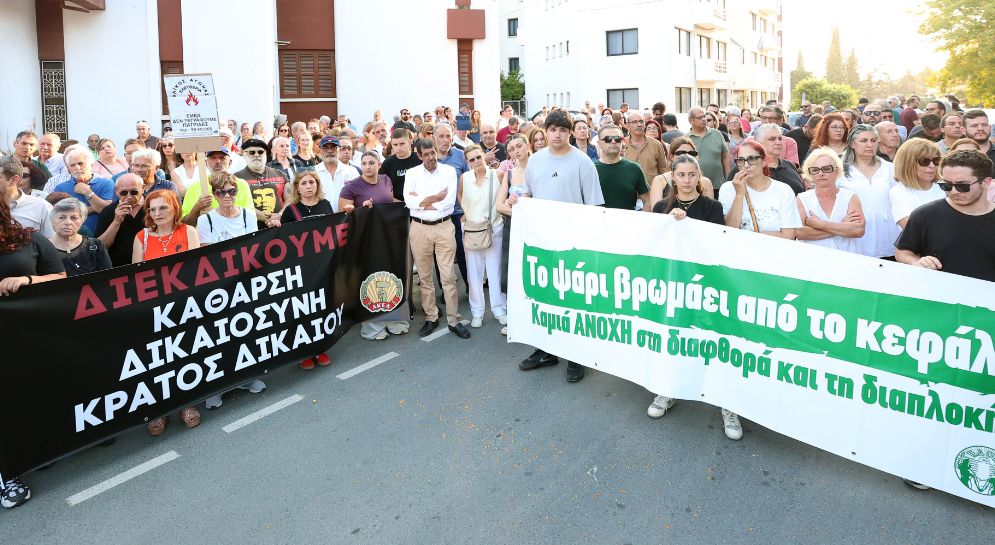

AKEL (Cyprus) held a demonstration on 22 June to protest corruption, emphasising the role of the government.
AKEL protests corruption
Stefanos Stefanou, General Secretary of AKEL, delivered a speech calling for a comprehensive effort to combat corruption and institutional collusion in Cyprus, demanding both accountability for those responsible and reforms to restore public trust in state institutions. He argued that the findings of the Anti-Corruption Authority had exposed not only individual cases of misconduct but also a systemic network of corruption and cover-ups, making the present moment a historic opportunity to pursue what he described as the "purification" of public life.
Stefanou maintained that although corruption had existed in Cyprus for many years, it became entrenched and expanded significantly under the government of former President Nicos Anastasiades and the Democratic Rally (DISY). He identified the "golden passports" scheme as the central example of this system but also cited other major scandals, including the handling of the Cooperative Bank, the Vasiliko energy project, and the electricity interconnection project, arguing that these reflected a broader pattern of institutional abuse and conflicts of interest.
The AKEL leader stated that his party had consistently raised concerns about corruption over many years, both inside and outside parliament, but had faced resistance from DISY. According to Stefanou, the governing party dismissed criticism, accused opponents of damaging Cyprus' international reputation, and defended controversial policies by presenting them as measures to attract investment. He argued that international assessments of corruption had been ignored or minimized by the government despite growing evidence of governance failures.
Stefanou criticized DISY's current leadership for refusing to distance itself from the Anastasiades administration despite the findings of the Anti-Corruption Authority. He also argued that President Nikos Christodoulides, having served for a decade in the Anastasiades government, could not avoid political responsibility for the situation and should recognize the erosion of public confidence in Cyprus' institutions.
A central demand of the speech was the resignation of the Attorney General and the Deputy Attorney General. Stefanou argued that, because both officials had been appointed under Anastasiades and served during his administration, they lacked the necessary independence to oversee an impartial investigation into the allegations. He also referred to previous controversial prosecutorial decisions, including the handling of the "spy van" case, as evidence of a pattern of opacity and inadequate accountability.
Concluding his remarks, Stefanou called for a full, independent and objective criminal investigation into the Anti-Corruption Authority's findings and pledged that AKEL would continue pressing the issue. He argued that the struggle against corruption transcended party politics and concerned Cypriot society as a whole. Stressing the need to restore the rule of law, transparency, integrity and good governance, he urged citizens from across the political spectrum to unite in demanding accountability and ensuring that public institutions serve the interests of the broader population rather than corrupt elites.