
The Brazilian Communist Party (Partido Comunista Brasileiro, PCB) has strongly condemned the government's latest fiscal adjustment package, describing it as an affront to the popular mandate expressed in the recent elections and a continuation of neoliberal austerity.
Image
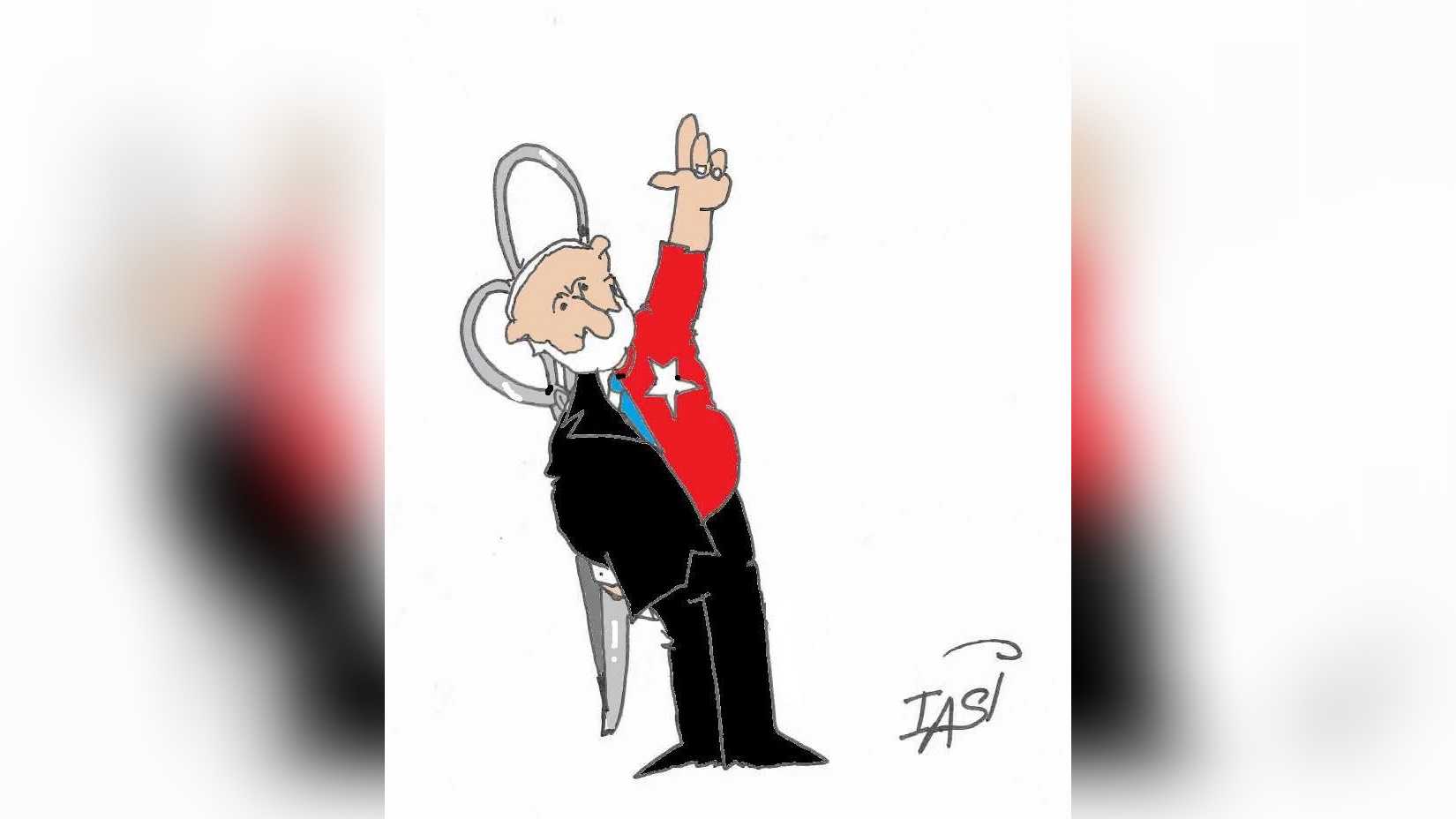
Brazilan Communist Party condemns Lula government's fiscal adjustment package as an attack on popular demands
Brazilan Communist Party condemns Lula government's fiscal adjustment package as an attack on popular demands
In a political statement issued by its National Political Commission on 15 November, the party called on workers, trade unions, popular movements and youth organisations to mobilise against the measures and demand a fundamental change in the government's economic policy.
The statement, entitled “Fiscal package: an affront to the popular will!”, was published as the package was advancing through Congress. The Senate approved its main text on 18 November, and the bill is now proceeding to the Chamber of Deputies.
The PCB argues that the more than 64 million voters who supported the electoral victory against the far right did not vote for further austerity, restrictions on public investment or the subordination of the national budget to bankers and financial speculators. According to the party, the government's decision to pursue fiscal adjustment rather than fulfil popular expectations represents a political retreat and allows the economic interests defeated at the ballot box to continue shaping the country's economic direction.
Opposition to the financial interests behind the adjustment
The PCB places the package within what it describes as an attempt by financial capital and rentier sectors to impose, through market pressure and fiscal blackmail, an economic programme that was rejected in the elections. The party characterises this as a kind of “third round” of the electoral contest, in which the financial sector seeks to reverse the political consequences of the popular vote.
A central argument in the statement concerns the distribution of public resources. The PCB rejects the government's emphasis on restraining primary expenditure, arguing that workers, pensioners, public employees and poorer sections of the population should not bear responsibility for the country's fiscal difficulties.
Instead, the party identifies exceptionally high interest payments on public debt as a central source of pressure on public finances. Citing figures for the period from September 2025 to September 2026, it estimates that accumulated interest payments reached approximately 1.2 trillion reais, equivalent to around 100 billion reais per month.
The PCB argues that this enormous transfer of public resources to holders of government debt contrasts with the lack of adequate funding for hospitals, schools, universities, public housing, infrastructure and productive investment. It maintains that the financial mechanisms benefiting rentiers remain fundamentally untouched by the new package.
Spending restrictions and the public health system
The party particularly criticises the proposed changes to Brazil's fiscal framework. Under the package, the mechanism for limiting federal expenditure growth can reduce the real growth ceiling from 2.5% to 2% when additional spending restraints are activated to meet fiscal targets. The package also expands the possibilities for budget freezes.
According to the PCB, these provisions will further restrict public investment and social expenditure, making it more difficult to meet growing demands for public services and infrastructure. The party warns that sustained restrictions could encourage greater reliance on public-private partnerships and create conditions for further privatisation of social services.
The proposed changes to the calculation of the constitutional minimum for health expenditure are another major point of criticism. The package extends the exclusion of extraordinary oil and gas revenues from the calculation of the minimum health-spending requirement. The PCB argues that this will reduce the amount the federal government is obliged to allocate to the Unified Health System (SUS), despite the dependence of millions of workers on publicly provided healthcare.
The party argues that additional public revenues should instead be used to expand hospital capacity, recruit healthcare professionals, strengthen primary care, reduce waiting lists and improve health infrastructure.
The government, for its part, presents the package as a means of controlling expenditure while preserving essential social policies and constitutional minimum spending on health and education. The PCB disputes this assessment, arguing that the changes will constrain the resources available to meet social needs.
A warning about political consequences
Beyond its economic criticism, the PCB warns that the government's course carries serious political risks. It argues that abandoning electoral commitments and adopting austerity measures contrary to popular expectations can weaken the social base that mobilised to defeat the far right.
The statement recalls earlier Brazilian political experiences, including the governments of Fernando Collor and Dilma Rousseff, as warnings about the consequences of political retreats and concessions to big capital. According to the PCB, successive concessions do not guarantee political stability; instead, they can demobilise workers and young people, deepen popular disappointment and create favourable conditions for the growth of conservative and far-right forces.
The party therefore insists that the electoral victory must be transformed into organised popular mobilisation rather than treated as a mandate for further sacrifices.
Call for mobilisation
The PCB calls on workers, trade unions, popular movements, youth organisations, public employees, intellectuals and democratic organisations to mobilise against the fiscal package and demand a profound change in the government's economic orientation.
Its alternative priorities include increased public investment, job creation, dignified wages, the defence and expansion of social rights and national sovereignty. The party insists that the costs of fiscal adjustment should not once again be imposed on working people while the privileges of financial capital remain protected.
The statement concludes with the slogans “No to the fiscal package!” and “Against the dictatorship of finance and the plunder of the public fund!”
The PCB's intervention also reflects its political independence from the Lula government. Although the party supported Lula in the second round of the recent presidential election to prevent a victory for the far right, it maintains that this support did not imply political or programmatic subordination to the government. It is now calling for organised pressure from below to prevent the continuation of policies it considers contrary to working-class interests.
With the Senate's approval of the package on 18 November and its subsequent transmission to the Chamber of Deputies, the PCB is seeking to turn its opposition into a broader mobilisation involving trade unions and popular organisations.