
The Colombian Communist Party (Partido Comunista Colombiano, PCC) has highlighted nationwide demonstrations held on 14 October, presenting them as a response to the policies of President Abelardo de la Espriella’s government.
Image
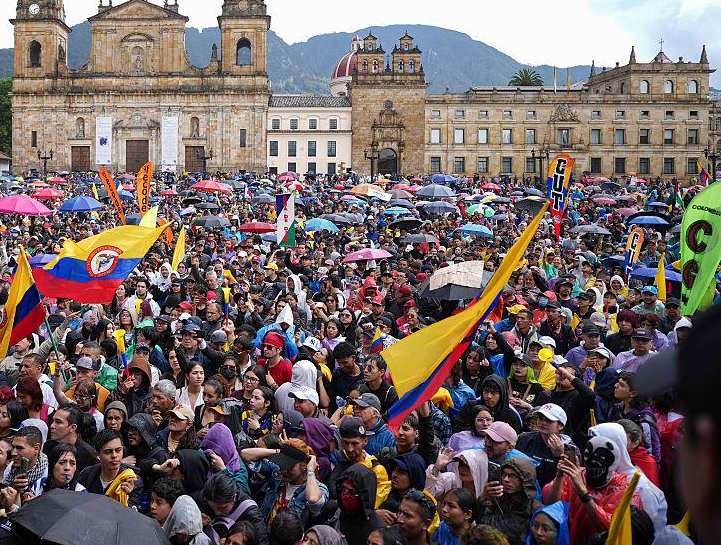
Colombian Communist Party supports nationwide protests and criticises government policies
Colombian Communist Party supports nationwide protests and criticises government policies
The protests brought together trade unionists, students, teachers, Indigenous organisations and other social movements in Bogotá and several other cities, including Cali, Bucaramanga, Pereira, Pasto and Santa Marta.
According to Voz, demonstrators called for the protection of labour rights, increased support for public education, continuation of agrarian reform and stronger guarantees for trade-union activity and political opposition. The party also emphasised the right to demonstrate and expressed solidarity with the Palestinian people.
The PCC criticised proposed changes to police procedures during demonstrations, arguing that they could restrict the right to protest. The government, by contrast, has presented its proposed measures as a means of distinguishing peaceful demonstrations from violent incidents.
In a separate report published on 16 October, the party addressed the displacement of homeless people and informal recycling workers in Cali. The article examined the municipal operation known as Cristo Rey, associated with the Ciudad Paraíso urban redevelopment project. Citing concerns raised by affected workers and human-rights advocates, the PCC argued that redevelopment should not come at the expense of vulnerable communities’ livelihoods and called attention to the need for social support and consultation.
The party’s also defended the economic record of former president Gustavo Petro’s administration. In an article published on 17 October, the PCC challenged claims that the previous government’s economic policies had caused a major deterioration, discussing indicators including unemployment, inflation and minimum-wage increases. The article criticised the economic direction of the new administration, although its conclusions represent the party’s interpretation of the available data.