
The Communist Party of Bangladesh (CPB) has stepped up its public activity in October, combining opposition to agreements it considers harmful to national sovereignty with demands for workers’ rights, accountability and protection for Bangladeshi citizens abroad.
Image
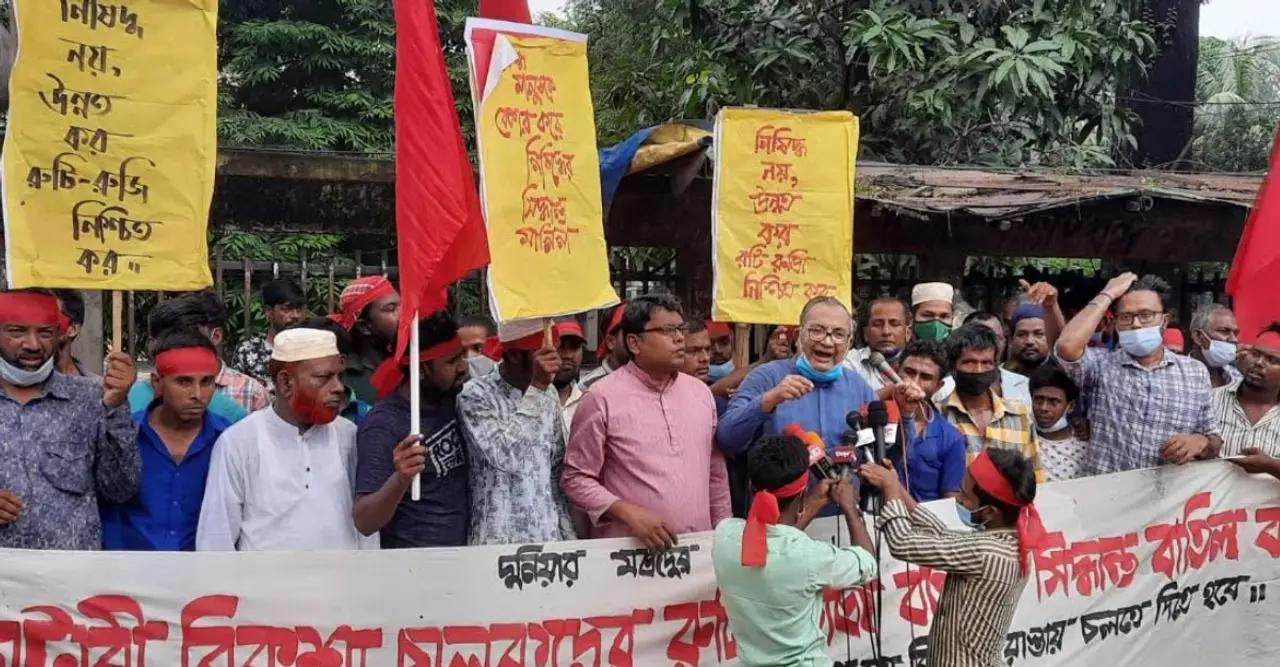
Communist Party of Bangladesh mobilises against foreign-controlled deals and demands protection for workers
Communist Party of Bangladesh mobilises against foreign-controlled deals and demands protection for workers
On 22 October, the CPB held a demonstration outside the National Press Club in Dhaka following the execution of two Bangladeshi nationals in Saudi Arabia. General Secretary Abdullah Al Kafi Ratan criticised the government’s diplomatic response and demanded initiatives to secure the release of Bangladeshi citizens imprisoned abroad. According to reporting by T Times, the party also called for stronger diplomatic efforts to protect migrant workers.
Earlier in the month, the CPB joined other left-wing organisations in opposing a 15-year agreement giving Dubai-based DP World responsibility for operating the New Mooring Container Terminal at Chattogram Port. On 8 October, protesters gathered outside the Invest Bangladesh office in Dhaka as the agreement was signed. Police dispersed the demonstration; the CPB reported that party leaders and activists, including President Kazi Sazzad Zahir Chandan, were injured. Chandan argued that the agreement threatened Bangladesh’s national interests. The party and its allies subsequently announced further protest action.
The party is also campaigning against a trade agreement with the United States. Following a meeting on 1 October involving the CPB, the Imperialism and Anti-War Alliance and labour organisations, a central rally was announced for 30 October at Dhaka’s Central Shaheed Minar, demanding cancellation of the agreement. The campaign’s organisers planned preparatory rallies and outreach in industrial areas, including Narayanganj, Gazipur and Savar-Ashulia. They argue that the agreement could undermine economic sovereignty and working people’s interests.