
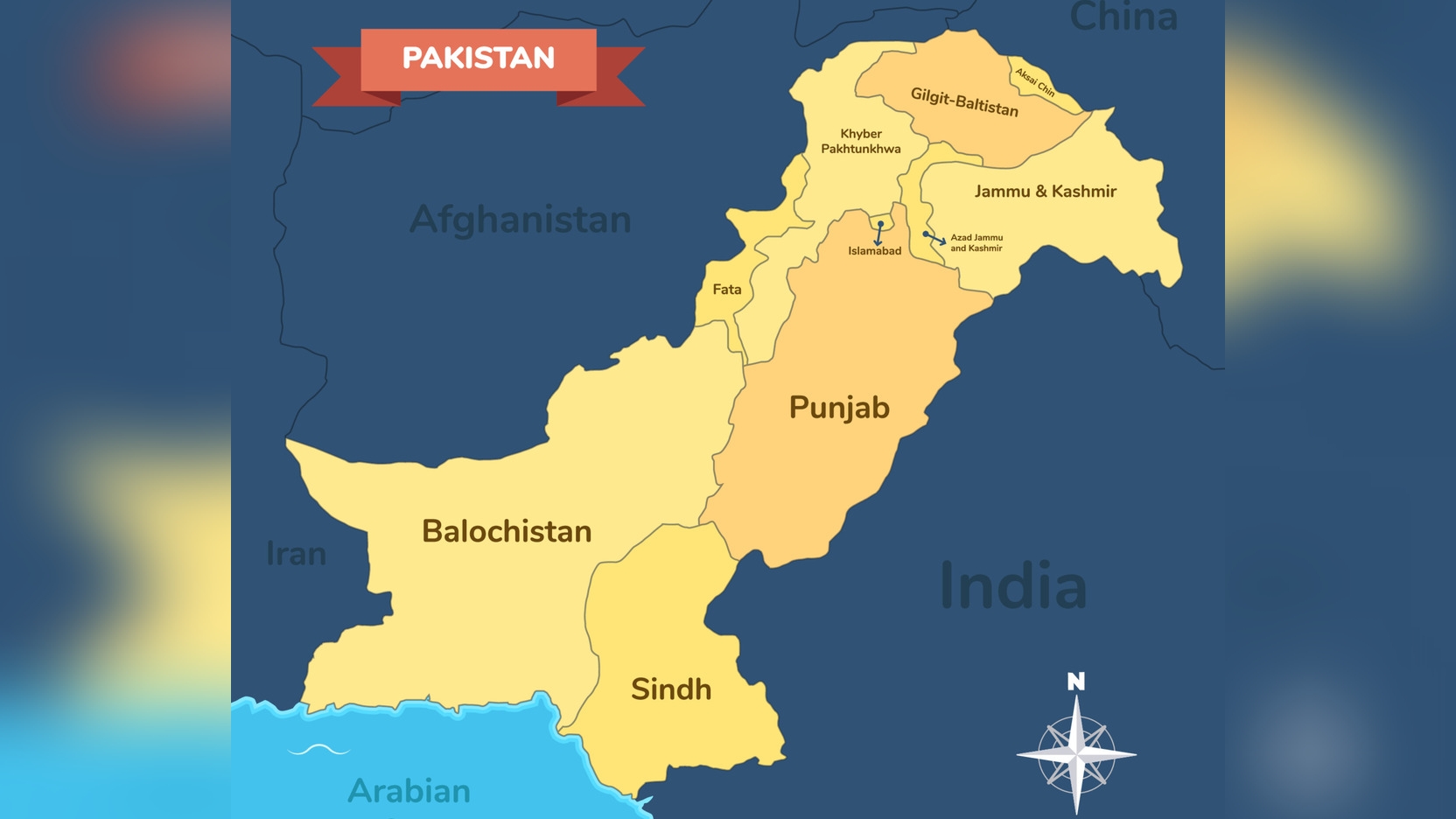
The Communist Party of Pakistan (CPP) has issued two statements addressing the situations in Balochistan and Azad Jammu and Kashmir (AJK), criticizing the state's reliance on repression and militarization to address political and economic grievances. The party argues that both crises stem from longstanding political exclusion, economic exploitation, and anti-people policies, and calls for democratic solutions based on political dialogue, social justice, and the protection of democratic rights.
Communist Party of Pakistan on Balochistan and Azad Jammu and Kashmir
Balochistan
The CPP condemned the government's ongoing military operations in Balochistan, arguing that decades of security-driven policies have failed to resolve what it described as a fundamentally political and national question. According to the party, successive governments have relied on military force, manipulated elections, and unelected institutions while denying meaningful political representation to the people of Balochistan.
The statement identifies enforced disappearances as one of Pakistan's most serious political crises, arguing that unresolved cases have deepened mistrust between the Baloch population and the state. It also criticizes the sentencing of Baloch Yakjehti Committee (BYC) leaders, including Dr. Mahrang Baloch and Sibghatullah Shahji, describing the prosecutions as politically motivated attempts to criminalize peaceful political activism through anti-terrorism legislation.
The CPP states that Balochistan's vast natural resources—including natural gas, copper, gold, and critical minerals—have benefited domestic elites, multinational corporations, and competing foreign powers while leaving local communities impoverished. It contends that geopolitical competition between China and Western countries has intensified militarization and displacement in the province without improving living conditions.
While acknowledging that prolonged exploitation and political exclusion have fueled resistance, the party maintains that neither state military operations nor armed struggle can provide a lasting solution. Instead, it calls for an end to enforced disappearances, the release of political prisoners, independent investigations into human rights abuses, restoration of democratic freedoms, and public ownership of Balochistan's natural resources to support social and economic development.
Azad Jammu and Kashmir
In its second statement, the CPP expressed support for the mass protests and strikes taking place across Azad Jammu and Kashmir, describing them as a response to rising living costs, austerity measures, and years of economic hardship under successive governments implementing International Monetary Fund (IMF)-backed economic policies.
The party argues that workers, farmers, students, pensioners, traders, and low-income families have borne the costs of subsidy cuts, tax increases, inflation, and rising utility prices, despite AJK's significant hydroelectric resources. It supports the Jammu Kashmir Joint Awami Action Committee (JKJAAC), a broad coalition that includes trade unions, farmers, transport workers, lawyers, students, political activists, and left-wing organizations, including the CPP.
According to the statement, the movement's demands have expanded beyond economic issues to include constitutional reforms, such as abolishing the 12 legislative assembly seats reserved for refugees living outside AJK and ending what it describes as excessive privileges for politicians and senior bureaucrats.
The CPP condemns the authorities' response to the protests, including arrests, anti-terrorism charges against activists, restrictions on movement, and disruption of essential supplies. It argues that such measures have intensified public dissatisfaction and undermined prospects for dialogue.
While supporting the movement's objectives, the party also criticizes appeals by some JKJAAC leaders for intervention by Pakistan's military leadership, arguing that political disputes should be resolved through elected institutions rather than unelected bodies. It maintains that reliance on military intervention weakens democratic institutions and undermines civilian politics.
The CPP calls for permanent electricity and wheat flour subsidies, abolition of the 12 reserved assembly seats, removal of elite privileges, release of detained activists, withdrawal of legal cases against movement leaders, restoration of the JKJAAC's right to organize, and an end to the use of anti-terrorism legislation and related restrictions against political activists.