
The Communist Party of Bangladesh (CPB) has called for the construction of an alternative left-wing political force, arguing that neither the governing Bangladesh Nationalist Party (BNP) nor the established opposition can provide a solution to the country's political and social crisis.
CP of Bangladesh calls for a left-wing political alternative amid deepening political crisis
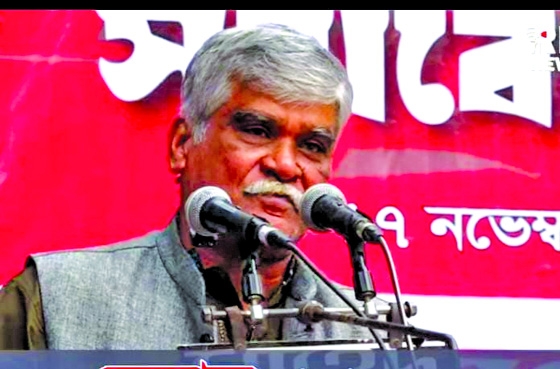
The call was made by CPB President Kazi Sazzad Zahir Chandan at a major party rally in Rangpur on 17 November.
Addressing the gathering, Chandan warned that Bangladesh was experiencing a profound political crisis and that the prevailing situation could lead to another mass uprising. He criticised both the BNP and Jamaat-e-Islami, arguing that their political positions were contrary to the spirit of the Liberation War. He called on the CPB and the Left Democratic Alliance (LDA) to work towards building an alternative political platform independent of the established mainstream parties.
Chandan also stressed the need to unite workers, peasants and working-class people in defence of their rights and interests. The CPB's approach, as presented at the rally, is to connect popular discontent with the development of an organised political alternative rather than allow opposition to the government to remain confined to competition between established political forces.
The rally comes amid continuing tensions over workers' wages, political freedoms and the direction of the country's economy. The CPB has recently organised demonstrations in solidarity with garment workers demanding higher wages, protested attacks on its headquarters in Dhaka and opposed agreements that it considers detrimental to Bangladesh's economic sovereignty.
The Rangpur gathering therefore represents an effort by the Party to bring these different struggles into a broader political framework. Its central message is that the country's problems cannot be addressed simply by replacing one governing party with another, but require an alternative based on the organisation and participation of workers and other popular sectors.
Photo: (The Asian Age)