
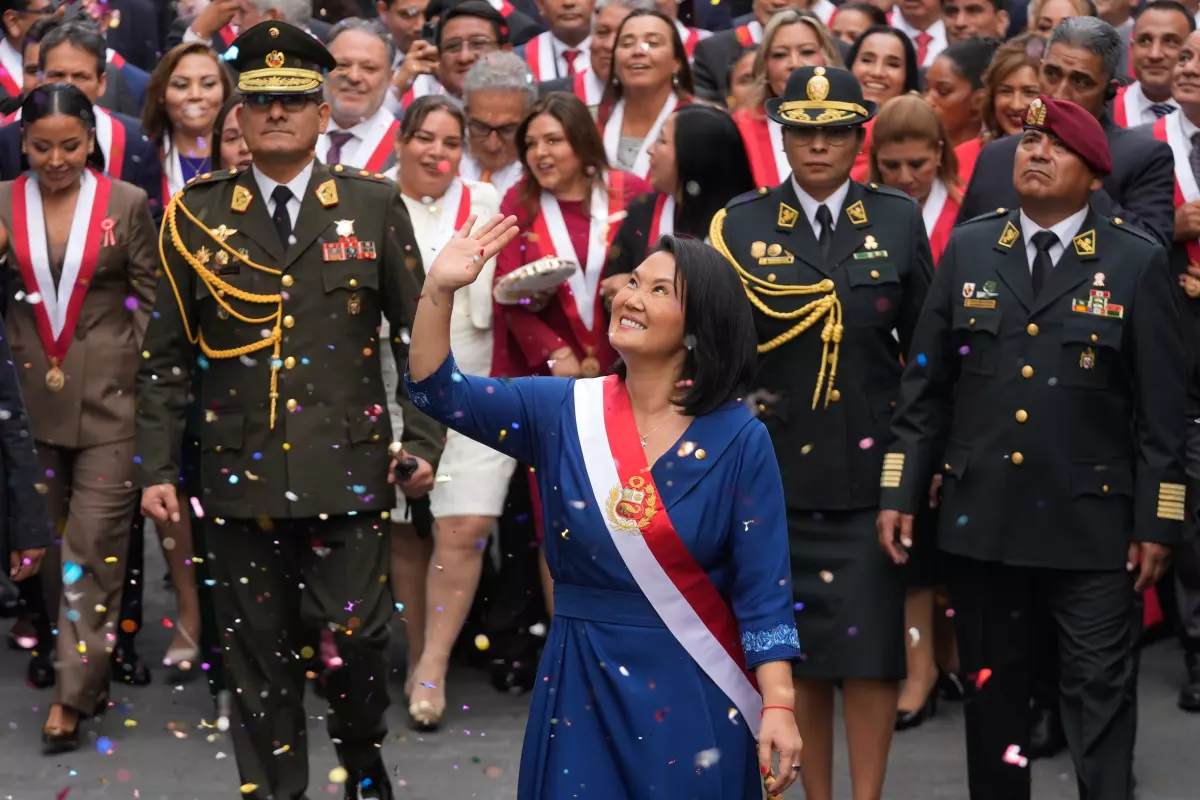
The Communist Party of Peru - Patria Roja issued a statement entitled, “The Assumption of Keiko Fujimori Is Only Continuity of the Dictatorial, Mafioso and Neoliberal Pact.”
CP of Peru - Patria Roja statement on Fujimori government
The Party states that the return of Keiko Fujimori and Fujimorism to government represents a continuation of what it describes as Peru's authoritarian, corrupt and neoliberal political order rather than a genuine democratic change.
According to the party, Fujimorism has returned to government after several failed attempts, presenting promises of “the greatness and well-being of Peru” and respect for the Constitution. The party rejects these claims, arguing that the Fujimorist project has historically defended the interests of big capital at the expense of marginalized sectors. It maintains that more than three decades of neoliberalism, based on a state subordinated to the market, have failed to deliver development, social justice, national integration or a sovereign state, and have therefore failed to resolve Peru's major historical problems.
The party also questions the democratic legitimacy of the new government. It states that Keiko Fujimori received 17% of the valid vote in the first round, equivalent to only 10.73% of eligible voters, while the second round took place in a highly polarized country marked by decades of frustration, moral deterioration, violence and growing insecurity. The statement describes Peru as a society tied to a centralized, primary-export economy and an inefficient, bureaucratic and corrupt “patrimonial” state, which it considers an expression of the neoliberal model established under the 1993 Fujimorist Constitution.
U.S. alignment and foreign policy
Patria Roja argues that what it calls the “second Fujimorism” draws upon an authoritarian and cynical political legacy and is closely tied, both historically and practically, to the United States. It argues that rather than strengthening Peruvian sovereignty, the government subjects it to external dictates.
The statement cites the appointment of journalist Carlos Espá, described by the party as a former official of the U.S. Embassy in Peru, as Foreign Minister as an indication of this orientation. It expresses particular concern over what it describes as the U.S. government's strategy of securing continued access to strategically important locations in the region at the expense of Peru's national interests.
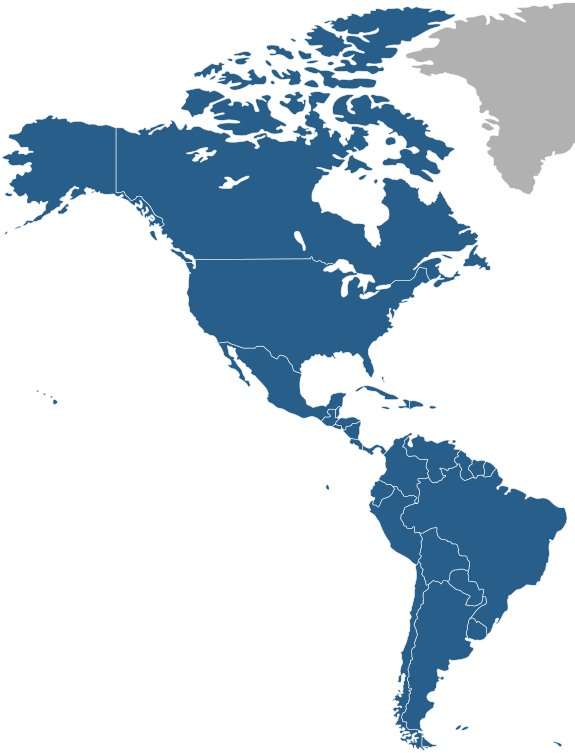
The party explicitly rejects Peru's inclusion in the so-called “Shield of the Americas” and warns against a possible rupture of diplomatic relations with Cuba, which it describes as being subjected to aggression by the Trump administration.
Assessment of Fujimorism's political strategy
According to the statement, the strategy pursued by Fujimorism has one central objective: to control state institutions through authoritarian or corrupt methods, supported by control of Congress and the subordination of corporate media.
The party argues that Fujimorism also benefits indirectly from the fragmentation of political organizations and, particularly, from the absence of a unified alternative strategy among progressive and left-wing opposition forces. It identifies sectarianism, which prevents forces from uniting, and the absence of serious leadership with a comprehensive vision and the capacity to offer an alternative as important weaknesses of the opposition.
Patria Roja describes Peru as politically polarized and argues that Fujimorism and its allies seek to unite the right while dividing the opposition. According to the statement, this strategy involves attracting or neutralizing parts of the opposition, isolating forces regarded as dangerous to Fujimorism, and creating a false political alternative between “democrats” on one side and “communists and terrorists” on the other.
The party also accuses Fujimorism of using populist slogans to conceal the country's underlying problems while prioritizing its alliance with the United States internationally and simultaneously strengthening what it calls a right-wing and fascistic current in Latin America.
Criticism of the Peruvian left
A substantial part of the statement is devoted to criticism of the Peruvian left itself.
Patria Roja argues that the left has historically suffered from short-term thinking, a lack of strategic clarity and insufficient capacity for action. It describes the left as fragmented rather than systemic and overly declarative rather than practically oriented.
The party calls for a change of political paradigm. In its view, the left should not limit itself to opposition but must develop the capacity to become a genuine political alternative. It argues that the will to achieve unity must become central to left-wing political activity, while political and ethical principles must be brought together and the use of the masses for narrow political purposes abandoned.
The party further calls for an end to politics based on sectional interests and argues that political activity should instead serve the people and the nation. It says that a genuine left must be “renewing, honest, consistent and creative.”
Continuity or change
The statement presents “change or continuity” as the fundamental political dilemma facing Peru.
Patria Roja argues that the accumulated crisis, repeated frustrations with successive governments and the lack of a clear future require the country to choose between two paths: continued neoliberalism based on the 1993 Constitution and its subsequent reforms, which the party considers a failure, or a fundamental change of direction.
The party calls for a new republic, based on a viable political project and a government capable of engaging with the world while defending Peru's national interests. It emphasizes the need for an organized population capable of becoming the protagonist of political change.
Call for popular organization
The statement concludes by arguing that Peru is experiencing difficult times characterized by authoritarian and anti-democratic threats, moral deterioration, violence, concentration of wealth, expanding poverty, depoliticization and pessimism. Nevertheless, Patria Roja maintains that these conditions also create opportunities if the population responds with courage and initiative.
The party argues that the future belongs to the forces seeking change, but that such a future must be built through unity, organization, broad political vision and sustained struggle, rather than temporary indignation or passivity. It maintains that only an organized and active population capable of taking responsibility for the country's direction can overcome what it describes as Peru's long-standing historical crisis.
The statement ends with calls for:
- Effective democracy
- Full sovereignty
- National integration
- Social justice
- Moral regeneration
- Popular unity and unity from the grassroots
- A homeland for all
- Solidarity with the peoples of Latin America and the Caribbean in the face of imperialist aggression