
Cuban President Miguel Díaz-Canel stated that strengthening national defense and combat readiness under the concept of the "War of the Whole People" remains a fundamental priority in light of what he described as the continued hostile policy of the United States and the constant threat of aggression against Cuba.
Díaz-Canel on "War of the Whole People"
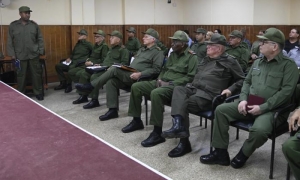
Speaking during the National Defense Day at the Libertad Defense Zone in Havana's Marianao municipality, he stressed the importance of protecting the population, strengthening territorial defense structures, and updating military preparedness plans to reflect current national conditions.
According to Granma, addressing domestic affairs, Díaz-Canel highlighted the government's recently approved package of economic and social reforms. He reported that 80 measures had already been approved for implementation, with more than 100 expected to be ready in the following week. According to him, the reforms prioritize expanding productive capacity by granting greater autonomy to municipalities and state enterprises, improving cooperation between the state and non-state sectors, encouraging investment and partnerships, and making better use of underutilized productive resources. He argued that these measures would increase the supply of goods and services and improve the relationship between wages and prices while preserving social justice.
The president acknowledged that many problems remain but said recent efforts involving the Communist Party, government institutions, the armed forces (FAR), the Interior Ministry (MININT), and local authorities had begun to produce positive results. He pointed to increased use of renewable energy by both state and private entities, greater cooperation in providing electricity and water services, improvements in cash distribution to workers and pensioners, and expanded support for vulnerable populations through social assistance programs.
Díaz-Canel also highlighted improvements in the Family Assistance System, noting that facilities serving vulnerable people had been renovated and were receiving support from both state and non-state actors to improve food provision. He said similar cooperation was strengthening more than 32 social programs aimed at assisting disadvantaged individuals and families while fostering greater community solidarity.
Concluding his remarks, Díaz-Canel acknowledged continuing public dissatisfaction but argued that the government was creating conditions for gradual progress through collective effort and resilience. He pointed to infrastructure rehabilitation projects and summer activities being organized across municipalities ahead of Cuba's July 26 national celebrations as examples of the country's determination to overcome current economic difficulties. The event was attended by senior political leaders, including National Assembly President Esteban Lazo, senior Communist Party official Roberto Morales Ojeda, and the ministers of the Revolutionary Armed Forces and the Interior.