
India has been witnessing mass mobilisations in recent weeks, centred around the demand for resignation of the Chief Election Commissioner (CEC) who is responsible for the conduct of free and fair elections. The Communist Party of India (Marxist), CPI(M), has been raising its concerns about the way the Election Commission of India (ECI) is conducting for the last 18-20 months, and has been the leading force of the mass protests. CPI(M) Polit Bureau member Arun Kumar answered International Communist Press's questions.
Image
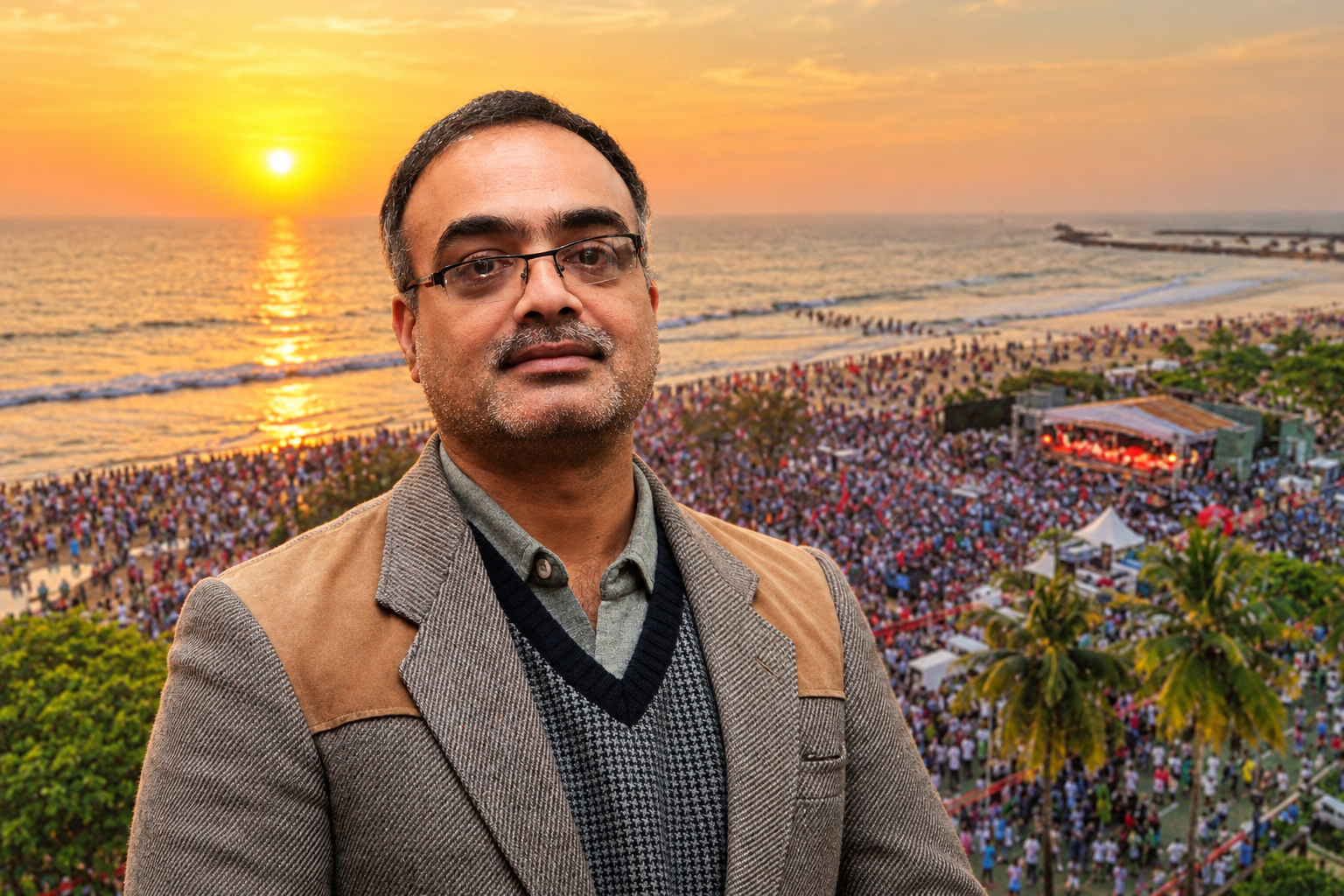
Communist Party of India (Marxist) Polit Bureau member Arun Kumar answered ICP's questions
EXCLUSIVE INTERVIEW with CPI(M)'s Polit Bureau member Arun Kumar
Recent developments around the world suggest that we may be entering a period of intensified popular mobilisation. One of the major campaigns in this emerging wave of struggles began in India, where the CPI(M) took a leading role in demanding the resignation of Chief Election Commissioner Gyanesh Kumar. Party cadres at every level took to the streets on a daily basis. Could you explain the reasons behind this campaign, its main objectives, and how the struggle is expected to develop in the coming period?
Yes indeed it appears we are witnessing an intense phase of protests in many countries. The protests we are now witnessing in France and Italy, apart from those in India, are two major instances that validate this point. Though unconnected, they have one element of commonality that is the denial of basic rights by the present system. In France, it might be the story state of schools that triggered these protests but the underlying reason of economic hardship cannot be missed. Similarly in India, the main demand is the resignation of the Chief Election Commissioner (CEC) who is responsible for the conduct of free and fair elections. The CPI(M) has been raising its concerns about the way the Election Commission of India (ECI) is conducting for the last 18-20 months.
The ECI in the guise of cleansing the electoral rolls of fake and non-existing persons stated a process of deletion of genuine voters from the rolls. A majority of those who were deleted are from the poor families, i.e., the toiling sections of the society. And also they are religious minorities and other social downtrodden sections, including women. Most of them were voting in successive elections. Despite it, their names are deleted under a whimsical reason that they failed to show documents attesting to their existence! Some of the government provided documents which they possessed were declared as insufficient proof. So for the first time in our history, citizens were burdened with the task of proving that they can be enrolled as voters. This is against our Constitution which states that it is the responsibility of the ECI to enroll all Indian citizens who are above 18 years of age as voters. So what is really happening is, the protections and rights given by the Constitution, howsoever limited, are now denied. A major reason for this change is the functioning of the ECI which is now packed with the pen-pushers of the present regime.
We have characterised the present ruling party, the BJP, as a party unlike any other party of the big bourgeois landlord classes because it is controlled by an organisation called the Rashtriya Swayamsewak Sangh (RSS), which is fascistic in character. The ECI is now working to carry forward the agenda of the BJP-RSS. The ECI earlier was biased but never worked with a divisive agenda as it is doing now. It is remodeling the electorate to ensure the victory of the BJP. Those who do not vote for them – the poor toilers – are deleted from the rolls. So the struggle we are waging is for the protection of democracy (bourgeois democracy), that is facing a threat from the bourgeois themselves.
Our campaign for the last few months gained traction after a media organisation exposed the internal dealings of the ECI. The open violation of the rules guiding the ECI functioning by the CEC vindicated our campaign. More than 134 million voters are deleted during the period. Those whose names are deleted are also denied any benefits from the government welfare schemes. Here it is pertinent to point that 800 million people are officially dependent on the government for their daily food. Seen together, this makes it clear why people are forced to protest against the government. They have a genuine worry about their citizenship and survival.
Our Party immediately after the expose took the initiative and approached all the opposition parties, organisations and individuals who are concerned with the fate of our country. This included an organisation that was recently floated representing the aspirations of the GenZ. Many responded positively to our appeal and joined the protests. We first started coordinating with the other communist parties and then the parties on the Left, joined by others. The joint action committees of the working class and the peasantry came together with various student youth and women's organisations. This broadened the movement and got new sections of people on the streets. The government initially unleashed police to suppress these protests but failed. Repression further angered people and increased the intensity of the protests. Our task is to stand with the people and continue our efforts to broaden them by involving more and more people.
In September, the CPI(M) held an extended meeting of its Kerala State Committee, followed by a major mass rally. What was the significance of this meeting, and what were its main decisions? How should we understand the meeting and the rally in the context of the party’s electoral defeat in Kerala?
As you might be aware, the CPI(M) was governing the province of Keralam (or Kerala) for the last ten years. Communists were elected to govern the province for the first time in 1957. The ruling class didn't allow the then elected communist government to govern for its entire five-year term. Within two years the provincial government was dismissed by the Union government. Since then we are regularly elected to govern, but never could complete the entire five-year term. It is only since the late 1990s that the party was able to complete its five-year term wherever it was elected. But even then, we used to lose the elections after every five years. We could successfully reverse this trend in 2016. We were elected for two consecutive terms for the first time – in 2016 and then in 2021. Given the many limitations in running a provincial government – finance is the major concern among them – we managed to implement most of the promises we made in our election manifesto. Of course there were many things we could have done better. Despite all this, we lost the elections held in 2026. Our Party Central Committee (CC) considered it as a serious setback and decided to undertake a comprehensive review. All our Party committees in Keralam were directed to review the results, find out the reasons and initiate corrective measures wherever they were needed. This was the background in which the extended meeting of the Keralam state committee was held.
In fact it was not just in Keralam, but even in West Bengal where we have a strong presence and governed that province for 34 consecutive years (from 1977 to 2011) we conducted a similar exercise after the recent elections. We expected a much better performance in Bengal but didn't realise our targets there.
After all the Party units in these two provinces conducted this exercise, the CC met and finalised the review which pin-pointed certain major lapses. We noted that there were some political and organisational mistakes we committed in Keralam sent a wrong message and could have been avoided. The CC directed certain corrective measures after the review. The extended meetings were intended to explain these directions and implement the suggested corrective measures. We believe that accepting our mistakes before the people is not a weakness, but a reflection of the communists’ strength. People appreciated our efforts, which was evident in the huge public rally we could organise after the conclusion of the extended meeting. A further indication is, in the bye-elections conducted for certain local bodies (grassroots level peoples’ representative bodies) we were able to better our performance. We know that these are small steps, but we are confident that if we continue in this path we will emerge stronger. The recent struggles we are conducting also are helping us in regaining people's trust.
The mass mobilisations have also highlighted growing concerns about the BJP government’s restrictions on democratic rights and popular freedoms. At the same time, the BJP appears to be relying increasingly on the RSS to strengthen its influence and counter opposition movements. How does the CPI(M) assess this strategy? To what extent can the government succeed in consolidating its power, and what are the prospects for popular struggles in India?
The BJP always relies on the RSS as they share a parental relationship. BJP is the political arm of the RSS. RSS provides the organisational muscle and ideological guidance to the BJP. That is the reason why our party considers BJP a much dangerous force than any other ruling class party. RSS is a fascistic force that is unapologetic about the inspiration it draws from Hitler and Mussolini. The three consecutive electoral victories won by the BJP since 2014 helped the RSS gain enormous control over the entire State apparatus. In almost all positions of consequence they successfully appointed their henchmen. The ECI is one example and the havoc they could create using such appointees is there before us to see. Similar is the situation in various universities and other educational institutions. They want to control the thought process and impose their hegemony over the society. All these 12 and odd years they created a psyche through this hegemony and terror (both through the State machinery and RSS cadre) that the BJP is invincible. In such a background, these protests are taking place. After many many years the students and youth have overcome their fear and challenging the government and the RSS. This is of huge significance and has rattled them. Workers are also intensifying their struggles. Peasants too are on the move. All these are positive features and reconfirm our belief that any change is possible only through popular mobilisation.
In recent years, the BJP government has strengthened India’s relations with Israel. What are the political and strategic implications of this rapprochement, particularly in light of tensions between India and Pakistan and the emerging regional alignments involving Pakistan, Turkey and Saudi Arabia, including the agreement reached in Mecca? How might these developments affect India’s foreign policy and regional balances?
The BJP government's foreign policy is a reflection of its ideological convictions. The friendship between Modi and Netanyahu is more than personal, it is ideological. Both of them believe that nationality is defined on the basis of religion and not on the basis of territory. Just as Netanyahu and his party believes Jewishness as the necessary condition for being a citizen of Israel, the RSS believes that Hinduism should be the criteria for Indian nationalism. This explains the closeness of BJP with Israel. They are bound by their hate towards other religions, particularly Muslims. We fundamentally oppose these concepts. They also see themselves as close to Trump's MAGA movement. The BJP government prioritises the relation with Israel and the US which is reflected in their efforts to strengthen the I2U2 grouping. The West Asian policy of the government is designed broadly to dovetail to this understanding.
What are the plans of CPI(M) regarding its struggle in the coming period?
The people of our country are suffering a lot. Contrary to all the propaganda and media driven hype, the economy is in a bad shape. Inflation, unemployment, falling living standards, growing inequalities are all having tremendous impact on people’s livelihood. So the latent discontent is getting expressed now through protests as people are losing their fear. Many sections of the people are on the streets – students, youth, workers, peasants and women – all protesting on their respective issues. All these issues are due to the failures of the government and its faulty policies. Our Party, its class and mass organisations are with the people in these struggles. We need to broaden the scope of these struggles and ensure more and more people join them. We want all our Party members, from the General Secretary and the PB, to the ordinary member, to be part of these struggles. Our leaders and cadre should be in the forefront which is what we are doing right now.