
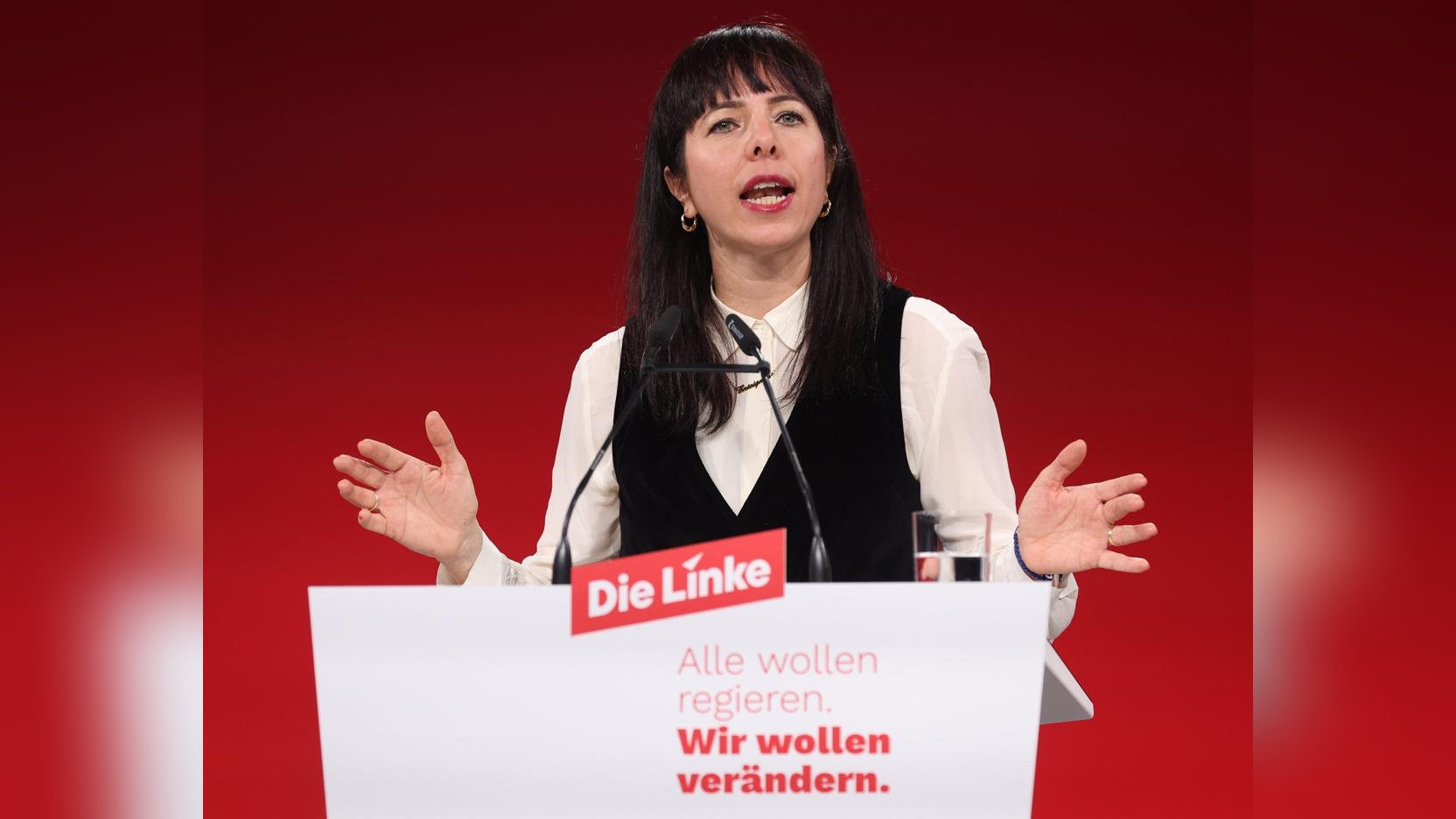

The following article, written by Matthew Read, was published in Unsere Zeit, the organ of the German Communist Party (DKP). It assesses what Die Linke did after its candidate Elif Eralp won the elections in Berlin.
German Communist Party assesses Die Linke's performance in Berlin since elections
Is this what winners look like?
"More together, more Berlin" – that's the title of the final document from the exploratory talks between the Left Party, the Greens, and the SPD. Anyone reading the 30 pages would never guess that the Left Party won the Berlin election by a wide margin on September 20th, because hardly anything remains of their campaign promises.
The course was set before the exploratory talks even began. The Greens and the SPD, in their loyalty to "reason of state," ensured that solidarity with Palestine would have no place in a renewed red-red-green Senate. The leadership of the Left Party quickly capitulated, distanced itself from its own supporters and members, and on October 8th signed an agreement that broke with its own party resolutions. The "right of Israel to exist" became a duty of commitment for all elected officials and functionaries of the three parties. Anyone who supports boycott campaigns in protest against the genocide in Palestine risks expulsion from the parliamentary group. This effectively prohibits Left Party members from cooperating with large segments of the pro-Palestinian movement. At the same time, this agreement already revealed a key campaign promise of the Left Party: the police and the Office for the Protection of the Constitution are no longer to be weakened, but explicitly strengthened.
The actual exploratory talks then began with a Left Party intimidated by media smear campaigns, and solidarity with Palestine was not the only casualty. In 2021, a majority of Berliners voted in a referendum to expropriate all real estate companies with more than 3,000 apartments in the city and transfer their holdings into public ownership. The three parties now want to raise this threshold to 10,000 apartments. Furthermore, each company would be allowed to retain 10,000 apartments. A spokesperson for the initiative "Expropriate Deutsche Wohnen & Co." criticizes: "This would mean approximately 70,000 fewer apartments would be socialized. That clearly contradicts the will of the voters." The timeline also plays into the companies' hands: A law is not expected to be presented until mid-2028 and would only take effect one year after its promulgation. This gives the companies at least three more years to restructure their holdings, if necessary, so that they fall below the threshold. And Federal Minister for Construction Verena Hubertz (SPD) still has ample opportunity to help her party's Berlin state association out of its predicament with an already announced "investment protection law" – i.e., a ban on expropriation.
The exploratory paper makes no mention of a rejection of armaments and militarization, even though Berlin is already deeply involved in current war preparations. Instead, the three parties want to promote "resilience technologies" and explicitly mention drones, autonomous systems, satellites, and aerospace – all core areas of the arms and dual-use industries. The previous Senate wanted to develop Berlin into a "DefTech ecosystem" and, among other things, attract the Israeli defense company Israel Aerospace Industries to Adlershof. The paper makes no mention of this. The promised civilian clause for economic development is entirely absent. While the cooperation agreement between the education authorities and the Bundeswehr, signed in June 2026, is terminated, access to Berlin schools remains open for youth officers.
As the undisputed election winner, the Left Party could have used its newfound support to go on the offensive. It could have confidently defended its members, turned the tables, and used the media attention to expose the hypocrisy of "reason of state" and the federal government's militarization plans. But that would have made it unfit to govern, and the party leadership would have had to relinquish positions. So, it prefers to be part of the "turning point" rather than fight against it.