
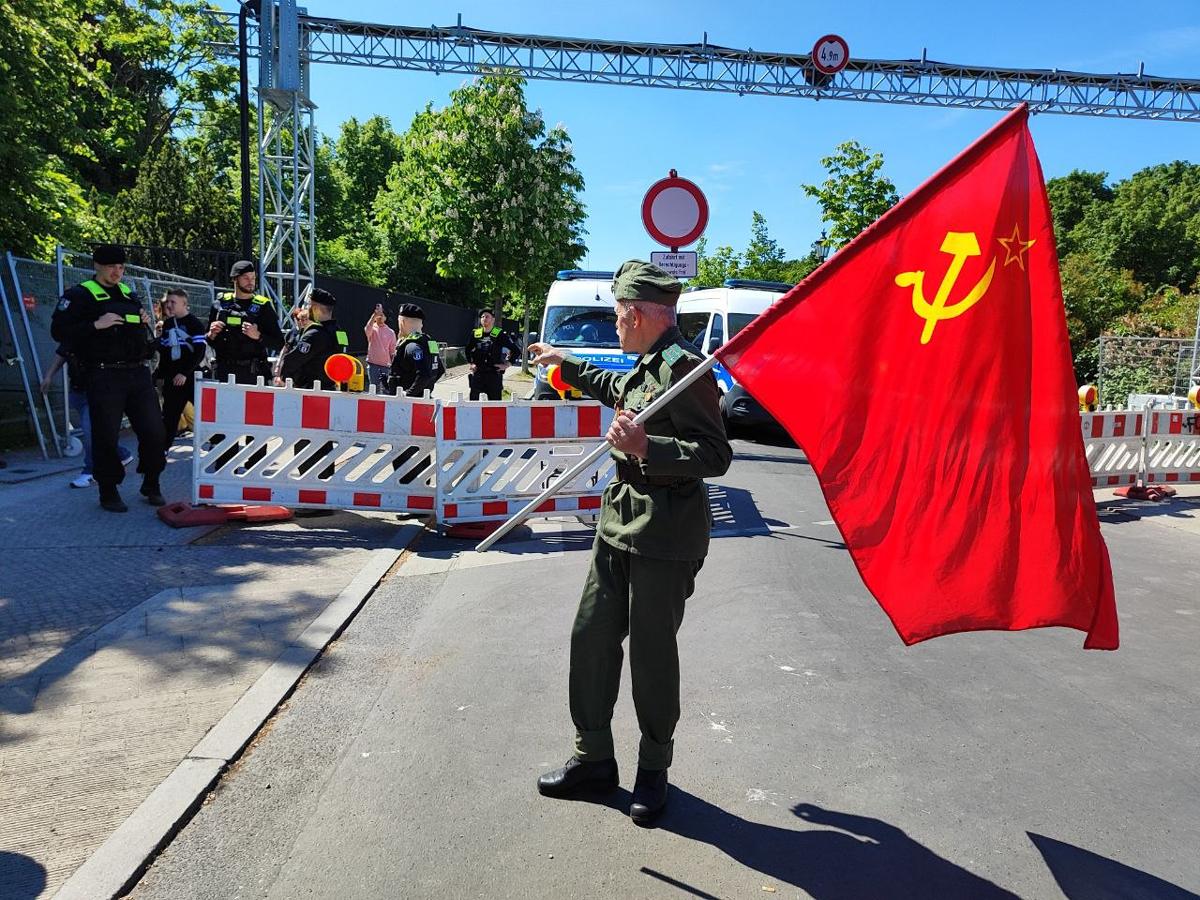

The German Communist Party (DKP) filed a lawsuit against the "General Order of the Berlin Police." Since 2022, the Berlin police have prohibited the display of Russian and Soviet symbols, flags, music, and lettering at events on 8th and 9th of May. The hearing took place on the 19th of May.
German Communist Party lawsuit against ban on Soviet symbols
The lawsuit alleges unconstitutional and disproportionate restrictions on freedom of assembly and freedom of expression.
Unsere Zeit made an interview with the plaintiff and former state chairman of the DKP Berlin, Stefan Natke, about the proceedings. He explained that his lawsuit against the Berlin police seeks to overturn restrictions imposed on Soviet symbols and flags during commemorations of the defeat of fascism on May 8 and 9. He argues that these bans are historically unjust and disrespectful to the sacrifices of the Red Army and the millions of Soviet citizens who died during World War II. After previous emergency appeals failed, Natke filed a declaratory judgment action aimed at establishing that the restrictions imposed since 2022 violate Germany’s Basic Law and are therefore unlawful.
According to Natke, the Berlin authorities justify the bans by claiming that Soviet symbols could provoke confrontations and threaten public order. He rejected this argument, noting that the DKP’s commemorative events have been held for more than a decade without incidents of violence. He criticized the authorities for basing their position on speculation rather than evidence and argued that the purpose of the commemorations is to honour the Soviet soldiers who helped liberate Europe from fascism.
During the hearing, Natke challenged the double standard in the application of political symbolism. He questioned why Soviet symbols are restricted while the flags of other states involved in contemporary military conflicts are permitted. He also objected to the broader policing of commemorative events, describing extensive police controls, surveillance, and restrictions on participants’ clothing and symbols as humiliating and disrespectful. As examples, he cited incidents involving elderly veterans and the prohibition of symbols associated with the Ukrainian Soviet Socialist Republic, despite the significant role Ukrainians played in the Red Army. He also submitted photographic evidence that documents the harassment and mistreatment of participants at previous commemorations.
Regardless of the final verdict, Natke believes the lawsuit has already succeeded in drawing public attention to the issue. He pointed to strong public interest in the hearing and coverage by several media outlets. If the court rules against him, he stated that he intends to continue challenging the restrictions through further legal and political efforts, arguing that it is necessary to resist what he regards as an ongoing injustice. While expressing some hope for a favorable ruling, he remained skeptical about the likelihood of success within Germany’s class-based judicial system.
Photo: Unsere Zeit