
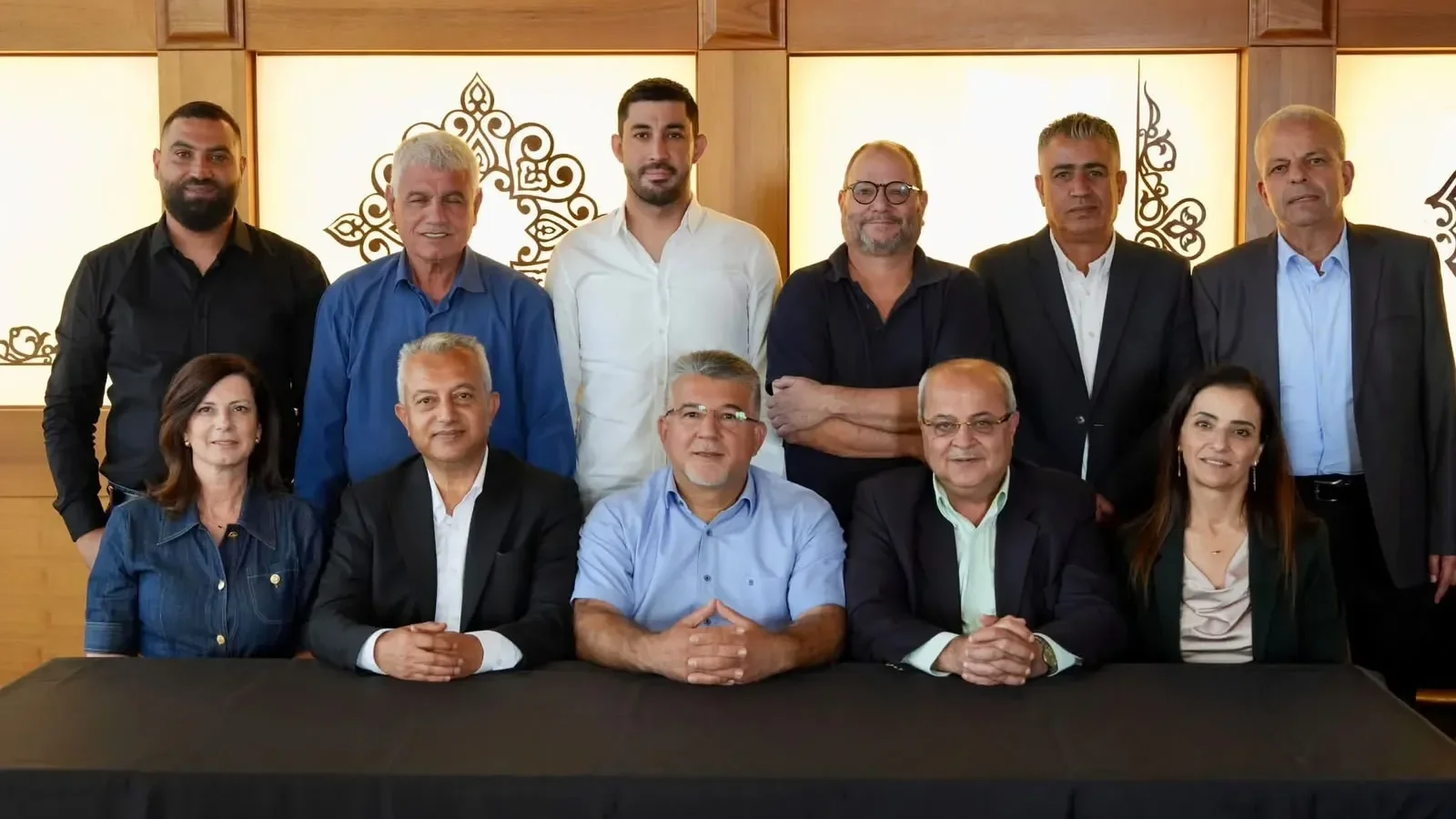
The Hadash-led Joint List held a meeting of its newly elected parliamentary faction and political leadership on 2 November, followed by a separate meeting with representatives of the United Arab List (Ra’am).
Hadash and Joint List seek wider cooperation to challenge Netanyahu government
The discussions focused on the political situation following Israel’s 27 October parliamentary elections and the prospects for closer cooperation among Arab political forces to confront the far right and remove Benjamin Netanyahu’s government.
According to a report published by Al-Ittihad, the Joint List meeting on 2 November brought together its elected representatives, parliamentary staff and the general secretaries of the parties making up the alliance. Joint List chairman Yousef Jabareen opened the meeting by congratulating the newly elected lawmakers and stressing that the confidence placed in the list by voters carried a major responsibility, particularly amid incitement against Arab citizens and their political representatives.
The head of the Joint List parliamentary faction, Ahmad Tibi, reviewed the professional and parliamentary responsibilities of the new faction, emphasising the need for coordination and cooperation among its members, particularly in parliamentary committees. The meeting was attended by the elected representatives, including Hadash MK Ofer Cassif, as well as representatives of the other components of the alliance.
In a separate meeting, the Joint List leadership received a delegation from Ra’am, headed by its chairman Mansour Abbas and including MK Walid Taha. The two sides discussed developments in Israeli politics and the need to deepen cooperation in confronting the far right and working to bring down its government.
Turning electoral gains into political influence
The meetings followed the Joint List’s strong performance in the 27 October elections. The alliance secured 11 seats in the 120-member Knesset, while Ra’am won eight, giving the two Arab-led lists a combined 19 seats. The Netanyahu-led bloc obtained 53 seats, while the principal Jewish-led opposition parties won 48. Neither side can reach the 61 seats required for a parliamentary majority without support from Arab representatives or defections from other parties.
Hadash and the Communist Party of Israel (Maki) welcomed the election result in a statement issued on 2 November. They congratulated the Arab public for its high turnout, describing the result as an important achievement in the face of intimidation and incitement. They also thanked activists, volunteers and democratic Jewish forces that had supported the Joint List.
They warned that the far right was seeking to undermine the legitimacy of the Arab vote and prepare the ground for further incitement. They called for the electoral mobilisation to be transformed into organised and lasting political influence, alongside expanded cooperation with democratic Jewish forces.
Hadash and Maki described the removal of the Netanyahu, Ben-Gvir and Smotrich government as an urgent and historic task, citing its policies in Gaza, the deepening occupation, settler violence and attacks on the rights of Arab citizens. At the same time, they cautioned against illusions that replacing the government would by itself end the occupation or bring about a fundamental change in Israeli policy.
The Joint List has indicated that it is prepared to support an alternative government from outside the governing coalition, but does not intend to join it. Its chairman, Yousef Jabareen, has called for concrete commitments on issues affecting Arab citizens, including action against organised crime, investment in Arab localities, an end to home demolitions and a political process towards establishing a Palestinian state.
Jewish-Arab partnership amid right-wing incitement
The meetings took place against a background of growing political tensions following the election. On 31 October, around 2,000 people gathered in Tel Aviv’s Habima Square to demand the formation of a government based on Jewish-Arab partnership. Demonstrations were also held in Jerusalem and Haifa. Participants called for cooperation and equality, while a separate right-wing counter-demonstration opposed the inclusion of Arab parties in government and repeated allegations of electoral fraud.
The accusations against Arab voters and political parties have been rejected by election officials, who have said that the investigations into alleged interference would not affect the validity of the election results.
(Photo: Al Ittihad)