
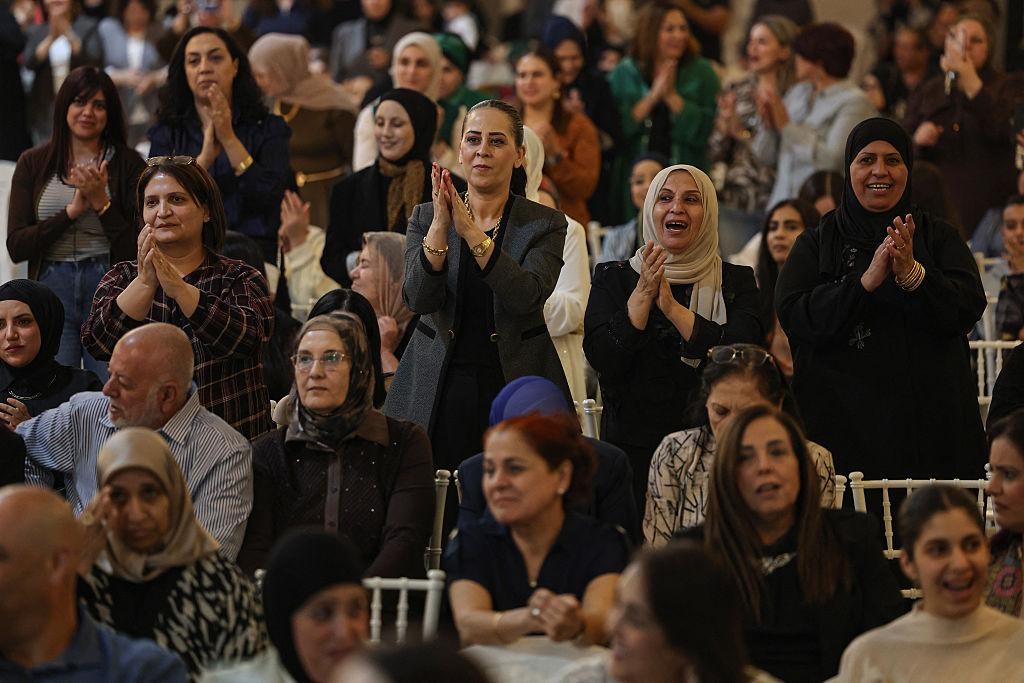

The Hadash-led Joint List (backed by the Communist Party of Israel) has won at least 10 seats in Israel’s 27 October parliamentary election, according to television exit polls, marking a substantial advance.
Joint List wins at least 11 seats in Israeli election; CP of Israel calls for change beyond Netanyahu
Partial official results released overnight on 28 October subsequently placed the list at 11–12 seats as counting progressed. The result represents a significant increase from the six seats won by Hadash-Ta’al in the 2022 election, although the final allocation remains subject to the completion of the count.
For the Communist Party of Israel (Maki), which is the leading force behind Hadash, the result comes after a campaign centred on removing Benjamin Netanyahu’s government, opposing racism and the occupation, and advancing equality and Jewish-Arab partnership. The election has not produced a clear parliamentary majority: neither Netanyahu’s bloc nor the main opposition bloc led by Gadi Eisenkot appears to have secured the 61 seats required to form a government independently.
Jabareen: End Netanyahu’s government, but change its policies too
On election day, Joint List chair Yousef Jabareen called on voters to support the list, saying that it could win ten seats and help bring Netanyahu’s period in office to an end. In statements reported by Maki and its newspaper Zo Haderekh, Jabareen described the election as a decisive moment for Arab citizens and Israeli society as a whole.
The Joint List’s campaign went beyond replacing the prime minister. It demanded equality and social justice for Jews and Arabs, opposition to racism and the occupation, and a just peace based on the establishment of a Palestinian state alongside Israel. Jabareen also called for action against organised crime and violence in Arab communities, and argued that any political alternative must bring concrete policy changes rather than simply replace the government’s leadership.
The list’s electoral performance gives its parties a potentially important position in the parliamentary arithmetic. Yet Netanyahu has rejected the prospect of relying on Arab parties (Joint List is labelled as an Arab list in mainstream politics and media) to form a government, while opposition leaders have also signalled limits on cooperation with them. The role the Joint List will play in the coming negotiations therefore remains uncertain.
Maki reports complaints over voting in Arab communities
Maki and Zo Haderekh also reported complaints of delays and alleged irregularities at polling stations in Arab towns and villages. The legal rights organisation Adalah appealed to the Central Elections Committee following reports that police were delaying voters, voting committees were slowing or interrupting the process, and Arabic-language ballot papers were unavailable at some polling stations.
The Joint List urged voters to continue turning out despite these reported obstacles. In an election in which turnout among Arab citizens was closely watched, the party described participation as essential to challenging the government and strengthening Arab political representation. The reported incidents remain allegations and should not be treated as a final finding of systematic electoral misconduct.
An important result, but no clear path to government
The preliminary results point to a larger parliamentary presence for the Joint List, but they do not by themselves establish that Netanyahu has been definitively removed from power. With the two main political blocs short of a clear majority, coalition negotiations could be prolonged. Arab-led parties (those in the Joint List and the United Arab List) may hold seats that prove significant to the formation of a government, even as the major Jewish-led parties debate whether and how to rely on their support.
From Maki’s perspective, the central test is whether the election leads to a change in the policies affecting Arab citizens and working people: racism, inequality, violence, the occupation and the absence of a just political settlement with the Palestinians. The Joint List’s campaign argued that the removal of Netanyahu is necessary but insufficient without substantive changes in these areas.
A formal post-election assessment by Maki is yet to be issued.
(Photo: Anadolu Agency)