
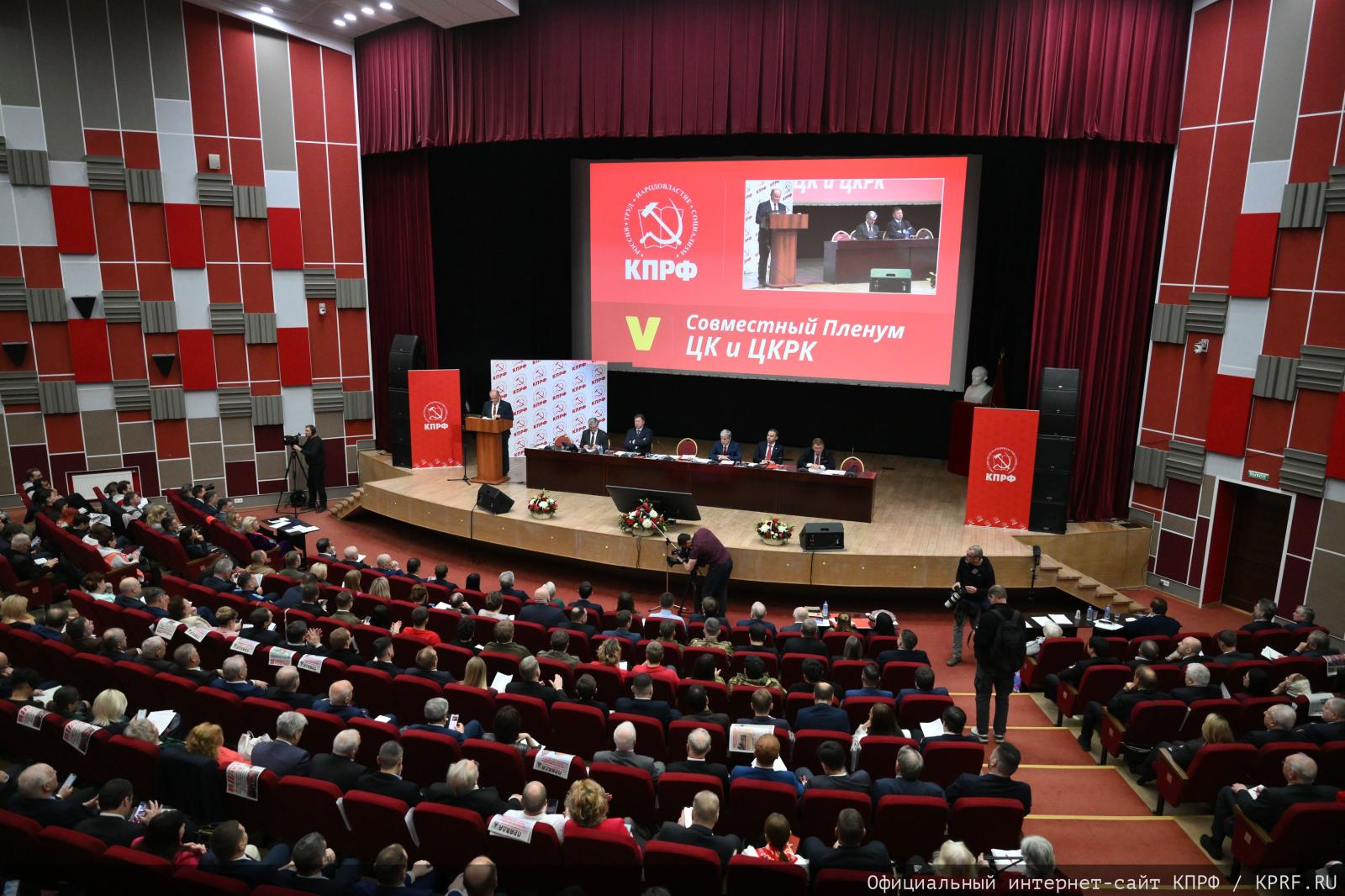
The Communist Party of the Russian Federation (KPRF) held its Fifth Joint Plenum of the Central Committee and Central Control and Audit Commission on 14 November in the Moscow Region.
KPRF Plenum calls for party-building, recruitment and a “left turn” following State Duma elections
The meeting brought together more than 600 participants, including representatives of regional party organisations, elected deputies at different levels, allied organisations and workers’ collectives. Its central agenda was an assessment of the elections to the ninth State Duma and the tasks facing the party in strengthening its organisation.
The Plenum was chaired by KPRF Central Committee Chairman Gennady Zyuganov, who presented the party’s assessment of the electoral campaign and outlined its priorities for the coming period. The meeting adopted a resolution on the election results and the tasks of strengthening the KPRF. It also approved an appeal to the population entitled “Let Us Create the Future Together!”, calling for the consolidation of popular forces around a programme of social development, popular power and socialism. The appeal particularly addresses young people and encourages them to join the Communist Party and participate in its political work.
Party-building and recruitment were prominent themes throughout the meeting. New members of the party and the Komsomol were formally presented with their membership cards. Zyuganov stressed the importance of attracting a new generation of activists and improving the party's organisational and electoral capabilities. The KPRF also intends to intensify its work among workers and in the regions, drawing on the experience of its regional organisations and what it calls its “people's enterprises”.
Zyuganov called for a change in Russia's economic and social course, describing it as a “left turn” and urging the implementation of the KPRF's Victory Programme. The party presents this programme as an alternative to policies it associates with big capital, emphasising state-led development, social guarantees and greater economic sovereignty.
A central element of the party's political strategy remains its Victory Programme and its proposed Development Budget. Zyuganov argued that the government's economic and financial policies were failing to address the country's development needs. He presented the KPRF's alternative budget as approximately 10 trillion roubles larger than the government and United Russia's version, arguing that greater public investment and a different economic course are necessary. The party intends to use its programme and the experience of its publicly oriented enterprises and regional administrations in its political campaigning.
The Plenum also addressed the conduct of the election campaign. The KPRF leadership argued that its results were stronger in areas where votes were effectively monitored and called for better legal protection of voters' choices, more systematic electoral oversight and changes to the country's electoral legislation. These conclusions reflect the party's own assessment of the campaign and its concerns about electoral procedures.
International cooperation and historical memory also featured in Zyuganov's closing remarks. He highlighted the party's international anti-fascist forums and called for continued cooperation among anti-fascist forces. Looking ahead to the 110th anniversary of the October Revolution in 2027, the KPRF announced that it would campaign for 7 November to regain its status as a national public holiday. The party presented the October Revolution as a defining historical event whose legacy should remain central to public life.
The November Plenum marks an effort by the KPRF leadership to translate its post-election assessment into a renewed organisational and political campaign. Its priorities include expanding membership, strengthening regional structures, mobilising younger activists, promoting its alternative economic programme and increasing its influence in the workplace and among popular organisations. The appeal “Let Us Create the Future Together!” is intended to serve as a public invitation to join this effort.