
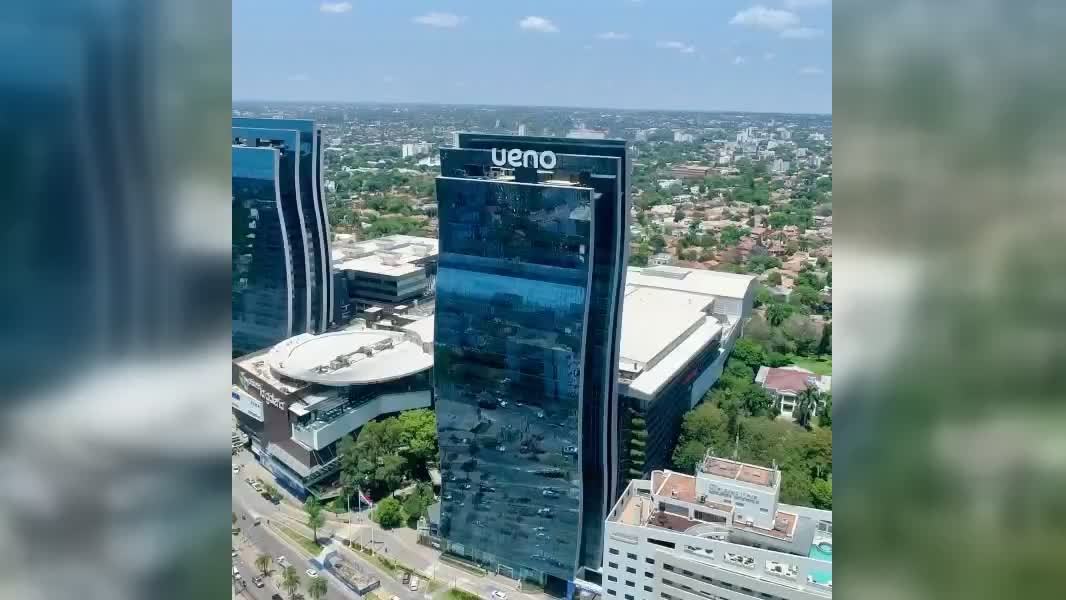
The Paraguayan Communist Party (PCP), through its newspaper Adelante!, has published an analysis linking the crisis surrounding Ueno Bank to the expansion of financial speculation, the concentration of economic power and the growing influence of private financial interests over public resources.
Paraguayan Communist Party Links Bank Collapse to Financial Speculation and Subordination of Public Resources to Private Capital
The article, written by Alhelí González Cáceres and published on 3 November under the title “Financial Crisis under the Government of the Economists”, appeared just as the banking crisis was developing into a major political confrontation that would lead to President Santiago Peña announcing his resignation.
The article states that the collapse of Ueno Bank cannot be understood simply as a case of poor banking supervision or the failure of an individual business group. It must instead be examined within the broader transformation of Paraguayan capitalism, particularly the increasing importance of financial markets, public indebtedness and the concentration of financial capital under successive governments, beginning with Horacio Cartes and continuing under Peña.
Ueno Bank and the connections between economic and political power
The intervention of Ueno Bank by the Central Bank of Paraguay on 2 November exposed serious problems in the bank's financial position. The institution had expanded rapidly and accumulated a substantial share of deposits, including public funds and resources belonging to the Social Security Institute (IPS).
González Cáceres argues that the bank's expansion reflected a broader process of centralisation of financial capital. She points to the consolidation of banking assets, the absorption of Visión Banco and the use of public and pension funds to support the expansion of a private financial conglomerate. The article notes that Ueno had issued international bonds worth US$350 million in March 2026, presenting its business model as an expression of investor confidence, only to face serious capital deficiencies a few months later.
Particular attention is given to the exposure of the IPS, whose deposits in Ueno reached approximately US$345 million in the first half of 2026, equivalent to 9.6% of its investment portfolio. The author stresses that these resources are not simply financial assets: they represent workers' deferred wages and are intended to guarantee healthcare, pensions and social protection. Their placement in a private bank at attractive interest rates, she argues, subordinated workers' social rights to the pursuit of financial returns.
The article also highlights the connections between the bank's business interests and political power. Peña had been a business partner of the Grupo Vázquez, the conglomerate associated with Ueno, until April 2025. Meanwhile, the president of the Central Bank responsible for supervising the financial institution had previously headed Ueno Holding. For González Cáceres, these relationships illustrate the revolving door between economic power and state institutions, raising questions about the independence of financial supervision and the use of public resources.
The author nevertheless cautions against reducing the crisis to a single business group or claiming that all the bank's financial problems have been explained. She argues that the episode reveals wider contradictions in the organisation of the country's financial system and the relationship between private capital and the state.
A crisis that exposes the limits of the government's economic model
The article places the Ueno crisis within the economic policies pursued since Cartes assumed the presidency in 2013. It identifies the growing reliance on public borrowing and international financial markets as central features of this model, arguing that successive administrations have strengthened the position of financial creditors over the distribution of public resources.
The government's emphasis on macroeconomic stability, fiscal discipline and investor confidence is contrasted with the increasing burden of public debt and the limited resources available for social needs. The article points out that financial obligations and the interests of asset holders increasingly shape fiscal priorities, while workers face inadequate wages, household indebtedness and insufficient public services.
It also rejects the idea that the crisis represents a general collapse of the Paraguayan banking system. Rather, it describes Ueno as a significant case illustrating the risks associated with rapid financial expansion, centralisation of capital and the use of public resources to sustain private business operations.
Workers' organisations demand control over pension funds
The analysis also draws attention to the response of trade unions and workers' organisations. Groups including the OTEP-SN teachers' organisation, the Association of IPS Insured Persons, Acción Sindical Clasista, the Confederation of the Working Class and Grupo Insurgencia had demanded the immediate withdrawal of pension funds deposited in Ueno and threatened mobilisation.
Among the proposals raised by these organisations was the creation of a social second-tier bank through which the IPS could administer its own resources rather than placing them at the disposal of private financial institutions.
For the author, these demands raise a fundamental political question: who decides how workers' pension contributions are invested, according to what criteria, and in whose interests? The struggle over the IPS funds is presented as part of a wider contest over the control of social resources and the subordination of social security to private financial accumulation.
Peña's resignation announcement deepens the political crisis
The political consequences of the banking crisis became dramatic on 5 November. After Ueno's intervention left nearly three million customers unable to access their accounts, protests spread and demands for political accountability intensified. Allegations concerning Peña's previous business connections with the bank's associated conglomerate, the appointment of a former Ueno executive to head the Central Bank and the placement of public pension funds in the institution became central to the political confrontation.
Peña announced his resignation as president amid the crisis and the loss of support from influential figures within his own Colorado Party. However, the Chamber of Deputies voted unanimously to advance impeachment proceedings and rejected his resignation. As of 6 November, the Senate proceedings were continuing, while prosecutors had opened criminal investigations into the bank's collapse and the related allegations. The accusations against Peña and other officials remain subject to investigation.
The developments have exposed divisions within the ruling political establishment, including the break between Peña and former president Horacio Cartes, who had previously been his political patron. The crisis has also brought thousands of depositors and other affected citizens into the streets demanding access to their money and accountability.
Although Adelante!'s 3 November article preceded Peña's resignation announcement, its analysis provides PCP's framework for understanding the crisis: not as an isolated banking failure, but as an expression of the relations between financial capital, political power and the state. Its emphasis on the protection of pension resources and the organisation of workers also points towards the party's view that the response must involve collective action to defend the social resources and rights of the working class.