
The Paraguayan Communist Party (Partido Comunista Paraguayo, PCP) is calling for continued popular mobilisation in the wake of the Ueno Bank crisis, arguing that the political consequences of the scandal cannot be resolved simply through the removal of President Santiago Peña.
Image
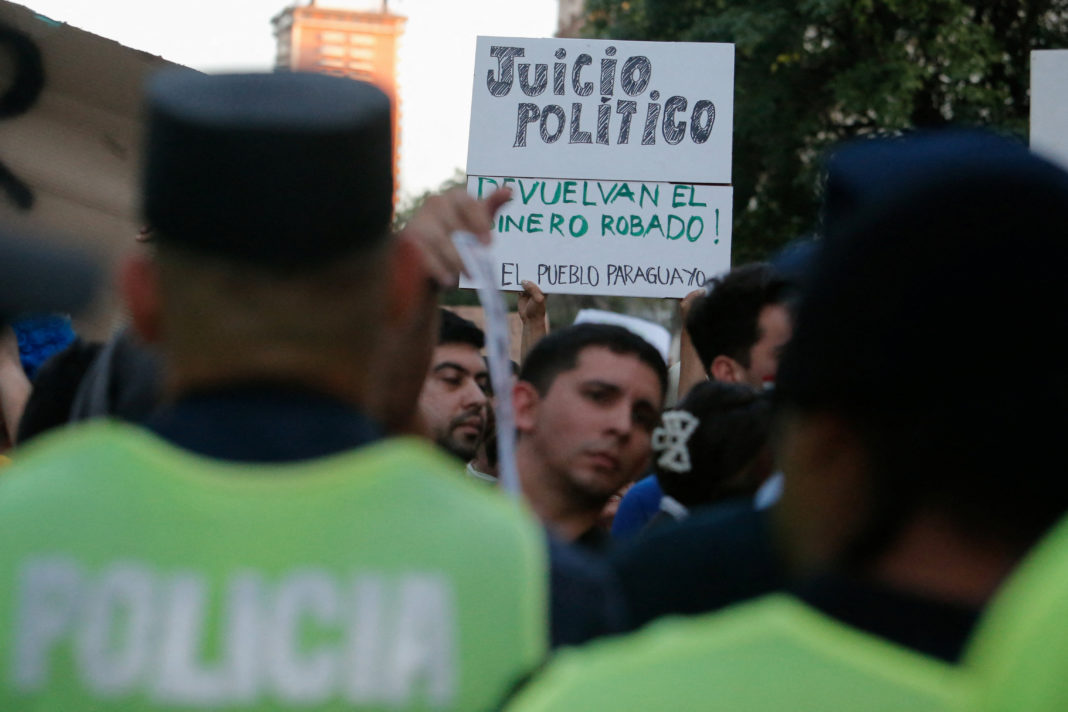
Paraguayan CP calls for continued mobilisation to recover workers’ funds and defend social rights
Paraguayan CP calls for continued mobilisation to recover workers’ funds and defend social rights
The party is placing particular emphasis on recovering workers’ pension funds and other public resources, establishing accountability for those responsible, and building an independent workers’ movement capable of defending social rights.
On 13 November, the PCP and the Paraguayan Communist Youth (Juventud Comunista Paraguaya, JCP) organised a public discussion at the party's premises in Asunción under the title “How Do We Make Them All Leave and Recover What Was Stolen?” Speakers included PCP General Secretary Najeeb Amado, Alhelí González and Ariel Prieto. The discussion focused on the Ueno Bank crisis, the political situation following Santiago Peña's removal, and the need to recover workers' pension funds and other public resources. The speakers emphasised that Peña's departure alone would not resolve the crisis, calling for investigations and accountability, renewed popular mobilisation and the construction of a united workers' front to defend social rights and strengthen an independent political alternative.
In a 13 November interview with Semanario Voz, Amado argued that Peña's removal had not resolved the underlying problems exposed by the crisis. He called for the recovery of workers’ pension funds and other public money, investigations into the events and punishment of those responsible. He also acknowledged that the initial wave of street protests had diminished following Peña's departure and the first reimbursements to smaller depositors. The PCP, he indicated, intends to work towards renewing mobilisation and preventing the issue from disappearing from public debate.
Amado has stressed the need to build a workers’ front to defend and recover social rights, strengthen organisation among working people and develop an independent political alternative. He has cautioned against limiting the struggle to a change of government while leaving the structures responsible for the crisis intact. In a separate interview published on 10 November by the Communist Party of Argentina's newspaper Nuestra Propuesta, he similarly argued that the crisis had exposed the connections between financial capital and political power. He called for unity among workers, progressive forces and popular organisations around the recovery of the funds and the defence of social rights, while maintaining political independence from governments that continue to administer the existing economic system.
The party has also drawn attention to the direct consequences of the crisis for workers. A 7 November report in Adelante!, the PCP's newspaper, focused on employees of the Monchis delivery platform who said they had not received their wages because of legal measures affecting the corporate structure of ITTI and Ueno. By highlighting these cases, the party has sought to show that the consequences of the banking crisis extend beyond depositors and pension funds to workers whose livelihoods are affected.
The PCP's recent interventions therefore combine demands for accountability and the recovery of public and workers’ resources with an effort to build a broader movement around labour and social rights. Its coverage of the Spanish general strike also reflects an interest in debates over trade-union organisation, class independence and workers' mobilisation beyond Paraguay. Its message at home is that the end of Peña's presidency must not be mistaken for a resolution of the crisis. The party is seeking to keep workers' demands at the centre of the political debate and to strengthen independent organisation capable of challenging the interests behind the scandal.