
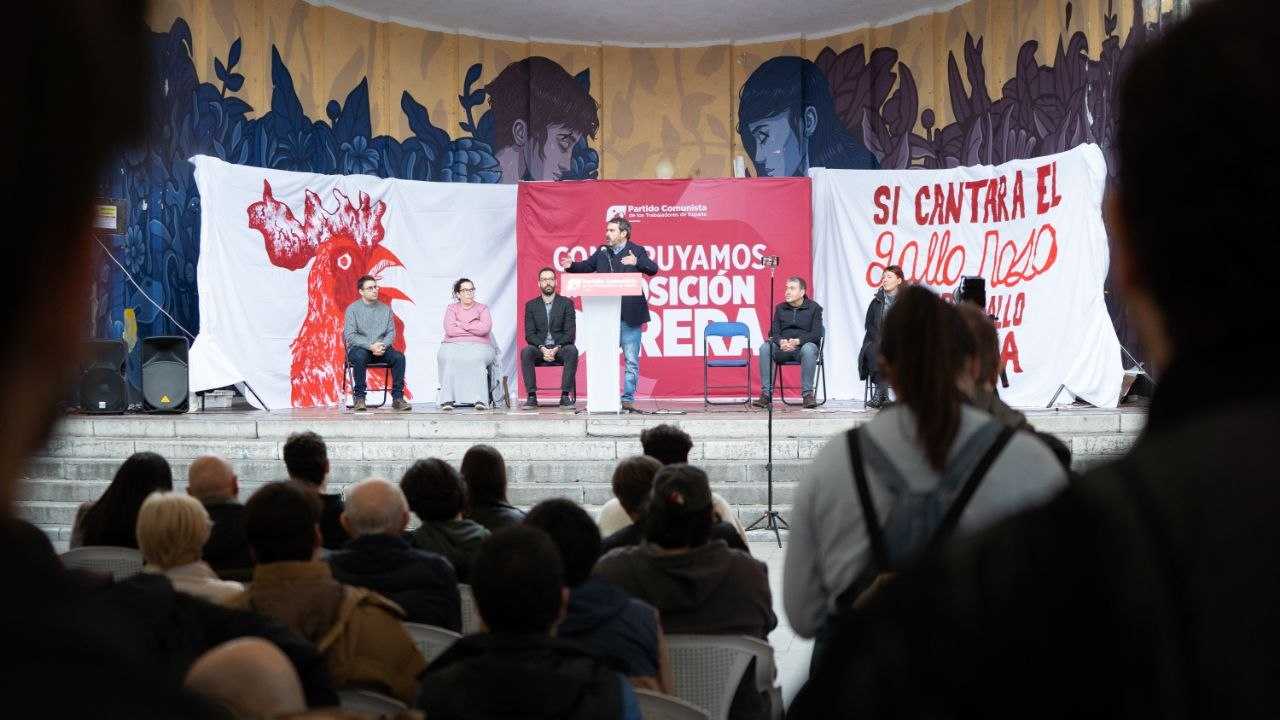

The Communist Party of the Workers of Spain (PCTE) held an electoral rally in Parque Jovellanos in Mieres, Asturias, on 21 November, under the slogan “Let us build the workers’ opposition”.
PCTE holds electoral rally in Asturias, Spain with participation of KKE MEP
The rally brought together PCTE candidates and representatives, alongside Lefteris Nikolaou-Alavanos, Member of the European Parliament for the Communist Party of Greece (KKE).
The speakers included Ástor García, PCTE General Secretary and candidate for President of the Government; Nikolaou-Alavanos; Saúl Fernández, third on the PCTE list in Asturias; and Political Bureau members Cristina González and Severino Menéndez. The participation of the KKE representative gave the event an international dimension and expressed solidarity between the two communist parties during the Spanish electoral campaign.
In its account of the meeting, the PCTE emphasised the working-class history of Asturias's mining valleys, arguing that workers there know that social gains are never given freely but are won through organisation in workplaces, neighbourhoods and the streets. The party connected this tradition of struggle with the problems facing workers today: wages that do not cover living costs, unaffordable rents, deteriorating public services and young people forced to leave their communities in search of employment.
The PCTE argued that these conditions make it necessary to organise an independent workers’ opposition, both against capitalist interests and against the political forces that represent them. It called for organisation in every workplace, sector and town, presenting this as a task that extends beyond the electoral campaign.
The party described the vote for communists on 29 November as one step in building this opposition, stressing that the struggle must continue from 30 November onwards through collective organisation and action. Its message in Mieres was that electoral participation should serve as part of a longer process of strengthening working-class organisation, rather than being treated as an end in itself.