

The Communist Workers’ Party of Spain (PCTE) took part in workplace pickets, demonstrations and other actions across the country during the general strike of 11 November, seeking to turn the day into an effective interruption of economic activity.
Image
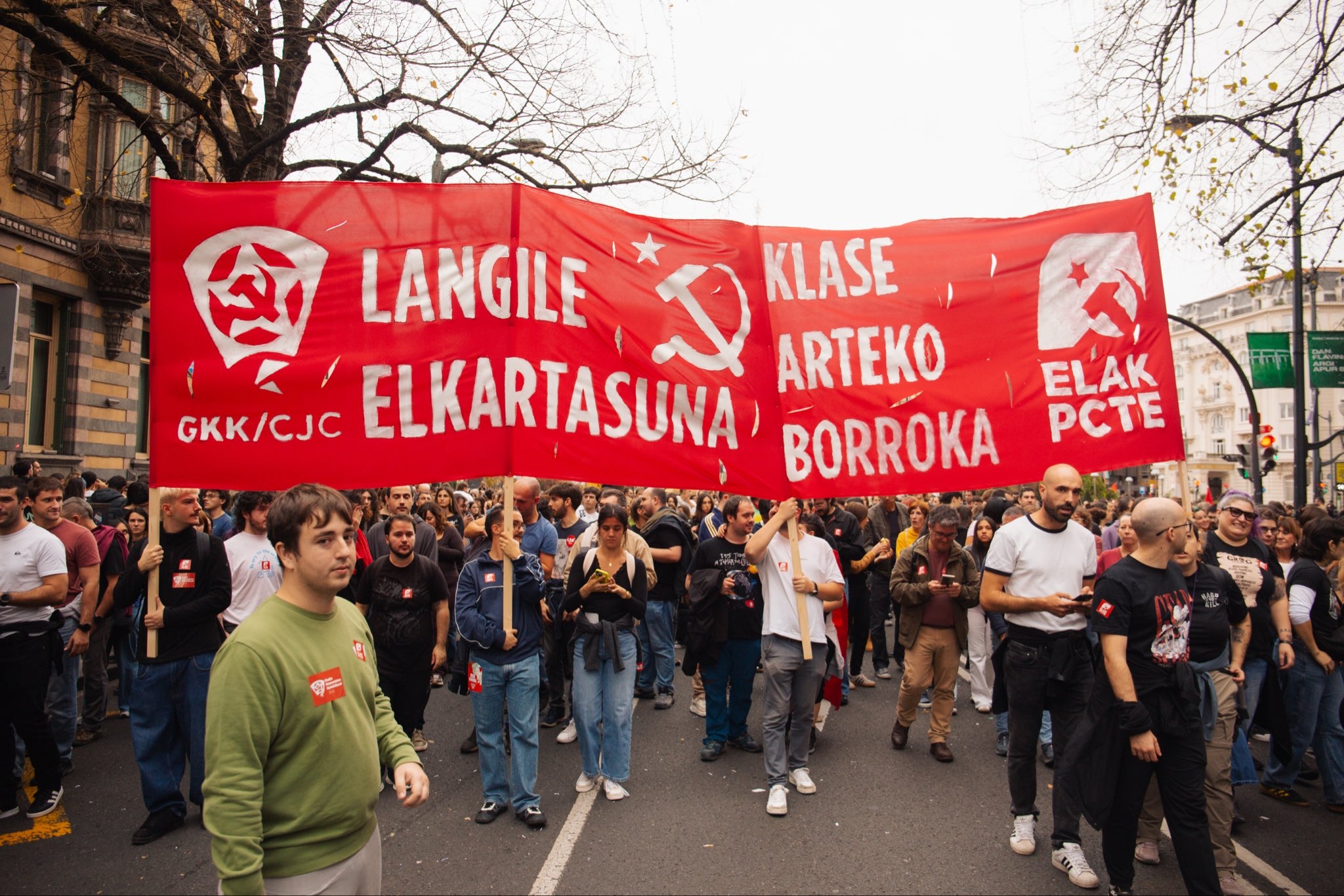
Communist Party of the Workers of Spain takes to streets and joins pickets as millions of workers join general strike in Spain
PCTE joins pickets and workplace actions across Spain during 11 November general strike
Party militants joined workers at factories, transport depots, distribution centres and other workplaces, while the party also reported police interventions against pickets and expressed solidarity with those facing repression.
In its activities across several territories, the PCTE emphasised the need for workers to act collectively at the point of production. Its interventions reflected the position it had set out before the strike: that the strength of a general strike lies above all in stopping production and demonstrating the collective power of the working class.
PCTE actions across the country
The PCTE reported that workers had begun mobilising from the early hours of the morning to bring economic activity to a halt. According to the party's initial figures, strike participation in Andalusia stood at 75%. It called on workers to maintain the pressure not only throughout the day but also in the days that followed.
In Guadalajara, the general strike also began with informational pickets at GXO and Inditex facilities. PCTE reported that workers on the night shift continued their mobilisation despite heavy rain, insisting on the defence of workers' rights and opposition to employers' abuses.
In Burgos, PCTE militants joined workers and members of other trade-union and political organisations in an informational picket outside the depots of the city's urban bus service. The National Police and Local Police charged the workers gathered there. PCTE militants and other participants resisted the police intervention until officers managed to clear a path for a bus to leave several minutes later. The party denounced the police action as repression against workers exercising their right to strike.
In Valladolid, communist militants joined workers seeking to prevent goods and buses from leaving the Mercaolid distribution centre and AUVASA, the city's municipal transport operator. The united action brought traffic in the Argales industrial estate to a halt despite police charges. The PCTE presented the intervention as an example of the importance of workers' unity and collective action in making a strike effective.
In León, PCTE militants stood alongside workers at the Embutidos Rodríguez factory to prevent production and the movement of goods. The party reported that the Guardia Civil retreated and that a truck was prevented from entering the factory. Its account stressed that workers, as those who produce society's wealth, possess the collective capacity to bring economic activity to a standstill.
In Cantabria, pickets began in Santander, while workers taking part in the action in Torrelavega stopped the operation of food-distribution chains. A demonstration also took place through the streets of Santander, with the PCTE calling on workers to join the communist bloc and help build an independent workers' opposition.
In Madrid, the party expressed solidarity with those facing repression during the strike, noting that police interventions against teachers, students, informational pickets and workers taking part in demonstrations had become a recurring feature of the recent weeks of mobilisation.
In the Basque Country, militants of the Communist Workers’ Party of Euskadi (ELAK-PCTE) organised alongside their co-workers with the stated objective of stopping production. Their message underlined the need to continue building workers' opposition through everyday organisation and to rebuild communist organisation in workplaces.
Across these and other actions across the country, the PCTE's emphasis was on direct participation in workplace struggles, solidarity among workers and the organisation of pickets capable of interrupting production and distribution. The party's call to join the communist bloc and build workers' opposition also reflected its argument that the mobilisation should strengthen working-class organisation beyond the single day of the strike.
A general strike over wages and housing
The general strike of 11 November was the first nationwide general strike in Spain in 14 years. It was called by a group of trade unions, including the major confederations CCOO and UGT, alongside organisations such as CGT and CNT. The mobilisation brought together demands for better wages and more affordable housing, against a background of declining purchasing power, insecure employment and a deepening housing crisis. The unions also sought to draw attention to the difficulties faced by working-class households in meeting basic living costs.
The housing question was a particularly prominent issue. Rising rents and the difficulty of accessing affordable accommodation have placed increasing pressure on workers, especially younger people and those on low incomes. The strike connected these concerns with demands for improved wages and living conditions, arguing that employment and housing insecurity cannot be treated as separate problems. The action also took place shortly before the general election scheduled for 29 November, giving it an additional political dimension.
During the strike work stoppages were particularly significant in some industrial sectors and regions, while participation was uneven elsewhere. Production was halted at the SEAT and Ebro plants in Catalonia, and unions reported stoppages at other industrial facilities. Transport services were disrupted, including the cancellation of flights and long-distance and commuter trains. Large demonstrations took place in cities across Spain. In Barcelona, an estimated 400,000 people joined the demonstration. The trade unions described the strike as a success.
The day also saw confrontations between police and pickets in several locations. By late evening, Europa Press reported at least 75 arrests and more than a thousand incidents recorded across Spain. Trade unions criticised police interventions against informational pickets and announced that they would pursue legal action over alleged police violence.
PCTE: the strike must strengthen workers' organisation
The PCTE had called on workers to participate actively in the strike in a statement issued by its Political Bureau on 10 November, under the title “The Strength of the Working Class Lies in Stopping Production: On 11 November, General Strike!” The party argued that a general strike should not be reduced to a day of demonstrations, but must aim to interrupt economic activity through the collective action of workers in factories, industrial estates, transport, logistics, shops and services.
The statement identified declining purchasing power, the housing crisis and precarious employment as central reasons for the mobilisation, while pointing to the continued accumulation of profits by large corporations. It also argued that the effectiveness of a strike depends on preparation in workplaces, workers' assemblies, organised pickets and the participation of broad sections of the workforce.
The PCTE had criticised shortcomings in the preparation of the strike, particularly the lack of sufficient organisation in workplaces and the risk that the mobilisation could be subordinated to electoral interests ahead of the 29 November election. It nevertheless insisted that these weaknesses should not lead to passivity or demobilisation. The party called on trade unions and political organisations to put the success of the strike ahead of their particular interests and to work together to stop production.