
The Central Committee of the Portuguese Communist Party (PCP), meeting on 27–28 June 2026, reviewed the national and international political situation, assessed recent workers' struggles, and outlined the Party's priorities for the coming period. It concluded that Portugal is experiencing an intensification of the conflict between the interests of big capital and the interests of workers and other anti-monopoly social groups, arguing that the country's political and economic direction continues to deepen exploitation, inequality and external dependence.
Image
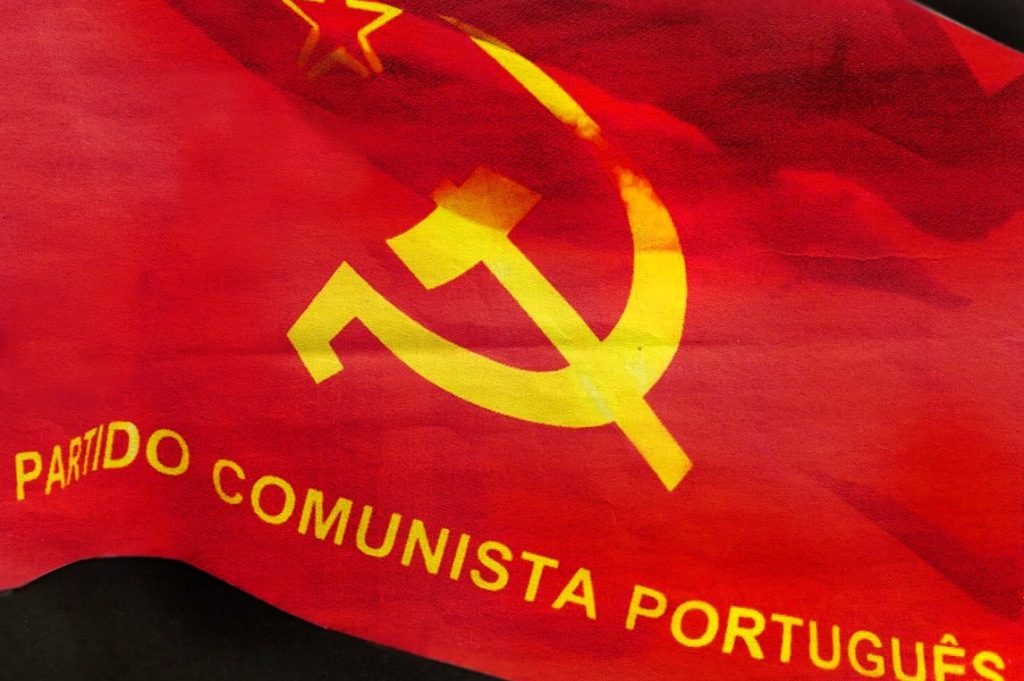
Portuguese CP makes a comprehensive assessment of domestic and international political situation
Portuguese Communist Party assesses national and international situation
The Committee highlighted as the most significant recent development the defeat of the government's proposed Labour Package, describing it as a major victory for workers following more than eleven months of sustained industrial action. It stated that the campaign, culminating in the general strikes of December 2025 and June 2026, demonstrated the decisive role of organized labour in defending workers' rights and defeating what it characterized as an anti-social and anti-democratic reform agenda. According to PCP, the outcome strengthened workers' confidence in collective struggle and weakened both the government and the political forces that had supported the legislation.
Reviewing the domestic political situation, PCP criticized the PSD/CDS government for pursuing policies that primarily benefit large corporations while worsening living conditions for the majority of the population. It pointed to rising prices, declining purchasing power, inadequate wage and pension increases, the deterioration of public services, housing shortages, attacks on Social Security, privatization, insufficient public investment and growing inequality. The Committee argued that these developments reflected the implementation of a neoliberal agenda aligned with the interests of large national and foreign capital.
The resolution further argued that Portugal's economic model continues to reinforce dependence on foreign ownership and European Union economic policies. It criticized privatisation programmes, public-private partnerships, the sale of strategic national assets, financial support for major corporations and what it described as attempts to weaken constitutional protections and public oversight. According to PCP, these policies undermine national sovereignty while increasing social inequality and weakening the state's ability to provide essential public services.
Assessing the political landscape, the Central Committee argued that the traditional alternation between the Socialist Party (PS) and the Social Democratic Party (PSD) has entered a period of exhaustion. It contended that large economic interests are increasingly promoting parties such as Chega and the Liberal Initiative (IL) as vehicles for maintaining right-wing policies. In response, PCP reiterated its call for a patriotic and left-wing political alternative based on defending workers' interests, national sovereignty, the Constitution of the Portuguese Republic and resistance to the influence of the European Union, NATO and imperialism.
The Committee praised the extensive mobilization of workers, trade unions, youth organizations and social movements over the previous year. Particular recognition was given to the CGTP-IN trade union confederation for organizing the campaign against the Labour Package and coordinating nationwide demonstrations, strikes and other protest actions. PCP also highlighted struggles by teachers, nurses, pensioners, students, women, anti-racist organizations and peace movements, arguing that these mobilizations demonstrated the growing potential of mass struggle to defend social rights.
In its assessment of international developments, the PCP argued that global tensions continue to reflect the structural crisis of capitalism and the increasingly aggressive role of imperialism led by the United States and supported by NATO, the European Union and the G7. It condemned military actions by the United States and Israel, including operations against Iran, the continuing war in Gaza, attacks on Lebanon, sanctions against Cuba and pressure on Venezuela, while also criticizing NATO's role in the war in Ukraine. The Committee maintained that these policies threaten international peace and stability.
The resolution criticized the Portuguese government for aligning its foreign policy with the United States, NATO and the European Union, arguing that this position contradicts both Portugal's national interests and the principles of its Constitution. It called for stronger international solidarity with Palestine, Lebanon, Iran, Cuba, Venezuela and other countries facing what it described as imperialist intervention, while renewing demands for NATO's dissolution, European demilitarization and the establishment of a new international order based on peace, cooperation and national sovereignty.
Looking ahead, PCP outlined a programme of political activity centred on defending wages, pensions, public services, housing, healthcare and education while opposing privatizations, constitutional revision and the rising cost of living. It also announced plans to intensify campaigns promoting peace and international solidarity, expand public outreach, prepare for the 50th Avante! Festival, commemorate the 90th anniversary of Ary dos Santos, and continue strengthening cooperation with social movements and trade unions.
Concluding its meeting, the Central Committee emphasized the importance of strengthening the Party's organization, recruitment, workplace presence and youth activities in order to consolidate its influence among workers. It argued that the victory over the Labour Package demonstrated both the necessity and effectiveness of a strong Communist Party rooted in organized labour. The Committee reaffirmed its commitment to building a patriotic and left-wing alternative for Portugal and concluded that recent national and international developments reinforce PCP's view that overcoming capitalism through the construction of socialism remains the necessary path toward social progress, democracy and peace.