
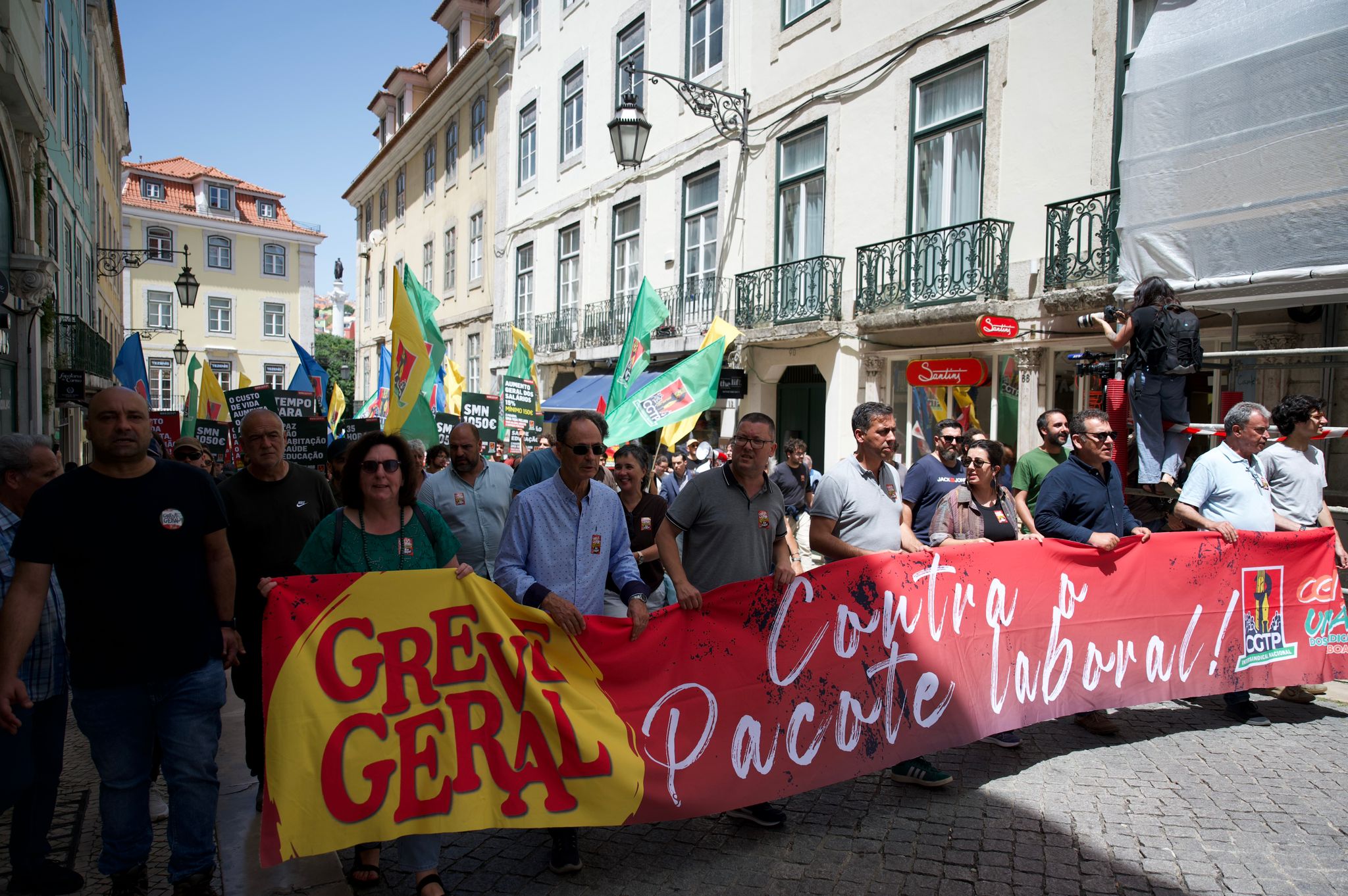

Paulo Raimundo, General Secretary of the Portuguese Communist Party (PCP), issued a statement regarding the national strike held on the 3rd of June across Portugal. He hailed the general strike as a major demonstration of workers’ strength and unity against the government’s proposed Labour Package, which he said would deepen exploitation, weaken labour protections, and undermine fundamental workers’ rights.
Portuguese CP backs general strike
According to Raimundo, the strike represented a clear rejection of measures aimed at facilitating dismissals, expanding precarious employment, deregulating working hours, restricting collective bargaining and trade union activity, and attacking the rights of workers and families. He argued that the mobilization also reflected growing public anger over rising living costs, housing difficulties, deteriorating public services, and widening social inequalities.
He described the strike as part of a broader wave of labour struggles that had developed since the summer of 2025 and as a sign of workers’ determination to intensify resistance to the Labour Package and to fight for higher wages, better pensions, improved living standards, and greater social justice. Raimundo highlighted the participation of workers from a wide range of sectors, including industry, transportation, public administration, healthcare, education, logistics, telecommunications, energy, and commerce, emphasizing the involvement of many first-time strikers, young people, women, immigrants, and precarious workers.
The PCP leader praised the role of the trade union confederation CGTP-IN, trade union activists, workers’ representatives, and thousands of organizers who contributed to what he characterized as one of the largest and most significant general strikes in Portuguese history. He argued that the strike’s success was particularly noteworthy because it had overcome pressure from employers and authorities, as well as attempts to limit its impact through the extensive use of minimum-service requirements.
Raimundo maintained that existing labour legislation already disadvantaged workers and insisted that the government’s Labour Package should not only be defeated but abandoned entirely. He accused the PSD/CDS government, supported by the Liberal Initiative and Chega, of pursuing anti-social, anti-democratic, and anti-patriotic policies that also included attacks on public healthcare, social security, public education, housing rights, and the transfer of public resources to large corporations and economic groups.
As an alternative, he called for policies that would raise wages, combat precarious employment, strengthen collective bargaining, expand public services, guarantee housing rights, support families, promote national production, and increase public investment.
Concluding his remarks, Raimundo presented the strike as both an act of militancy and a source of hope. He argued that the scale of the mobilization demonstrated that workers and the broader population possess the strength necessary to defeat the Labour Package, defend the achievements of the April Revolution, break with right-wing policies, and advance a path toward what he described as a more just, sovereign, and socially developed Portugal based on the principles of the Portuguese Constitution.