
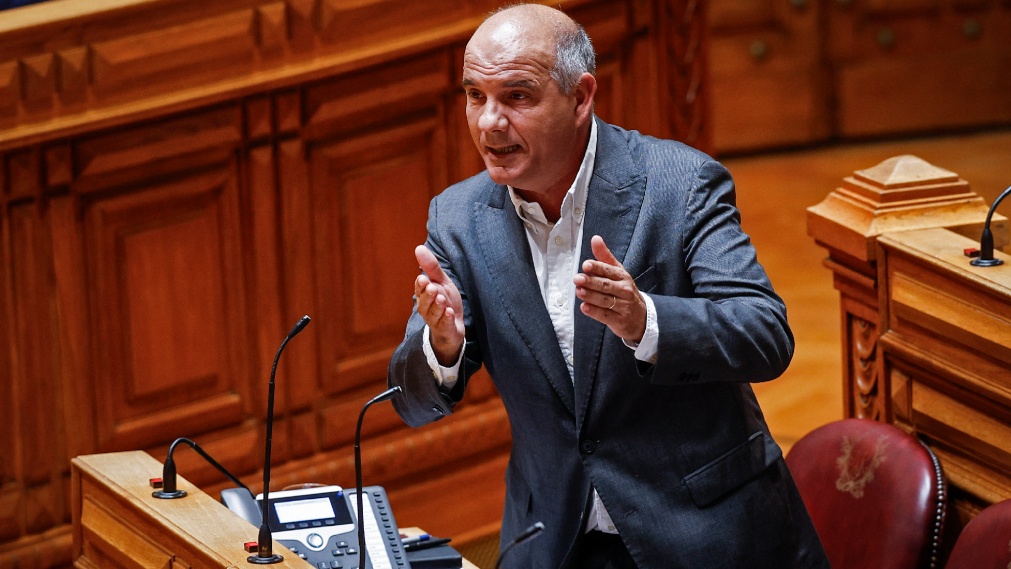

Portuguese Communist Party (PCP) General Secretary Paulo Raimundo addressed the parliament during the debate on the State of the Nation.
Portuguese CP criticizes government's economic and social policies
Raimundo stated that Portugal has become more unequal, unjust and dependent under the current government. He accused the government of prioritizing the interests of large corporations and foreign capital over those of workers and the wider population, while undermining public services, national sovereignty and social rights.
Raimundo argued that the wealth created by workers is increasingly concentrated in the hands of a small number of large corporations, while wages remain low and many people struggle with rising living costs, housing expenses and insecure employment. He maintained that government policies have benefited major economic groups at the expense of workers and ordinary families.
He also criticized the government's economic strategy, accusing it of subordinating Portugal's interests to foreign capital through the sale of strategic national assets, including the country's refinery, TAP Air Portugal and planned privatization of the national railway operator. He argued that adherence to European Union policies and increased military spending weaken Portuguese sovereignty and divert resources away from social priorities.
Raimundo accused the government of deliberately dismantling public services through state reforms and budget cuts. He cited problems in the education system, particularly the disruption surrounding national examinations, as evidence of mismanagement. He also criticized the government's handling of education, accusing it of reducing staffing, weakening the Ministry of Education and failing to provide adequate explanations to students and their families.
In healthcare, he argued that the government is weakening the National Health Service while transferring increasing amounts of public money to private healthcare companies. He held the government responsible for shortages of healthcare professionals, emergency room closures, long waiting times and declining access to maternal healthcare.
The PCP leader condemned government housing policies, arguing that they have fuelled rising property prices and rents while allowing banks and speculators to earn record profits. He also criticized measures affecting tenants, claiming they would lead to increased evictions and higher rents.
Raimundo further argued that the government's labour agenda seeks to weaken workers' rights, reduce protections in the public sector and undermine the social security system. He described these policies as benefiting a privileged minority while worsening conditions for workers, young people, pensioners, farmers and small business owners.
Raimundo characterized the government's programme as being supported by the right-wing parties Chega and the Liberal Initiative (IL), while criticizing the Socialist Party (PS) for cooperating with the government on key issues. He pledged that the PCP would continue to oppose these policies.
He argued that growing public opposition demonstrates the government's increasing political isolation and suggested that resistance to its programme is expanding.
Concluding his remarks, Raimundo highlighted the recent defeat of the government's labour reform package as evidence that organized workers' struggles can successfully challenge government policy. He argued that continued mobilization by workers and young people offers the prospect of a political alternative capable of reversing current policies and opening what he described as a new path for Portugal.