
Protests and political opposition emerged in Israel following the Central Elections Committee’s decision on September 23 to disqualify the Joint List, the electoral alliance comprising Hadash, Balad and Ta’al, from the October 27 Knesset elections.
Protests against disqualification of Joint List from elections
The committee also voted to disqualify Ra’am, Hadash MK Ofer Cassif and Balad chairman Sami Abu Shehadeh. The Joint List was barred by a vote of 18–5, while Cassif’s candidacy was rejected by 19 committee members against five, with two abstentions.
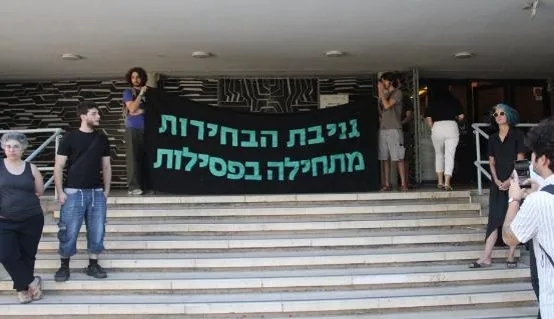
The decision immediately prompted demonstrations and calls for legal action. According to Zo Khadarek, activists from the Joint List demonstrated outside the Likud headquarters, Metzudat Ze’ev, in Tel Aviv, carrying the message that “stealing the elections begins with disqualifications.” The protest opposed what the participants described as the exclusion of Arab political representation from the electoral process.
The protests were accompanied by a broader appeal to the Supreme Court. Dozens of civil-society organisations signed a petition calling on the court to overturn the disqualifications. The organisations argued that excluding Arab parties and candidates deprived approximately one-fifth of Israel’s citizens of their right to political representation and sought to prevent political partnership between Jewish and Arab citizens. Among the signatories were B’Tselem, Peace Now, Breaking the Silence, Physicians for Human Rights–Israel, Adalah, Combatants for Peace, Yesh Din and other human-rights and peace organisations.
The Communist Party of Israel (Maki) and Hadash also called for a broad protest campaign against the decisions. In their joint response, they described the Central Elections Committee’s actions as an attack on the basic rules of democratic competition and accused the Israeli right of attempting to suppress Arab electoral participation and silence political forces opposed to the occupation and discrimination. They called on Arab citizens and democratic forces to respond through political mobilisation and increased participation in the elections.
Ofer Cassif rejected his disqualification as politically motivated and without a legal basis. Sami Abu Shehadeh similarly argued that his exclusion was directed against Arab society as a whole and intended to remove it from the political arena. The Joint List announced that it would challenge the decision through the Supreme Court as well as through political and popular mobilisation.
The controversy has also extended beyond the Joint List itself. The Central Elections Committee simultaneously excluded Ra’am, meaning that the committee’s decisions affected both of the principal Arab electoral lists. Rights organisation Adalah said it would challenge the decisions before the Supreme Court, describing the proceedings as a politically driven process.
The disqualifications are not yet final. The Supreme Court must determine whether the affected candidates and lists can participate in the October 27 election. Israeli legal practice has historically imposed a high threshold for disqualifying parties or candidates, and current reporting indicates that the decisions are expected to face significant judicial scrutiny.
The protests therefore combine two parallel forms of opposition: street and political mobilisation against the exclusion of Arab representation, and a legal challenge seeking to reverse the Central Elections Committee’s decisions. For Hadash and the Israeli Communist Party in particular, the issue has been framed as part of a wider struggle over democratic and political representation in Israel.
International solidarity messages were sent to the Communist Party of Israel, from the Communist Party of Turkey and the Communist Party of Greece, among others.