

Communist Party of Turkey (TKP) General Secretary Kemal Okuyan has said that Turkey's current political crisis is the result of a long-term erosion of republican principles rather than a recent development. Speaking on journalist Hilmi Hacaloğlu's Rivayet Muhtelif program on Medyascope, Okuyan said the country's departure from the founding values of the Republic began well before the rise of the Justice and Development Party (AKP) and accelerated with the transition to the multi-party system.
TKP leader Okuyan on current developments
According to Okuyan, the progressive and revolutionary reforms of the 1920s initially played an important role in developing Turkish capitalism, but over time principles such as secularism, national independence, and civic equality came to be viewed by the capitalist class as obstacles rather than necessities. He argued that the AKP represented a qualitative turning point in this process and described its rule as a "counter-revolution" that deepened the dismantling of republican institutions.
The TKP leader also linked the weakening of republican values to the privatization policies pursued during the AKP's early years. He claimed that insufficient resistance to large-scale privatizations allowed the government to break down key barriers protecting the public sphere, paving the way for subsequent attacks on democratic institutions, including what he described as growing political interference in the judiciary and electoral processes.
Okuyan criticized the main opposition Republican People's Party (CHP), arguing that it had failed to channel popular resistance to the AKP into an effective political force. He maintained that a significant section of Turkish society remains attached to republican and secular values but that this social energy has been weakened by the CHP's political strategy over many years. According to him, the mismatch between public sentiment and opposition politics has contributed to the current situation.
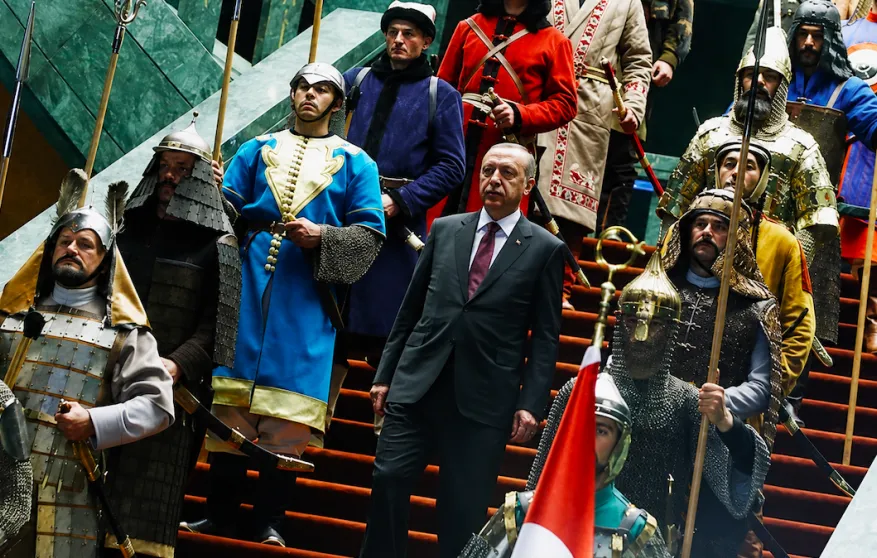
Addressing debates about Turkey's political future, Okuyan rejected suggestions that the country could evolve toward a monarchical or Gulf-style political system. While acknowledging the influence of Neo-Ottoman ideas within Turkish politics, he argued that Turkey's social and political traditions make it impossible to eliminate elections altogether. He described recent comments by U.S. Ambassador Tom Barrack regarding monarchy in the Middle East as reflecting a dismissive and arrogant view of the region.
Okuyan also accused the AKP of increasingly intervening in electoral politics because it has lost its ability to persuade voters through conventional political means. Referring to legal actions against opposition figures, including Istanbul Mayor Ekrem İmamoğlu, he argued that the government is attempting to weaken potential electoral challengers while justifying such moves through claims of corruption or national security concerns. Nevertheless, he said the ruling party's efforts have failed to increase its public support.
The TKP leader suggested that the AKP itself is experiencing growing internal tensions, particularly over questions of succession after President Recep Tayyip Erdoğan. He pointed to discussions surrounding figures such as Bilal Erdoğan and Foreign Minister Hakan Fidan, as well as broader disagreements within the ruling camp over foreign and domestic policy. He argued that these divisions undermine the common characterization of Turkey as being governed solely by a "one-man regime."
Concluding his remarks, Okuyan stated that the most accurate description of Turkey's political system today is a "dictatorship of capital." He argued that focusing exclusively on individual leaders obscures the class interests underlying political developments and warned that failing to recognize the role of economic power in shaping the country's trajectory would lead to a misunderstanding of Turkey's current crisis.