
The article published by the Tudeh Party of Iran on 2 November 2026, under the title “Efforts for Lasting Peace Do Not Mean Surrender to Imperialism,” examines the renewed threat of an attack by the United States on Iran alongside diplomatic efforts to resume negotiations.
TUDEH assesses renewed threat of US attack on Iran
The article argues that opposing war and seeking a lasting peace are not forms of capitulation to imperialist pressure. At the same time, the party rejects the idea that defending Iran’s national independence requires support for the Iranian government’s domestic policies. The article links the need for diplomacy and an end to military threats and sanctions with the worsening economic conditions facing workers and ordinary people, and calls for a peace settlement grounded in national sovereignty, international law, social justice and democratic participation.
Efforts for Lasting Peace do not Mean Surrender to Imperialism
Recent reports of the US considering options for a military strike on Iran, coupled with diplomatic moves to resume talks, have once again put the regional outlook on the brink of war or peace. With the ongoing tensions imposing heavy costs on the lives and livelihoods of the hard-working people of Iran, the key question is how to both confront the threat and foreign intervention and prevent the current eroding crisis from continuing.
The ominous shadow of war and the loopholes of diplomacy
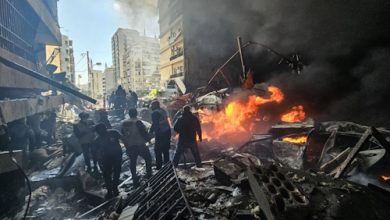
In recent days, worrying news has been released from the White House. According to a report by the Wall Street Journal, Admiral Brad Cooper, commander of the US Central Command (CENTCOM), presented Donald Trump with options for a new military attack on Iran in a meeting at the White House. Secretary of War Pete Hegsett and General Dan Kaine, chairman of the US Joint Chiefs of Staff, were also present at the meeting. This news cannot be considered a mere propaganda maneuver. In addition to the news of the meeting, reports have been published about the transfer of military equipment, strengthening of defense systems, and the preparation of American forces in the region. Meanwhile, the official website of Mojtaba Khamenei reported that in a “meeting” with the commanders of the Iranian armed forces, he ordered an “immediate and without geographical restrictions” response to any threat from the enemy. According to the same report, he has also ordered the list of military targets to be updated to put “material and intangible” assets of the United States and Israel within the reach of Iranian forces.
In addition to these reports, news agencies reported that Ahmed Sharif Chaudhry, a spokesman for the Pakistani army, announced that the country was “cautiously optimistic” about the success of its efforts to mediate between Iran and the United States, but warned that there were “powerful opposing forces” who saw the continuation of the war as beneficial to them. Regarding Iran’s possible membership in the Mecca Pact, the Pakistani army spokesman also said that the final decision on this matter was up to the political leaders of the three countries, Pakistan, Saudi Arabia, and Turkey.
Almost simultaneously with the publication of the news of the US military procurement, the Wall Street Journal also reported that J.D. Vance, Vice President of the United States, Donald Trump, had sent a letter to Mohsen Rezaei, Secretary of the Supreme National Security Council of Iran, with Trump’s approval, to explore the possibility of resuming direct negotiations. According to published reports, these contacts have not yet reached an agreement on specific peace proposals and have focused more on creating a framework for negotiations. However, Iran considers the lifting of the naval blockade, the release of financial resources, and the reduction of economic and military pressures as important preconditions for dialogue. As Trump and Netanyahu have announced, this time the aim of the renewed and extensive military attack by US imperialism and the criminal Israeli regime on Iran is to destroy Iran’s industrial and economic infrastructure, which cannot be called anything other than a war crime. The goal is clear: to completely destroy the country or to prepare the conditions for the disintegration of Iran. No progressive and democratic force can believe that the destruction of the country will be a step towards freeing Iran from the clutches of dictatorship. Therefore, while a number of sanctions and war mongers in Iran are spreading false propaganda about Iran's readiness to "destroy America" and spread war to other countries in the region, fighting for peace and mobilizing public opinion against war is one of the most important tasks facing all national and patriotic forces.
War, Sanctions, and a Society Burdened by Poverty
It is also important to note that the prolonged conditions of “no war, no peace” mean continued disruption and chaos in economic and social life. As we have already mentioned, even before the escalation of the war, Iran’s economy was struggling with deep structural problems due to the regime’s destructive policies to secure the interests of the country’s big capitalists: corruption of government agencies and institutions affiliated with the IRGC and repressive forces, managerial inefficiency, inequality, dependence on oil revenues, and weak productive investment. The inhuman sanctions of US imperialism, war, siege, and constant military threats have made these problems much more severe and widespread.
According to the latest official reports, annual inflation in Iran reached 73.6% in October of this year, and the prices of food and beverages have increased by about 121.8% compared to the previous year. Such figures are not just economic indicators, but also reflect a real decline in purchasing power, a restriction on essential consumption, and the spread of insecurity in the livelihoods of households, especially wage earners. According to a recent estimate by Hamid Haj Esmaili, an expert in the field of labor and employment, the monthly poverty line for the household under study is more than 85 million tomans, which, according to him, is three times the average salary in Iran. Accordingly, if a household earns 25 to 35 million tomans per month, it will face a deficit of 50 to 60 million tomans per month. Simply put, for a large segment of society, having a job is no longer a guarantee of freedom from poverty. In such a situation, while the political and military stalemate continues and the drumbeat of war continues, the expectation that the working people, who have sunk further into poverty and deprivation, will endure the current inhumane conditions and stand alongside the Velayat-e-Faqih regime and its leaders, who are immersed in luxury, blessings, and legendary wealth, is nothing more than a mirage. When there is no clear policy and active effort from the Islamist rulers to solve the current huge problems that they themselves are the main cause of, and despite the continued atmosphere of severe repression and inhuman executions of opponents and protesters, society is rapidly moving towards renewed social explosions.
Lasting Peace: Beyond the Dichotomy of War and Surrender
The developments of recent days have once again confronted Iran and the entire region with a fateful question: Is the region once again heading towards the spread of war and destruction, or can a way out of the crisis and achieving lasting peace still be opened? The answer to this question is of fundamental importance, especially for progressive and leftist forces and defenders of independence and social justice. The issue is not just the choice between war and peace; the issue is how to prevent the continuation of a disaster whose first and greatest victims are the ordinary people, workers, and toilers of Iran and the region, without surrendering to the pressures of American imperialism and the criminal Israeli regime. In the view of the Tudeh Party of Iran, the struggle to secure lasting peace is not only not inconsistent with the struggle against imperialism, but in the current circumstances it can be one of the most important arenas in the struggle against imperialism. Opposing war does not mean accepting American domination, just as defending national independence should not be seen as defending the anti-people policies of the ruling vassal regime. Negotiations in themselves are neither a sign of surrender nor a guarantee of independence; the nature of negotiations is determined by the conditions, content of the agreement, and the results that negotiations bring to the people. One can oppose any ultimatum and foreign imposition and at the same time demand direct, comprehensive, solution-oriented, and result-oriented negotiations. National independence is not limited to the ability to resist pressure; the ability to prevent a devastating war and maintain the country’s economic and human capacities is also part of it.
The Tudeh Party of Iran has repeatedly stated in recent years that the experience of the wars of the past several decades and the aggressive policies of imperialism and its allies in the region show that foreign military intervention has had catastrophic consequences for the people of the region. Iraq, Afghanistan, and Libya are examples of the devastating consequences of such interventions. Thus, the fundamental question is how to both oppose war and foreign intervention and stand against the policies that keep Iranian society in its current erosive and costly state.
Striving for lasting peace: A national and popular duty
Diplomacy based on international law, using the leverage of friendly countries such as Russia and China, regional diplomatic activity to advance the policy that a new war in the region will only benefit the interests of American imperialism and the criminal Israeli regime and further weaken the countries of the region, and efforts to reach mutual agreements, security guarantees, reducing sanctions, and respecting the sovereignty of countries can all be components of a different solution to war. Undoubtedly, no agreement is worthy of approval without assessing its real content, especially in securing national interests for the benefit of the working people. An agreement that is based on constant military threats or depriving a country of its legal rights cannot bring about lasting peace. And we should not forget that peace can also be lasting and meaningful when it is accompanied by economic reconstruction, poverty reduction, the expansion of social justice, and political accountability. From this perspective, the fight against imperialist aggression and foreign intervention and the fight for the rights of ordinary and working people are not two separate and unrelated projects; they both concern a common question: who decides the fate of society and who pays for these decisions? Iran today finds itself in a situation where the continuation of the current situation, even without a new round of large-scale military attacks, imposes exorbitant costs on society and places a heavy burden on the shoulders of working people.
Iran’s sovereignty can and must be defended, military threats and aggression opposed, sanctions that target people’s livelihoods lifted, and at the same time, the need to change policies that perpetuate the current stalemate must be raised. The ultimate criterion for evaluating any policy should be its real consequences for ordinary and working people, the security of the country, the rights and welfare of citizens, and the possibility of equitable development. Neither war, nor economic blockade, nor the permanent erosion of people's lives should become the normal and accepted state of society. Ultimately, a peace based on independence, equal rights of countries, social justice, and democratic participation of all people can open a different horizon to both the options of war and surrender. And it is precisely in this sense that the effort to secure lasting peace is not a retreat from the fight against imperialist domination and aggression, but an inseparable part of the effort to build a future without foreign interference and free from the shackles of dictatorship, a freer and more humane future for Iran and the region.