
TUDEH Party of Iran made an assessment of the issues that the people of Iran is left dealing with, in an article entitled "Iran is caught in the grip of inhuman sanctions by US imperialism, escalating domestic repression, and the risk of a renewed war", in People's Letter.
TUDEH Party of Iran on issues strangling Iran
The Iranian people are living through one of the most difficult times in decades. Economic pressure, severe inflation, falling purchasing power, shortages and high prices of medicine, and increasing difficulties in establishing economic and transportation links with the world have affected the lives of millions. At the same time, the threat of a resumption of war on a larger scale still looms over the country. In such circumstances, the most important issue is how to defend Iran’s independence and national sovereignty while paving the way for an end to the war and economic blockade and policies that will help end the conflict.
The Islamic Republic government has entered a new phase of deciding on the future of the ruling “political system.” There are serious disagreements within the government about “what to do,” especially after Khamenei’s assassination. A section of the government wants to reach some kind of agreement with the United States through diplomacy. These forces are concerned about the outbreak of widespread popular protests in the wake of deep economic crises. And another section is under the illusion that by enduring the status quo, keeping the Strait of Hormuz closed, and hurting the global economy, it will be possible to defeat the United States and contain and suppress popular protests resulting from the country’s deteriorating economic situation.
The reality is that the majority of Iranians want to maintain independence, peace, and a decent life, but in practice there is no channel for them to express and realize their demands. Even expressing their opposition to the problems and crises caused by the regime’s destructive and neoliberal policies that burden the working class is interpreted as weakening the country against the enemy. The extent of the economic crisis can be seen more than anywhere else in the gap between income and the cost of living. According to an estimate published this summer based on official statistics and food costs, the minimum monthly cost of living for an average working-class household was about 90.6 million tomans at the end of July. In contrast, the total salary and benefits of a married worker with one child are about 24.9 million tomans. In other words, such an income only covers a little more than a quarter of the livelihood basket.
These numbers are not just economic statistics on paper. Behind them are families who are forced to reduce their consumption of meat, dairy, fruit, and even very basic goods such as eggs. Recent reports even report a significant increase in the price of bread, making it more difficult for working-class families to afford the simplest food. The new round of economic pressure and the imposition of inhuman sanctions by the quasi-fascist Trump administration have also made the situation more difficult. In recent months, the US government has expanded its measures to restrict Iran’s foreign income, financial networks, trade, and transportation. Reuters reported in early September that the combination of the export blockade and the intensified enforcement of sanctions has severely limited Iran’s access to foreign currency and foreign purchasing channels. The shortage of basic medicines and food is a clear example of the impact of this situation on ordinary, hard-working people in the country. Reports in September indicate a shortage of hundreds of medicines in Iran, including dozens of essential and vital medicines. Even domestic drug manufacturers have not been immune to the crisis due to their dependence on imported raw materials and equipment. The prices of some expensive drugs have increased several times, and for patients who need ongoing treatment, finding the drug is no longer just a problem; the ability to pay for the drug has also become a serious crisis.
In other words, the war-mongering of American imperialism led by Trump and the criminal Israeli government against Iran, which today threatens to destroy the economy and livelihood of the people in the form of a full-scale economic war, has brought about a huge disaster for the entire Iranian people, especially the working people. This disaster has not only weakened the freedom-seeking and justice-seeking struggles of the progressive, leftist, nationalist forces, including the union struggles of the labor movement. The reason is that in the current situation, the ruling political structure and the entire society are faced, first of all, with the vital necessity of fighting to repel the existential threat against Iran.
The Iranian nation is simultaneously facing two intertwined dangers that threaten the existence of the country: on the one hand, the devastating threat of American imperialism from abroad, and on the other, the insistence of the merchants of tension and delusion who believe in the deviant thinking of “war, war until victory” on policies against national interests at home. This destructive and anti-national current in the power structure seeks to achieve “unified sovereignty” in the post-Ali Khamenei era and to highlight the most reactionary religious views mixed with demagoguery nationalism - a tool for internal repression under the pretext of “preserving national security”. In this way, they are trying to establish and maintain the complete dominance of “political Islam” and expand their exclusive access to huge political and economic rents.
This movement within the ruling dictatorship, through a coordinated and organized effort and through political levers, such as the “New Leadership Beat”, the parliament, the Iranian Broadcasting Corporation, domestic and foreign social networks, and newspapers such as Kayhan, and in the past few days by organizing street pressure, is seeking to remove Masoud Pezzeshkian, the elected president of the “martyr leader”, and the likes of Qalibaf and Araqchi from political power. The movement sees this as an obstacle to its goals of maintaining the current destructive “neither war nor peace” situation. The effort to block any diplomatic path, while Pezzekian and Araqchi are busy consulting with China and Russia, can be seen in the words of Zolghadr, the “political advisor” to Mojtaba Khamenei, who says: “We will not open the Strait of Hormuz until we bring down Trump and Netanyahu, and this is the first stage of revenge for the Iranian nation.”
In this regard, the collection of signatures for a three-step bill to withdraw from the Nuclear Non-Proliferation Treaty (NPT) in order to pave the way for the implementation of the dangerous illusion of a “nuclear test” is noteworthy. These words provide propaganda fodder for the psychological warfare room of Netanyahu’s criminal government and the ruling Zionists in the Republican and Democratic Parties of the United States, who are trying to return to military aggression against Iran. The reality is that the nuclear program of the Islamic Republic over the past three decades has not only not benefited our homeland and the hardworking and deprived people of Iran, but has also failed in all areas, and its financial, material, political, and security costs have been paid from the pockets of the nation.
It is also important to note that in addition to the economic war, the risk of a renewed military war is also serious. Donald Trump said in an interview with Axios on Thursday that he is on the verge of a “big decision” about resuming large-scale attacks on Iran. In the same interview, he spoke of the possibility of an attack to “totally destroy Iran.” Trump has also said that Iran wants a deal and expressed hope that the war is nearing its final stages. Therefore, the US government’s stated positions on the war simultaneously include two elements: the threat of escalating military operations and talk of the possibility of a deal.
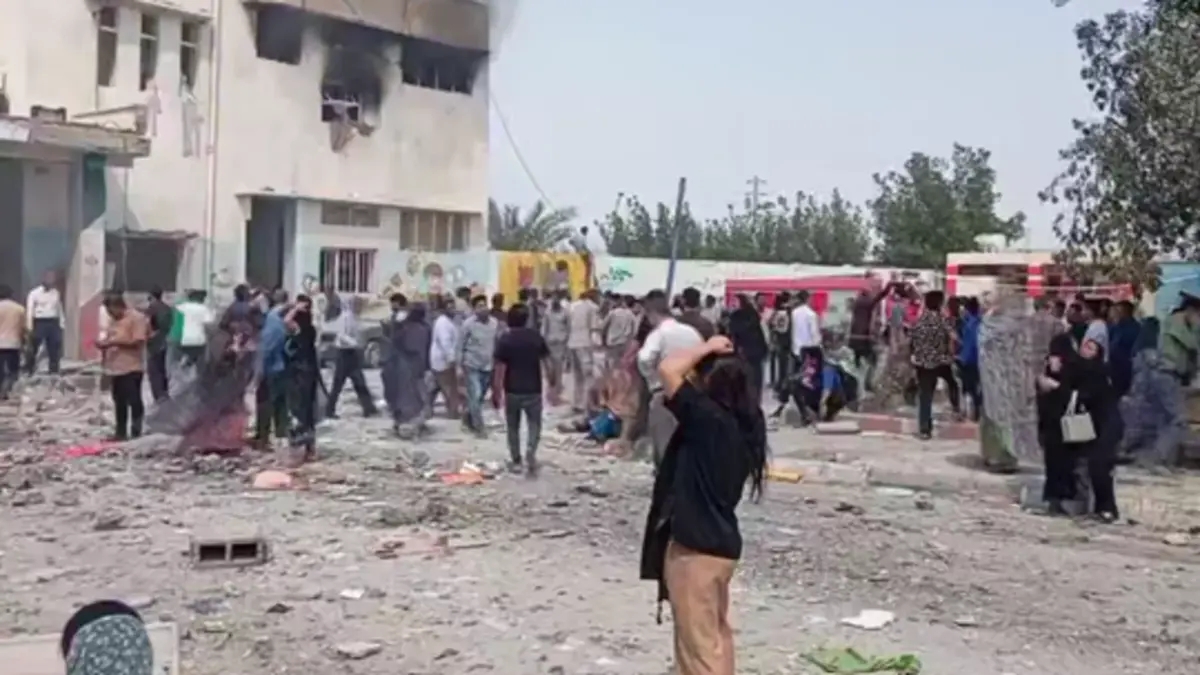
These threats cannot be separated from the experience of the war that began in March 2025. US and Israeli attacks on Iran and Iran’s missile and drone responses have expanded the scope of the conflict to the region. An interim agreement and subsequent mediations have reduced the intensity of the war to some extent, but disagreements over the Strait of Hormuz, Iran’s nuclear program, and sanctions remain. Each new round of large-scale attacks could have a cost far beyond the destruction of military targets. Economic and transportation infrastructure, energy networks, hospitals, production, and the lives of millions of citizens are becoming more vulnerable to war. For a people already struggling with inflation and shortages of basic goods, the resumption and expansion of the war could deepen the existing crisis.
We have previously pointed out and reiterate that Iran has the right to defend its independence, territorial integrity, and national sovereignty. No foreign power should and cannot decide Iran’s political future through bombing, blockade, or the imposition of economic sanctions. The determination of Iran’s fate and future lies solely with the Iranian people. At the same time, defending national sovereignty should not mean accepting endless war. When the cost of a family’s livelihood has become several times the monthly income of a worker, hundreds of items of medicine are scarce, and the country’s air and commercial connections are becoming more and more limited every day, the continuation of the military and economic confrontation is directly tied to the lives of the people. Today, Iran is facing two simultaneous dangers: the economic erosion of society and the return of a wider war. A way out of this situation requires, above all, diplomacy, the opening of economic and humanitarian channels, and an agreement that preserves Iran’s security and national sovereignty while at the same time reducing the cycle of threats, blockades, and war. Ultimately, the main issue should not be the victory of this or that government in this attrition confrontation. A more humane and tangible criterion is that the Iranian people can live without fear of bombing, obtain the medicine they need, live a decent life with their income, and decide about the future of their own country without pressure from foreign powers. (Both security is established and pressure, arrests, and executions are stopped.) Lasting peace makes sense when both Iran's independence is preserved and the people are freed from the costs of endless confrontation. In such circumstances, defending the country's existence, preserving its independence and future, and the possibility of fundamental transformation of the country require vigilance, solidarity, and responsible action by all progressive and freedom-loving forces in the country. The reality is that without the real support of the people, relying solely on missiles and drones, the country cannot be protected against encroachments, security infiltrations, and military attacks by imperialism and Israel. But who doesn’t know that there is a deep and wide gap between the nation and the government of the Islamic Republic, an irreparable gap that, for now, due to war conditions and people’s avoidance of creating chaos, has not led to a widespread social explosion like what we saw in the popular uprising of “Women, Life, Freedom” and then in the protests of January 1404? The current situation in the country can be likened to a brief calm before the storm. Every day, we witness protests by retirees, workers, unemployed youth, women, students, grieving families, and other segments of society in every corner of the country, and at the same time, the regime’s repressive apparatus continues to carry out inhumane executions, arrests, and torture of opponents in order to silence any critical voices. For example, in recent days, simultaneously with the regime’s “Martyrdom Parade” propaganda show, which also featured Massoud Pezzeshkian, the people of Tehran held two 10-kilometer marathons in “Bostan Velayat,” in which most of the women participants did not observe the “Islamic veil.” The ruling dictatorship’s response to this popular movement—the right to run freely—was immediate: the next day, the judiciary filed a criminal complaint against the organizers of the marathon, alleging that the participants “failed to observe Islamic customs.”
In its recent assessments of the critical situation in the country and the region, our party has declared that the continuation of the current situation is contrary to national interests and in line with the strategic policies of US imperialism and the criminal Israeli regime in the region. Mobilizing public opinion in Iran and the world and trying to end the inhuman sanctions and economic war of US imperialism against Iran, which are increasingly affecting the lives of tens of millions of hard-working people in Iran, and preventing the resumption of military conflicts, are among the most important tasks of the country's progressive and freedom-loving forces today. The country's progressive and freedom-loving forces' efforts to reflect the legitimate demands of the majority of society, especially the wage-earning workers who are dying of poverty and oppression, and to prepare the ground for the establishment of a nationwide movement against war and warmongers and against the aggressive policies of US imperialism and Israel in the region are urgent and vital tasks.