

The Workers’ Party of Belgium (Parti du Travail de Belgique, PTB/PVDA) has intensified its criticism of the federal and regional governments’ economic policies, focusing on pension indexation, threatened job cuts at pharmaceutical multinational GSK, and education reforms that the party says will worsen conditions for students and teachers.
Workers Party of Belgium challenges budget austerity, demands repayment of public aid from GSK
On 16 October, PTB president Raoul Hedebouw published a video criticising the federal government’s failure to reach a budget agreement. He questioned who would bear the consequences of the impasse, particularly amid proposals to restrict pension indexation. The party argues that workers and pensioners should not pay for the government’s fiscal difficulties through measures that erode purchasing power.
The intervention formed part of the PTB’s wider opposition to the federal government’s austerity programme. The party has called for an alternative based on taxing large fortunes and excess corporate profits rather than placing additional burdens on working people.
PTB demands repayment of public subsidies if GSK cuts jobs
The PTB also intervened in the dispute over pharmaceutical company GSK’s announced restructuring in Belgium. On 14 October, the company announced a plan that could eliminate up to 1,217 jobs across its Belgian operations, including 735 managerial positions and 482 employee posts.
The PTB demanded that public authorities require GSK to repay public subsidies and tax benefits if the company proceeds with collective redundancies. The party argues that public money should support employment and research rather than benefit a multinational that subsequently reduces its workforce.
PTB parliamentary group leader Sofie Merckx raised the issue with federal Employment and Economy Minister David Clarinval in parliament on 15 October, criticising the government’s response to the restructuring. The dispute coincided with union actions at GSK sites in Wavre and Rixensart. Trade unions have warned that further mobilisation may follow, depending on management’s response.
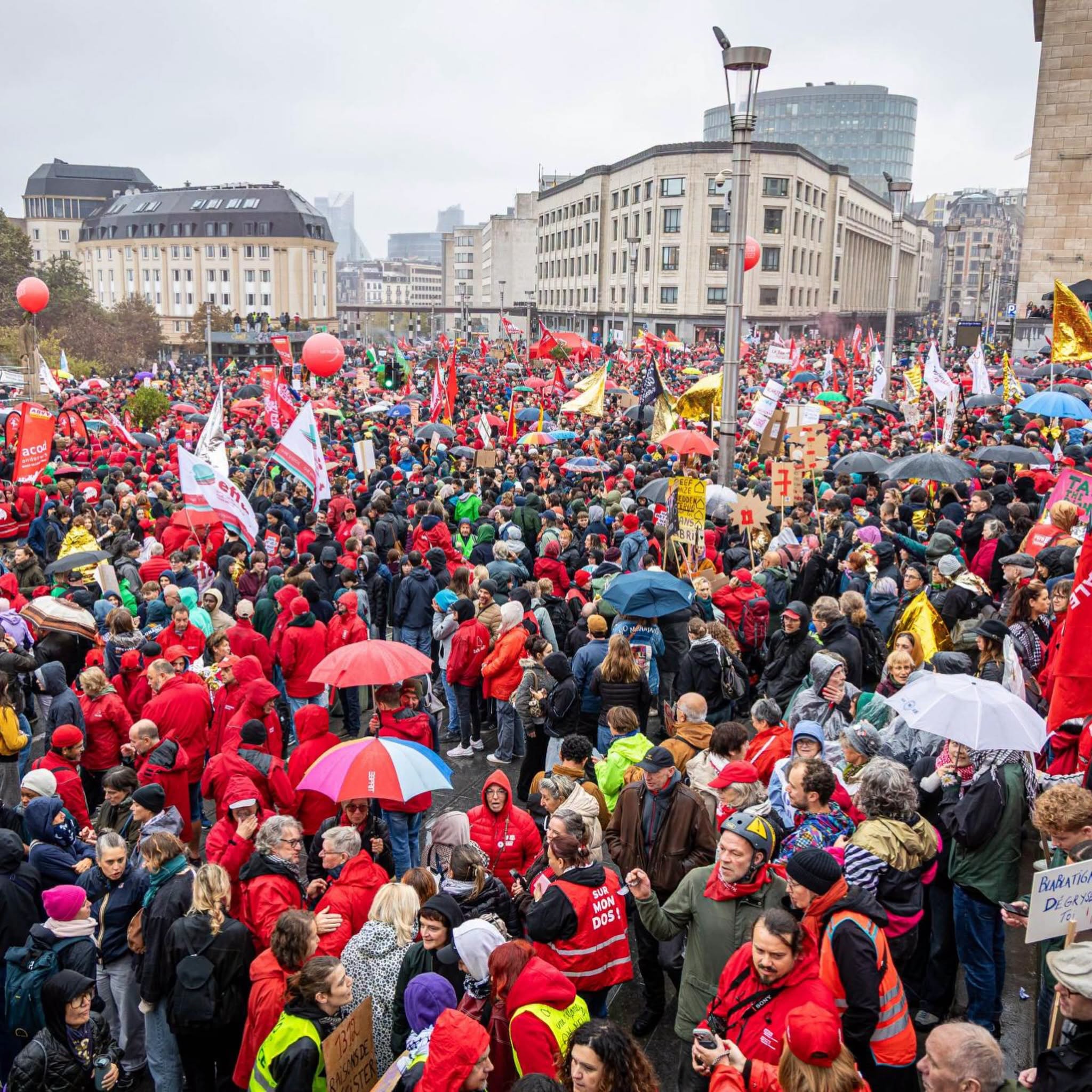
PTB was active in workers' demonstrations in which tens of thousand of workers participated and the strike of public sector workers.
Party opposes education reforms
On 13 October, the PTB published “Youth Is the Future”, a video-led intervention criticising education reforms associated with Wallonia-Brussels education minister Valérie Glatigny. The party argues that rising enrolment costs, heavier workloads for teachers and reductions in support for students threaten access to education and deepen existing inequalities.
The campaign follows student mobilisations and the national trade-union demonstration in Brussels on 9 October. The PTB has presented these protests as part of broader opposition to austerity and has called for greater public investment in education and youth services.
Across these interventions, the PTB has sought to connect the federal budget dispute with concrete effects on pensions, industrial employment and public education. Its proposals include stronger conditions on public subsidies to companies, protection of purchasing power and increased taxation of the wealthiest sections of society.